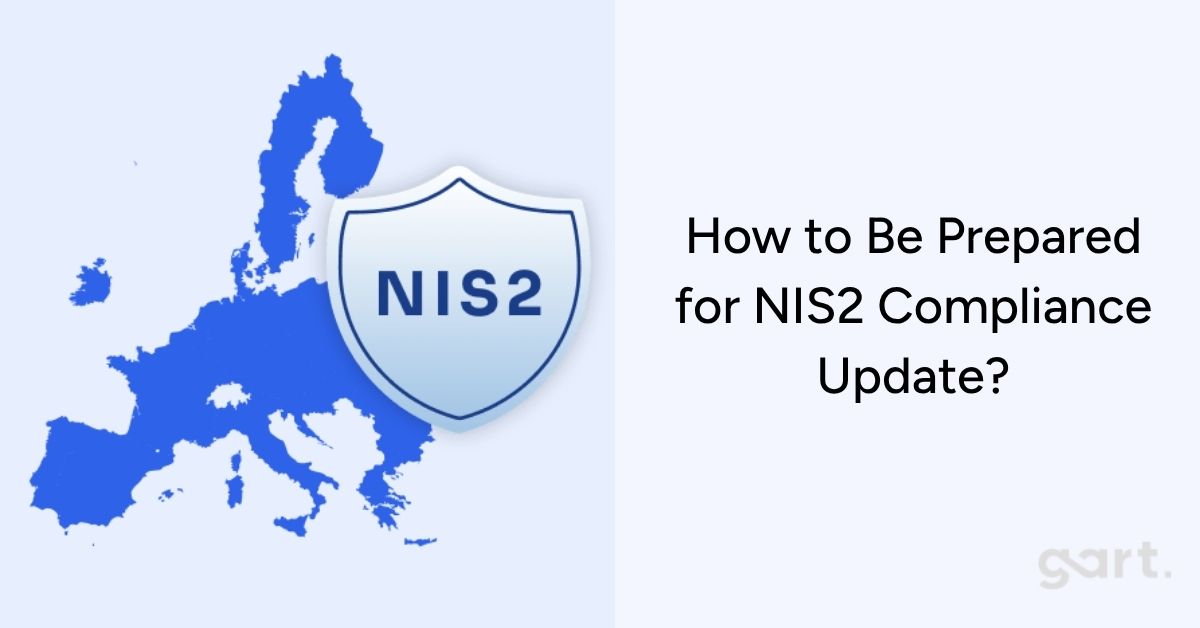
The EU's NIS2 compliance deadline — October 17, 2024 — has come and gone, but the compliance work it triggered hasn't. Most member states have now transposed the directive into national law, registration windows have opened and closed, and 2026 is widely described as the year supervisory authorities move from guidance to active enforcement. Yet only 16% of businesses in scope say they're confident they're fully compliant. If your organization is still treating NIS2 as a deadline you either hit or missed, this guide walks through where enforcement actually stands in 2026, what's changed since the original rollout, and how to close the gap — including where a compliance audit fits into getting there.
The short version: NIS2's transposition deadline passed in October 2024, but national implementation has rolled out unevenly since — Germany's registration window closed July 31, 2026, the Netherlands enters full enforcement mid-2026, and Spain and France are still finalizing their national rules. The European Commission proposed further amendments to the directive in January 2026, and the adjacent Cyber Resilience Act adds its own reporting obligations starting September 11, 2026. NIS2 isn't a deadline you missed or made — it's an ongoing compliance posture regulators are now actively checking.
Where NIS2 Stands in 2026: From Deadline to Enforcement
NIS2 (the updated Network and Information Security Directive) was due to be transposed into the national law of all 27 EU member states by October 17, 2024. That date marked a legal deadline for governments to pass implementing legislation — not a single EU-wide date on which every covered business suddenly became compliant. In practice, transposition and enforcement have rolled out unevenly ever since:
Member state / groupStatus as of 2026Most of the EU (~22–24 of 27 states)Transposed into national law, with implementing legislation and competent authorities in placeGermanyAmended BSI Act in force since December 6, 2025; registration deadline extended once to July 31, 2026 — now closed. Late registration still carries its own fine of up to €500,000, separate from substantive-violation finesNetherlandsLaw enacted, with a staggered entry into full enforcement around mid-2026SpainStill in active legislative process; remains under the older NIS1-based Royal Decree 43/2021 regime pending completion, expected late 2026FranceTransposition act adopted; implementing decrees still being finalized
Adding to the moving target: the European Commission proposed targeted amendments to NIS2 in January 2026 as part of a broader EU cybersecurity package. The proposal would adjust the directive's scope — bringing submarine data-cable infrastructure operators in, taking chemical distributors out (manufacturers stay in scope), adding a requirement to disclose whether a ransom was demanded and paid after a significant ransomware incident, and expanding which companies must appoint an EU representative. None of this is finalized, but it underlines the point: NIS2 compliance in 2026 means tracking a directive that's still being tuned, not checking a box against a document that hasn't changed since 2024. Germany's BSI, for instance, publishes its own running guidance on which organizations must register under the national implementation — worth checking directly if you operate there, since the detail changes as the rules get finalized.
Whatever stage your country is at, the underlying obligation hasn't changed — businesses in scope need their digital infrastructure and data management practices to be secure, resilient, and adaptable to evolving threats, backed by evidence a regulator can actually review. For the official legal text, see Directive (EU) 2022/2555 on EUR-Lex.
Why NIS2 Still Matters for European Businesses
The case for NIS2 was never really about the October 2024 date — it's about the threat environment the directive was built to address, which has kept getting worse, not better. According to ENISA's Threat Landscape 2025 report, which analyzed 4,875 incidents across the EU between July 2024 and June 2025, public administration was the single most targeted sector at 38% of incidents, ransomware activity fragmented across 82 distinct variants rather than concentrating on a few dominant groups, and AI-enabled phishing made up more than 80% of observed social-engineering activity by early 2025.
That 16% figure comes from a survey of 670 business leaders across the UK, Poland, the Netherlands, Ireland, France, Germany, Denmark, and Belgium — and 11% of respondents said they were still unsure whether NIS2 even applied to their organization. That's the real 2026 story: not a deadline that already happened, but a compliance gap most businesses in scope still haven't closed, right as supervisory authorities shift from advisory guidance to active audits.
Which Industries Fall Under NIS2
NIS2 significantly broadened the sectoral scope of the original 2016 directive. Businesses now fall into one of two categories — "essential" or "important" entities — spanning sectors including energy, transport, banking, financial market infrastructure, health, drinking water and wastewater, digital infrastructure, ICT service management, public administration, and space, alongside a second tier covering postal and courier services, waste management, chemicals, food, manufacturing, and digital providers. Size thresholds generally apply (roughly 50+ employees or €10M+ turnover for important entities, 250+ employees or €50M+ turnover for essential entities), though certain critical providers are in scope regardless of size.
The practical effect for many businesses is indirect: NIS2 doesn't always name your industry outright, but if you provide hosting, cloud, data-center, or CDN services to a company that is named — or if you're a supplier deep in an essential entity's chain — NIS2 obligations can reach you through that relationship even when you're not separately listed.
NIS2 Fines and Penalties in 2026
The headline fine ceilings set by the directive haven't changed:
Entity typeMaximum fineOther consequencesEssential entitiesUp to €10 million or 2% of global annual turnover, whichever is higherPersonal liability can extend to management for serious non-complianceImportant entitiesUp to €7 million or 1.4% of global annual turnover, whichever is higherSame personal-liability exposure for managementLate registration (example: Germany)Up to €500,000A separate, standalone penalty — distinct from substantive control failures
What's changed is the enforcement posture around those numbers. Member states can set fine ceilings above the directive's floor — Germany does — so multi-country operators should check local caps rather than assuming the EU minimums are the actual worst case. And 2026 is the year several national authorities, including Germany's BSI, have moved from publishing guidance to actively auditing in-scope organizations. No wave of major published fines has landed as of this writing, but the shift from a grace period to active oversight is itself the headline: the deadline for having a compliance program was 2024; the deadline for having a defensible one is now.
NIS2, DORA, and the Cyber Resilience Act: Which Regime Applies
NIS2 no longer sits alone. Two adjacent EU regulations now overlap with it for a growing number of businesses, and 2026 is the year all three become operationally real at once:
RegulationWho it coversKey 2026 developmentNIS2Essential and important entities across critical sectors (energy, health, digital infrastructure, and more)National registration deadlines closing through 2026; supervisory authorities shifting to active enforcementDORAFinancial entities and their critical ICT third partiesFirst real supervisory enforcement cycle underway; Register of Information filings were due March 31, 2026, with incomplete third-party registers flagged as an enforcement priorityCyber Resilience Act (CRA)Manufacturers of products with digital elements sold in the EUVulnerability and incident reporting obligations take effect September 11, 2026 — over a year ahead of the CRA's full application in December 2027
The CRA's new reporting clock is tight: manufacturers must submit an early warning within 24 hours of becoming aware of an actively exploited vulnerability or severe incident, a detailed notification within 72 hours, and a final report once corrective measures are available. For businesses already carrying NIS2 and, in some cases, DORA third-party risk obligations, the practical challenge is that these regimes currently run on parallel reporting tracks with no single consolidated channel — which makes incident-response process design, not just underlying security controls, a genuine 2026 compliance problem in its own right.
How to Prepare for NIS2 Compliance
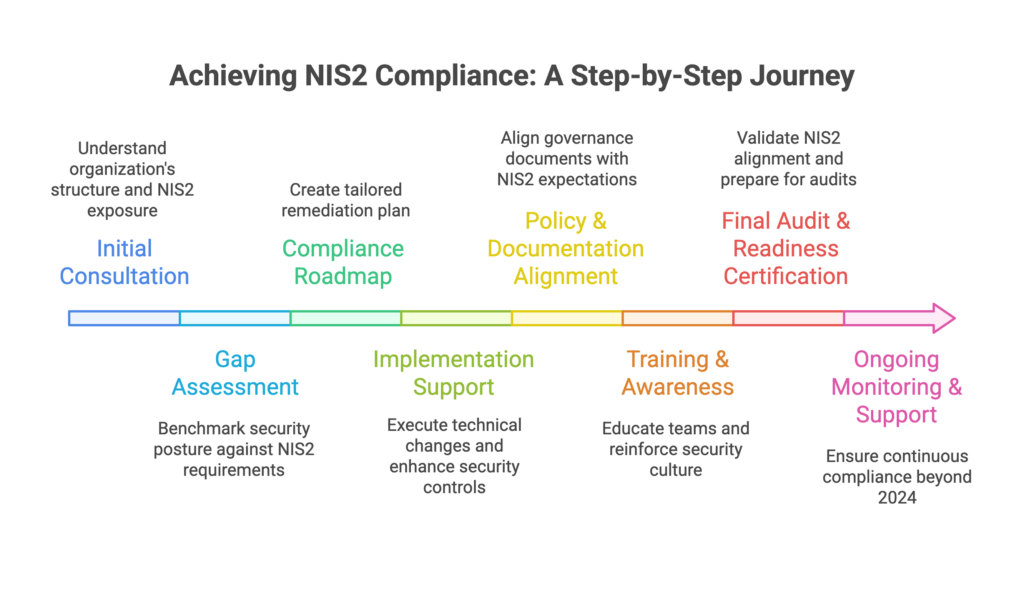
Whether your organization missed the original 2024 window entirely or has been working toward compliance since, the practical steps in 2026 look like this — or start with a structured self-assessment using our free NIS2 Compliance Checklist:
Confirm your registration status. If your country's national registration deadline has passed and you haven't registered with the competent authority, register now — late registration is typically treated more leniently than continued non-registration, but it isn't free (see Germany's €500,000 late-registration fine above).
Run a current risk assessment against NIS2's actual control requirements — not the 2024 version of your infrastructure, but what's running today.
Build or update your incident-reporting process to handle NIS2's notification timelines alongside any DORA or CRA obligations that apply to the same business, rather than maintaining separate, uncoordinated processes for each.
Review third-party and sub-processor relationships, particularly hosting, cloud, and data-center providers, since NIS2 obligations can reach your organization through those relationships even when you're not separately named in scope.
Get an independent technical read on where you actually stand — a compliance audit verifies the infrastructure behind your evidence, not just whether a policy document exists.
A few mistakes show up repeatedly in NIS2 readiness work:
Assuming the October 2024 deadline means the work is done. Transposition is a legal starting gun, not a finish line — enforcement is still ramping up in 2026.
Treating NIS2, DORA, and the CRA as separate projects when a business is in scope of more than one — the underlying security-control evidence overlaps significantly, and building one coordinated program is far more efficient than three parallel ones.
Skipping the registration step because the underlying security work feels more urgent — registration is a distinct, time-bound legal obligation with its own penalty, separate from your actual control maturity.
Not accounting for the moving target. With the Commission's January 2026 amendment proposal still working through the legislative process, scope and reporting requirements may shift again before the current cycle settles.
Organizations without an in-house compliance function often route this work through a managed partner rather than building it internally — see our guide to Compliance as a Service for MSPs for how that model works. Teams that want a more ISO 27001-aligned path into NIS2 readiness can also see our NIS2 compliance solution overview.
Choosing an EU Cloud Provider for NIS2 Compliance
Many businesses are consolidating data operations within the EU specifically to simplify NIS2 compliance and reduce their reliance on sub-processors outside Europe — fewer cross-border data flows to document, fewer third-party relationships to monitor, and a shorter chain between your infrastructure and the regulator's actual jurisdiction. When evaluating a provider against NIS2 requirements, prioritize transparent data-processing locations, minimal reliance on further sub-processors, a demonstrable compliance track record, and clear contractual commitments to EU-based data handling. For a deeper look at what that evaluation actually involves, see our guide to choosing an EU cloud provider.
Also, Gart Solutions, together with our partner — vBoxx, a renowned EU cloud solutions provider, offers a range of managed hosting and cloud server services that can significantly support businesses in their digital transformation journey.
1. Understanding the NIS2 Directive
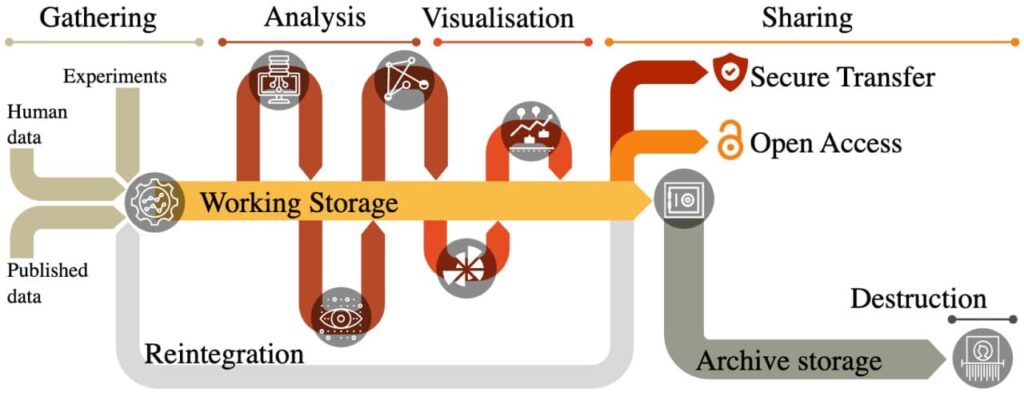
The NIS2 Directive represents a significant evolution in EU cybersecurity regulation, broadening the scope of compliance requirements to include a wider array of sectors. This directive underscores the necessity of not only securing data but also understanding its entire journey.
Organizations must be vigilant about tracking their data flow to mitigate risks and meet the stringent new standards imposed by NIS2.
2. Comprehensive Data Tracking
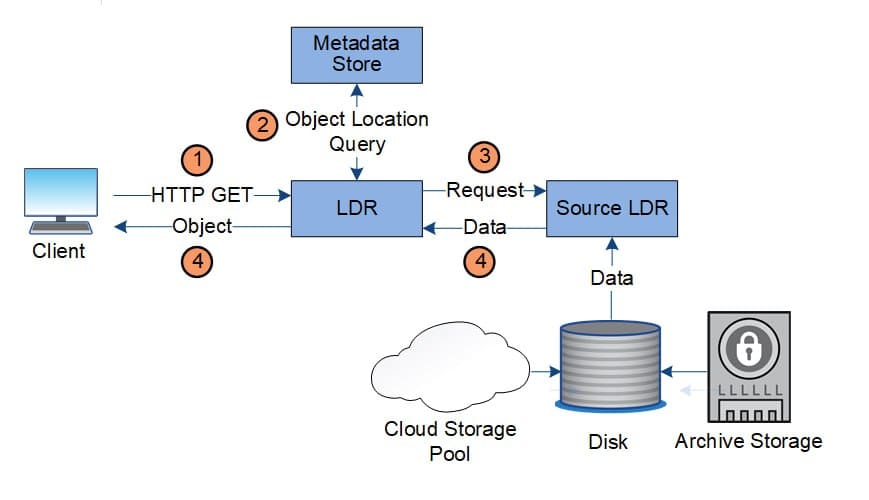
Compliance with NIS2 requires an in-depth understanding of where and how data is processed, stored, and transferred. This involves documentation of every stage of the data lifecycle — from creation and processing to storage and eventual deletion. By mapping out the data journey, organizations can better identify vulnerabilities and ensure that all parties involved in data handling adhere to high security standards.
3. The Challenge of Sub-processors
One of the most complex challenges introduced by NIS2 is the need for organizations to maintain visibility over all sub-processors involved in data processing. Each sub-processor, regardless of their role, must meet the same rigorous cybersecurity standards. This requires thorough vetting and ongoing monitoring to ensure compliance, making it critical for businesses to establish strong relationships and clear communication channels with their sub-processors.
4. Strategic Shifts in the Market
In response to NIS2, many businesses are re-evaluating their reliance on third-party sub-processors, especially those located outside the EU. By consolidating data operations within the EU, organizations can better manage compliance and reduce the risk of data breaches.
This trend towards localized data handling is reshaping the market, as companies seek to simplify their data ecosystems and enhance security.
5. Practical Steps for Compliance
To align with NIS2, businesses must take proactive measures, such as engaging closely with their service providers, conducting comprehensive risk assessments, and considering a shift to EU-based data centers and services. These steps not only facilitate compliance but also strengthen the overall cybersecurity posture, ensuring that the organization is well-prepared to meet current and future regulatory demands.
How Not to Repeat Mistakes: Case of Microsoft
If you say, we are using public data providers, there’s still are pitfalls we have to consider.
Let’s take, for example, Microsoft. Microsoft's products continue to be widely used, but they present significant challenges in transparency and data security.
At the time of writing, Microsoft lists 47 subprocessors and 36 data centers, but details on their operations and data handling are unclear. This is concerning given Microsoft's ongoing GDPR violations and multiple security breaches last year.
Moreover, the global spread of subprocessors, often linked to parent companies in various countries, adds complexity and potential security risks, making it difficult for companies to verify compliance and data safety.
Final words
Prepare your business for the NIS2 compliance update with the expert guidance of Gart Solutions. Download our Free Checklist — a comprehensive guide to the NIS2 audit, and ensure your organization is ready for the upcoming changes.
NIS2-Compliance-Checklist-A-Comprehensive-Guide-to-Audit_Free-PDFDownload
Wanna know how? Contact us.
Schedule a Free Consultation
See how we can help to overcome the challenges of NIS2 compliance.
Contact us
You might also like
GDPR Compliance Checklist: What Compliance Automation Can (and Can't) Do
Why ISO 27001 Is a Crucial Step for Successful Companies
Compliance Monitoring: Ensuring Businesses Stay on the Right Side
SOC 2 Compliance: A Step-by-Step Guide to Preparing for Your Audit
PCI DSS Audit Preparation: A Step-by-Step Compliance Guide
Most organizations still treat compliance as an event: a stressful few weeks before the auditor arrives, followed by eleven months of hoping nothing drifts.
Compliance as a service replaces that cycle with an ongoing program — continuous control monitoring, automated evidence collection, and managed remediation delivered by an outside team, so the organization is audit-ready every day of the year instead of for one week in Q4. It's a response to a simple problem: regulations change faster than internal teams can track them, and a point-in-time report is out of date the moment infrastructure changes. This guide covers what compliance as a service actually includes, what it costs against the alternative of doing nothing (or doing it once a year), which frameworks it typically spans, and how it compares to a traditional compliance audit — the point-in-time assessment most companies still default to.
What is compliance as a service (CaaS)?
Compliance as a service (CaaS) is a managed-service model in which an external provider takes ongoing responsibility for helping an organization meet its regulatory and security obligations — not as a single project, but as a continuous operating discipline. Instead of hiring auditors once a year to produce a report, a CaaS engagement keeps controls monitored, evidence current, and gaps closed in near-real time, so the "audit" becomes a formality that confirms what the provider already knows rather than a discovery exercise that surfaces surprises.
In practice, a CaaS program centralizes four things that most internal teams handle manually and inconsistently: policy and control mapping against the frameworks that apply to the business, automated or semi-automated evidence collection (logs, configuration snapshots, access records), proactive remediation of drift before it becomes a finding, and reporting that's current enough to hand to an auditor, a customer's security questionnaire, or a regulator on short notice.
In one sentence: a traditional compliance audit answers "were we compliant on the day someone checked?" — compliance as a service is built to answer "are we compliant right now?" on any given day, not just audit week.
Why compliance as a service is growing in 2026
Three forces are pushing organizations toward the continuous model instead of the annual one. First, the regulatory surface keeps expanding — NIS2's national transposition and enforcement obligations culminate on an October 2026 deadline across the EU, with non-compliant entities facing fines of up to €10 million or 2% of global annual turnover, whichever is higher.
DORA became applicable to EU financial entities in January 2025 and is now moving into genuine supervisory enforcement, and CMMC 2.0 continues to bind U.S. defense contractors even while parts of its rollout are under review — none of which are "set it and forget it" obligations.
Second, the cost math favors continuous programs. A widely cited Ponemon Institute study for Globalscape found that the average annual cost of non-compliance — business disruption, lost productivity, fines, and settlements — runs 2.71 times higher than the average cost of maintaining compliance in the first place ($14.82 million versus $5.47 million in the study's dataset).
IBM's 2025 Cost of a Data Breach Report found the global average breach now costs $4.44 million, with U.S. breaches hitting a record $10.22 million — driven in part by regulatory fines, audits, and compliance reporting costs layered on top of the incident itself.
Third, the market has caught up to the demand. Grand View Research values the global compliance-as-a-service market at $6.7 billion in 2025, growing to $7.2 billion in 2026 and $15.4 billion by 2033 — a 10.0% CAGR.
Gartner projects that 65% of organizations will automate compliance by 2028, with AI powering roughly 75% of those processes, and specifically recommends embedding continuous, automated compliance checks directly into delivery pipelines rather than treating them as a separate, periodic exercise.
2026 compliance snapshotFigureWhat it means for buyersGlobal CaaS market size (2026)$7.2 billionThis is no longer a niche category — providers, tooling, and pricing benchmarks are maturing fast.Cost gap: non-compliance vs. compliance2.71xPaying for ongoing compliance is, on average, far cheaper than absorbing the cost of a failure.Average U.S. data breach cost (2025)$10.22 millionRegulatory fines and compliance reporting are a growing share of breach costs, not a footnote.Orgs expected to automate compliance by 202865%Manual, spreadsheet-driven compliance is becoming the minority approach, not the default.Why compliance as a service is growing in 2026
Compliance as a service vs. a traditional compliance audit
These two aren't competing options — they're different tools for different moments. A point-in-time compliance audit is still exactly what you need when a regulator, acquirer, or enterprise customer wants a formal, dated attestation. Compliance as a service is what keeps the environment in the state that audit certified, in between formal reviews.
DimensionPoint-in-time compliance auditCompliance as a serviceFrequencyAnnual or on-demand, ahead of a specific deadlineContinuous — monitoring runs every day, not just before a reviewEvidenceCollected in a burst, right before the auditCollected automatically and kept current year-roundCost patternOne large fee at a fixed pointSmaller, predictable recurring fee spread across the yearDrift riskHigh — nothing catches configuration or policy drift between auditsLow — drift is flagged and fixed close to when it happensBest fitA named certification or attestation a third party requires by a specific dateOrganizations under continuous regulatory pressure or handling sensitive data year-roundCompliance as a service vs. a traditional compliance audit
Most mature compliance programs use both: a formal audit to establish the certified baseline, and an ongoing CaaS-style program to keep the organization from drifting back out of that state before the next review. It's the same logic that applies to infrastructure monitoring generally — a one-time infrastructure assessment tells you the state of the system today, but only continuous monitoring tells you when it changes.
What a compliance-as-a-service engagement actually covers
The specifics vary by provider and framework, but a real CaaS engagement — not just a compliance dashboard with a login — typically includes:
Control mapping: translating each applicable framework's requirements into specific, testable technical and procedural controls, rather than a generic checklist.
Continuous monitoring: automated checks on identity and access management, audit logging, encryption, patch status, and backup and recovery — the control areas auditors ask about most often.
Automated evidence collection: logs, configuration snapshots, and access records gathered and retained continuously, so there's no scramble to reconstruct six months of history right before an audit.
Managed remediation: when a control drifts out of spec, the provider fixes it or routes it to the right owner with a deadline — not just a flag in a dashboard nobody checks.
Audit and regulator liaison: a current evidence package ready to hand to an external auditor, a customer's security questionnaire, or a regulator on short notice.
Which frameworks does compliance as a service cover?
Compliance as a service isn't tied to a single standard — the value is in running the same continuous discipline across whichever frameworks actually apply to the business, since most mid-sized companies carry more than one at once.
FrameworkWho it applies toWhat continuous coverage looks likeSOC 2SaaS and service providers handling customer dataOngoing trust-criteria evidence instead of a pre-audit evidence sprint — see the SOC 2 preparation guideISO 27001 / 27002Organizations formalizing an information security management systemContinuous control testing between certification and surveillance audit cyclesHIPAA / HITECHHealthcare providers, payers, and their technology vendorsOngoing access, encryption, and breach-notification readiness — see the HIPAA audit preparation guidePCI DSSAny business storing, processing, or transmitting card dataContinuous network segmentation, logging, and vulnerability-scan evidence — see the PCI DSS audit guideGDPRAny organization processing EU residents' personal dataOngoing data-mapping, retention, and access-request readinessNIS2Operators of essential and important services across the EUContinuous network and information-system resilience evidence ahead of the October 2026 enforcement deadline — see NIS2 compliance servicesWhich frameworks does compliance as a service cover?
Case study
Security audit uncovers gaps a point-in-time review alone couldn't fix
A golf-club self-service software platform came to Gart Solutions for a security audit against NIST, ISO 27001/27002, and SOC 2. The audit surfaced publicly exposed credentials, weak passwords, misconfigured databases and firewalls, and missing encryption — the exact class of findings that reappear at the next annual review if nothing changes operationally in between. Rather than stopping at the report, Gart moved into infrastructure remediation: Dockerizing the platform and integrating the "Five C's" of DevOps (continuous integration, testing, delivery, deployment, and monitoring) so the fixed controls stayed fixed. Read the full Golf Self-Service Platform case study.
Signs you've outgrown annual, point-in-time audits
Not every organization needs a continuous program on day one. These are the signals that a once-a-year compliance audit is no longer enough on its own:
The same findings show up in consecutive annual audits because nothing enforces the fix between visits.
The business now carries two or more overlapping frameworks (for example, SOC 2 and GDPR, or PCI DSS and NIS2) that each demand separate evidence trails.
Customers or partners send security questionnaires more often than once a year, and each one triggers a scramble to pull current evidence.
Infrastructure changes — new cloud services, new vendors, new regions — happen faster than the compliance team can review them.
How to choose a compliance-as-a-service provider
Pricing and marketing language vary widely between providers, so evaluate on substance rather than the label on the homepage. Ask each provider — including any you're already talking to — to answer these questions with specifics, not a sales deck:
Which frameworks do you actively monitor, and which do you only reference? A provider that lists ten frameworks but has deep tooling for two is not the same as one that genuinely covers all ten continuously.
Is evidence collected automatically, or does your team still chase it manually each quarter? Manual evidence collection defeats the purpose of paying for a continuous service.
What happens when a control drifts — does the provider fix it, or just flag it? A dashboard full of unresolved alerts is not remediation.
Can you produce an audit-ready evidence package on 48 hours' notice? That turnaround is the practical test of whether "continuous" is real.
Do you also handle the infrastructure and security work the audit findings point to? If not, confirm who does — and how the handoff works — so findings don't sit in a backlog with no owner.
What's included versus billed separately? Monitoring, evidence storage, remediation hours, and formal attestation support are sometimes bundled and sometimes priced apart — get this in writing before you sign.
What compliance as a service costs
Compliance as a service is typically priced as a recurring engagement rather than a flat one-time fee, which is part of why the cost curve looks different from a traditional audit.
Engagement modelHow it's pricedTypical fitPoint-in-time compliance auditFlat project fee tied to a specific framework and deadlineA named certification or attestation required by a fixed dateCompliance as a service (retainer)Monthly or quarterly fee scaled to framework count and environment sizeOrganizations under continuous regulatory pressure that want drift caught between formal reviewsAudit + CaaS bundleFormal audit fee plus an ongoing monitoring retainerBuyers who want a certified baseline and a program that keeps them from drifting out of itWhat compliance as a service costs
The Ponemon/Globalscape research cited earlier is the useful frame for this decision: the recurring cost of an ongoing program is, for most organizations, smaller than the average annual cost of non-compliance — and far smaller than the cost of a breach compounded by regulatory fines and reporting obligations, as the breach-cost data cited earlier shows.
How Gart Solutions delivers continuous compliance
Gart doesn't sell a single packaged "compliance as a service" product with one price tag — and we'd rather say that plainly than stretch a label to fit. What we do run is the set of services that, combined, deliver the same continuous outcome the CaaS model describes: compliance audits to establish and re-certify the baseline against SOC 2, ISO 27001, HIPAA, PCI DSS, GDPR, and NIS2, ongoing IT monitoring and SRE work to catch drift between formal reviews, and DevSecOps practices that embed compliance checks directly into the delivery pipeline — the approach Gartner specifically recommends over treating compliance as a separate, periodic exercise. For teams that want the audit, the monitoring, and the remediation handled by one team that already understands the stack, that combination is the practical equivalent of compliance as a service, built from real service lines rather than a marketing bundle.
Whichever model fits your situation, the sequencing matters more than the label: establish a certified baseline, then keep it current. An audit that gets filed away and never revisited is a snapshot of a moment that's already gone by the time the report lands in an inbox.
Want the audit, the monitoring, and the remediation handled by one team?
Gart Solutions runs compliance audits against SOC 2, ISO 27001, HIPAA, PCI DSS, GDPR, and NIS2 — and keeps the environment compliant between reviews with ongoing IT monitoring, SRE, and DevSecOps.
Compliance, security, and infrastructure audits
Continuous IT monitoring and SRE support to catch drift early
DevSecOps practices that embed compliance checks into the pipeline
Talk to a compliance specialist
You might also like
Infrastructure Audit Services
IT Audit Services Overview
Monitoring as a Service
Segregation of Duties: A Guide for IT and Finance Teams
IT Infrastructure Audit Explained
Roman Burdiuzha
Co-founder & CTO, Gart Solutions · Cloud Architecture Expert
Roman has 15+ years of experience in DevOps and cloud architecture, with prior leadership roles at SoftServe and lifecell Ukraine. He co-founded Gart Solutions, where he leads cloud transformation and infrastructure modernization engagements across Europe and North America. In one recent client engagement, Gart reduced infrastructure waste by 38% through consolidating idle resources and introducing usage-aware automation. Read more on Startup Weekly.
Healthcare technology solutions must navigate a complex web of regulations designed to protect patient data and maintain confidentiality, integrity, and availability.
Six significant compliance frameworks that healthcare providers and technology developers must adhere to are HIPAA, CCPA, GDPR, NIST, HiTECH, and PIPEDA.
Let’s take a closer look at each of those frameworks:
HIPAA Compliance
The Health Insurance Portability and Accountability Act (HIPAA) is a critical regulation for any technological solutions developed for the US market. Enacted in 1996, HIPAA mandates the protection of Protected Healthcare Information (PHI). It ensures that electronically protected health information maintains its confidentiality, integrity, and availability. Compliance with HIPAA involves implementing robust security measures to prevent unauthorized access, breaches, and misuse of patient data. This includes encryption, access controls, and regular audits to ensure that all processes align with HIPAA standards.
CCPA Compliance
The California Consumer Privacy Act (CCPA) is another cornerstone of data protection in the United States. Although it primarily targets businesses operating in California, its implications are far-reaching, especially for healthcare providers handling large volumes of personal data. The CCPA focuses on transparency, requiring organizations to inform clients about the data collected, its purpose, and how it will be used. Patients have the right to request a detailed report of their data, demand its deletion, or opt out of data sharing with third parties. Ensuring CCPA compliance necessitates rigorous data management practices and responsive mechanisms to address patient requests promptly.
GDPR Compliance
The General Data Protection Regulation (GDPR) represents one of the most stringent data protection laws globally. Introduced in Europe in 2018, GDPR applies to any healthcare apps and services operating within the European Union. Its reach extends to any company processing data related to EU citizens, regardless of the company's location. GDPR emphasizes patient consent, data minimization, and the right to be forgotten. Healthcare providers must ensure that data is collected and processed transparently, securely, and only for specified purposes. Non-compliance can result in severe financial penalties, making adherence to GDPR a top priority for any organization handling personal health data in Europe.
NIST Compliance
The National Institute of Standards and Technology (NIST) framework is another collection of standards, tools, and technologies designed to protect users’ data in the United States. According to research, 70% of surveyed organizations consider the NIST framework as the best cybersecurity practice, but many say it requires significant investment. The NIST framework is renowned for its comprehensive approach to cybersecurity, offering guidelines for identifying, protecting, detecting, responding to, and recovering from cyber incidents. Implementing NIST standards helps healthcare organizations bolster their security posture, ensuring they can safeguard sensitive health information effectively.
HiTech Compliance
The Health Information Technology for Economic and Clinical Health (HiTECH) Act focuses more on the Electronic Health Record (EHR) systems' data security and is also valid in the United States. Enacted in 2009 and integrated into the HIPAA Final Omnibus Rule in 2013, HiTECH aims to promote the adoption and meaningful use of health information technology. Now, HIPAA-compliant applications are considered HiTECH compliant. This alignment simplifies compliance efforts for healthcare providers, ensuring they meet rigorous standards for data protection and patient privacy across multiple regulatory frameworks.
PIPEDA Compliance
The Personal Information Protection and Electronic Documents Act (PIPEDA) governs cloud storage and other medical software working in the Canadian market. Compliance with PIPEDA is crucial for any healthcare technology solutions operating in Canada. An interesting fact is that if your app is compliant with PIPEDA, it’s most likely compliant with the GDPR since these two laws are quite similar. PIPEDA emphasizes obtaining consent for data collection, ensuring data accuracy, and implementing safeguards to protect personal information. Compliance with PIPEDA helps organizations build trust with Canadian patients and ensures robust data protection practices.
Project Example: Gart's Expertise in ISO 27001 Compliance
Challenges:
Our client, Spiral Technology, faced significant challenges related to data security and cloud migration. The primary concerns were ensuring compliance with ISO 27001 standards and seamlessly transitioning their data and operations to the cloud without compromising security or disrupting their services.
Proposed Solutions:
ISO 27001 Compliance
Gart Solutions provided expert guidance and support to Spiral Technology, helping them achieve ISO 27001 certification. This involved implementing comprehensive security measures, conducting thorough risk assessments, and establishing robust data protection protocols.
Seamless Cloud Migration
To address the challenge of cloud migration, Gart Solutions developed a detailed migration plan that minimized downtime and ensured data integrity, utilizing advanced encryption and secure data transfer methods to protect sensitive information during the transition.
Continuous Monitoring and Audits
For post-migration, Gart Solutions set up continuous monitoring and regular audits to maintain ISO 27001 compliance and address any emerging security threats promptly.
More details about this Case Study – by the link.
Interested in being prepared for a compliance audit & certification - contact Us!
We will help you to understand the specifics and be prepared, as well as from a technology integration and data management perspective.
Conclusion
Compliance in healthcare is an ongoing challenge that requires constant vigilance, investment in technology, and a thorough understanding of regulatory requirements.
By adhering to HIPAA, CCPA, GDPR, NIST, HiTECH, and PIPEDA, healthcare providers can protect patient data, build trust, and avoid costly penalties. As the regulatory landscape continues to evolve, staying informed and proactive in compliance efforts will remain essential for success in the healthcare industry.