Why Legacy System Modernization Audits Are No Longer Optional
Legacy systems have a funny way of overstaying their welcome. They start as reliable workhorses, quietly supporting operations for years, sometimes decades. But over time, what once felt stable begins to feel fragile. Releases slow down. Bugs take longer to fix. Costs creep up without clear explanations. And suddenly, innovation feels like trying to renovate a house while living in it — blindfolded.
This is where a Legacy System Modernization Audit stops being a “nice-to-have” and becomes a strategic necessity.
A modernization audit is not about ripping everything out and starting from scratch. It’s about clarity before commitment. The goal is to transform outdated systems from business liabilities into competitive advantages through structured assessment, risk evaluation, and ROI-driven recommendations .
At Gart Solutions, modernization audits act as the foundation layer for broader initiatives like IT modernization, legacy application modernization, and IT infrastructure modernization. Without this foundation, companies often modernize blindly — overspending, under-delivering, or worse, disrupting core business operations.
As Fedir Kompaniiets, CEO of Gart Solutions, puts it:
“Modernization fails most often not because of technology, but because decisions are made without understanding the real state of the system. An audit replaces assumptions with facts.”
This article explores what a legacy system modernization audit really is, why it matters, how it works, and how businesses use it to unlock predictable, low-risk modernization outcomes.
Understanding Legacy Systems in Modern Enterprises
Legacy systems aren’t always ancient. In fact, some of the most problematic systems are less than ten years old. What makes a system “legacy” isn’t its age — it’s its ability (or inability) to support current and future business needs.
What Defines a Legacy System Today
A system becomes legacy when:
It relies on outdated or unsupported technologies
Only a few people understand how it works
Changes require disproportionate effort
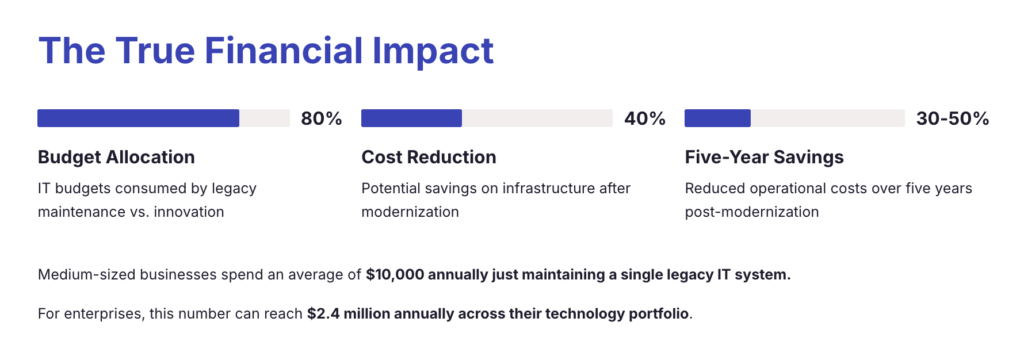
Maintenance consumes most of the IT budget
Security patches and compliance updates lag behind
Many organizations still run critical workloads on stacks like old Java versions, monolithic architectures, or tightly coupled on-premise infrastructure. These systems may function, but they actively resist growth.
The Illusion of “It Still Works”
One of the biggest misconceptions is that if a system works, it doesn’t need attention. In reality, legacy systems often:
Mask performance bottlenecks
Accumulate technical debt silently
Introduce hidden operational risks
The audit guide highlights that system failures in legacy environments are often hard to diagnose and expensive to fix . That’s not a technology issue — it’s a visibility issue.
The Hidden Cost of Technical Comfort Zones
Teams grow comfortable with what they know. But comfort comes at a cost:
Slower onboarding for new developers
Reduced agility in launching new features
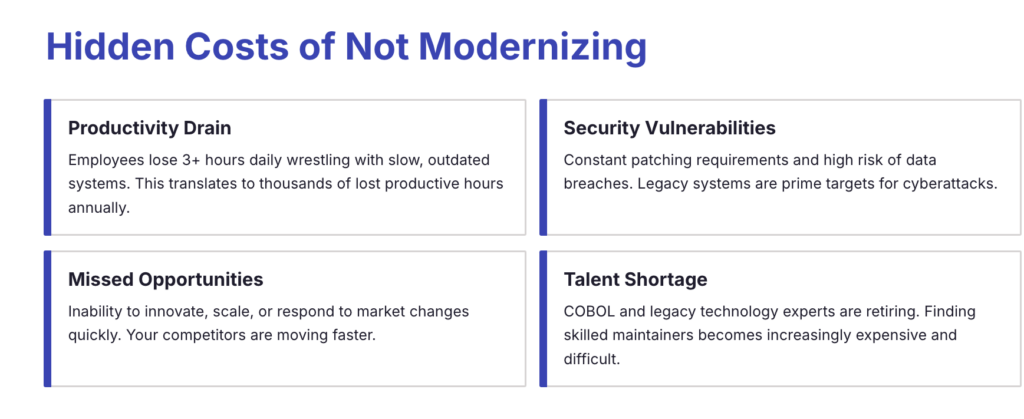
Increased dependency on specific individuals
A legacy system modernization audit shines a light on these blind spots, replacing gut feelings with measurable insights.
What Is a Legacy System Modernization Audit?
A Legacy System Modernization Audit is a structured, end-to-end assessment designed to evaluate how well an existing system supports business goals, technical sustainability, security, and financial efficiency.
Audit vs. Full Modernization
An audit is not modernization itself. It’s the decision engine behind modernization.
Instead of asking, “Should we modernize?”, the audit answers:
What should be modernized?
Why should it be modernized?
When is the right time?
How much value will it create?
This approach drastically reduces risk compared to jumping straight into large-scale transformation projects.
Why an Audit Is the Safest First Step
According to the assessment guide, Gart Solutions’ audit examines six critical dimensions — business value, technical health, security, functionality, operational risk, and cost. This 360-degree view ensures that modernization decisions are grounded in reality, not trends.
Strategic Outcomes vs. Tactical Fixes
Without an audit, teams often:
Over-modernize low-impact areas
Underestimate integration complexity
Miss quick wins that deliver fast ROI
An audit prioritizes actions based on impact, effort, and risk, creating a roadmap that balances ambition with pragmatism.
Who Needs a Legacy System Modernization Audit the Most
Legacy system challenges affect every role differently. That’s why the audit is designed to speak the language of technical leaders, business owners, and finance teams alike.
1/ CTOs and Heads of IT
For technical leaders, legacy systems mean:
Constant firefighting
Growing backlogs
Limited time for innovation
The audit identifies critical technical debt, outdated dependencies, and architectural constraints that slow teams down, providing a clear prioritization framework.
2/ CEOs and Business Owners
From a leadership perspective, legacy systems often:
Delay product launches
Limit scalability
Weaken competitive positioning
The audit connects technical realities directly to business outcomes, helping executives understand how technology choices impact growth and market agility.
3/ CFOs and Finance Leaders
For finance teams, the biggest frustration is uncertainty:
Unpredictable IT costs
Rising maintenance expenses
Unclear ROI on technology investments
A modernization audit uncovers hidden spending, compares maintenance vs. modernization costs, and quantifies savings opportunities — often revealing at least €5,000 in potential gains, as outlined in the offer section.
Key Business Risks of Skipping a Legacy System Modernization Audit
Skipping a legacy system modernization audit may seem like a time-saving decision, but in reality, it often creates a slow-burning risk that compounds over time. Many organizations only realize the true cost of legacy systems when something breaks — production downtime, security incidents, or missed market opportunities. By then, the damage is already done.
Escalating Maintenance Costs That Drain Innovation Budgets
One of the most common patterns seen in legacy-heavy organizations is budget imbalance. A disproportionate share of IT spending goes toward:
Keeping outdated systems alive
Paying for extended support contracts
Fixing recurring issues instead of building new capabilities
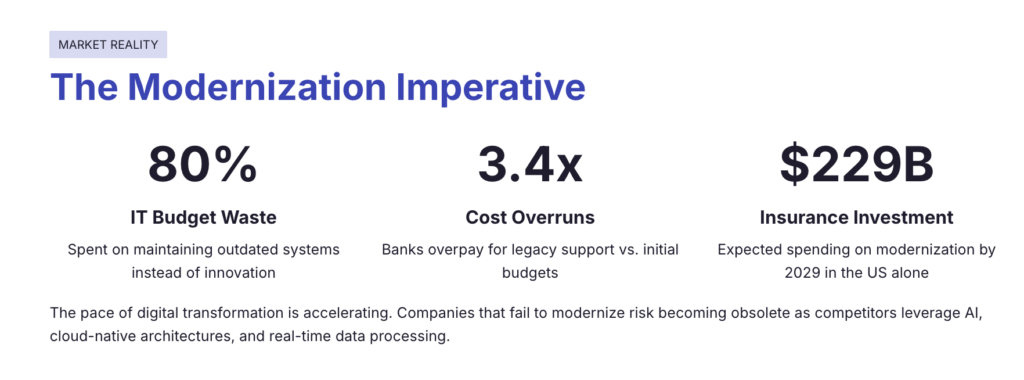
The assessment guide explicitly highlights this issue, noting that when most of the IT budget goes to maintenance rather than innovation, it’s a clear indicator that modernization ROI is being delayed unnecessarily. Without an audit, these costs remain fragmented across teams and vendors, making them difficult to quantify or challenge.
Security and Compliance Exposure
Legacy systems often rely on outdated libraries, unsupported frameworks, or undocumented integrations. This creates invisible security gaps that are easy to exploit and hard to fix quickly.
The Security Audit component of the modernization assessment focuses on:
Identifying vulnerabilities
Detecting data leakage risks
Highlighting compliance gaps (GDPR, CCPA, industry-specific regulations)
These risks are rarely isolated — they tend to cascade across interconnected systems. An audit surfaces these risks early, before they turn into incidents with legal or reputational consequences.
Innovation Paralysis and Competitive Decline
Perhaps the most dangerous risk isn’t technical at all—it’s strategic. When systems are hard to change, businesses stop experimenting. New ideas die in planning meetings because implementation feels “too risky.”
As Fedir Kompaniiets explains:
“Legacy systems don’t just slow development — they slow decision-making. When every change feels expensive, companies stop asking bold questions.”
A modernization audit breaks this paralysis by showing where change is safe, where it’s urgent, and where it delivers immediate value.
Core Components of a Legacy System Modernization Audit
A legacy system modernization audit isn’t a surface-level review. It’s a deep, structured assessment designed to uncover both obvious and hidden issues across technical and business dimensions.
According to the Assessment Guide, Gart Solutions evaluates six critical components, providing a complete picture of risks, opportunities, and modernization paths.
Business Value Assessment
This component answers a deceptively simple question: Is the system still aligned with the business?
The audit evaluates:
How well the system supports current business goals
Whether it enables or blocks future growth
Alignment with product, market, and customer expectations
Often, systems that are technically “fine” fail this test because business priorities have evolved while the software has not.
Technical Architecture and Code Audit
This is where technical reality meets documentation — or the lack of it.
The technical audit includes:
Code quality evaluation
Architecture review
Identification of outdated technologies (e.g., legacy Java, COBOL)
Dependency mapping across systems and third-party tools
The result is a clear understanding of technical debt, not as an abstract concept, but as actionable data.
Security and Compliance Review
Security audits focus on:
Vulnerability exposure
Access control weaknesses
Compliance gaps with regulations like GDPR or CCPA
Legacy systems are often compliant “by accident” rather than by design. The audit identifies where that luck may run out.
Functionality and User Fit Evaluation
This component assesses whether existing features still:
Meet internal user needs
Align with market expectations
Support efficient workflows
Many legacy systems are feature-rich but value-poor, overloaded with functionality that no longer matters.
Operational Risk Assessment
Operational risks include:
High dependency on specific individuals
Lack of documentation
Fragile deployment processes
Long recovery times after failures
The audit identifies critical failure points that pose immediate business risk.
Cost and ROI Analysis
Finally, the audit compares:
Current maintenance costs
Projected modernization investment
Expected savings and efficiency gains
This financial clarity turns modernization from a cost center discussion into a value creation conversation.
Technical Audit Deep Dive: What Really Gets Assessed
The technical audit is often the most eye-opening part of the entire process. It replaces assumptions like “the system is complex” with concrete evidence of why it’s complex — and what to do about it.
Tech Stack Review
The audit begins with a complete inventory of:
Programming languages
Frameworks
Libraries
Infrastructure components
Third-party integrations
Outdated or unsupported components are flagged immediately, especially those that pose scalability or security risks.
Dependency Mapping
Legacy systems rarely exist in isolation. Over time, they accumulate dependencies that:
Are poorly documented
Exist only in people’s heads
Break unexpectedly during updates
Dependency mapping visualizes these relationships, helping teams understand blast radius before making changes.
Code Quality and Technical Debt Assessment
This step evaluates:
Code maintainability
Test coverage
Duplication
Complexity hotspots
Instead of labeling everything as “bad code,” the audit distinguishes between acceptable legacy patterns and high-risk technical debt that must be addressed first.
Critical Failure Point Identification
The audit highlights areas where:
A single failure could halt operations
Recovery times are excessive
Monitoring and observability are insufficient
These insights often become immediate action items, even before full modernization begins.
Business and Financial Analysis: Turning Technology Into Numbers
Technical insights alone don’t drive executive decisions. That’s why the modernization audit places heavy emphasis on translating system health into financial impact.
Cost Breakdown and Hidden Spend
The audit compares:
Ongoing maintenance costs
Licensing fees
Infrastructure expenses
Support and downtime costs
According to the guide, many organizations underestimate total system cost because expenses are spread across departments.
Team Productivity Assessment
Productivity losses are often invisible:
Long onboarding times
Slow deployments
Manual workarounds
Frequent bug-fixing cycles
The audit identifies where time is lost and estimates its real cost to the business.
ROI Forecasting Models
Using collected data, the audit projects:
Cost savings
Efficiency gains
Reduced risk exposure
Improved time-to-market
This transforms modernization from a vague initiative into a measurable investment.
The Actionable Modernization Roadmap Explained
One of the most valuable outcomes of a legacy system modernization audit is not the diagnosis — it’s the roadmap. Without a clear, prioritized plan, even the most accurate insights remain theoretical. The audit converts findings into a structured modernization path that teams can actually execute.
According to the Assessment Guide, this phase translates insights into clear, practical next steps, aligned with business goals and realistic delivery constraints.
Prioritization Framework: What Comes First and Why
Not all modernization tasks deliver equal value. The roadmap ranks initiatives based on:
Business impact
Risk reduction
Implementation effort
Dependency constraints
This ensures teams focus first on actions that unlock momentum — often referred to as quick wins — before tackling deeper architectural changes.
Modernization Strategy Selection
Modernization is not one-size-fits-all. Based on audit findings, the roadmap recommends the most effective approach:
Optimizing existing systems
Gradual evolution through refactoring
Full re-architecture or replacement
This aligns closely with Gart Solutions’ broader IT modernization services, where audit-driven insights prevent overengineering and unnecessary rebuilds.
Implementation Timeline (3–12 Months)
The roadmap includes a realistic timeline outlining:
Key milestones
Required resources
Success metrics
This phased approach allows organizations to modernize without disrupting day-to-day operations — a critical factor for legacy-heavy environments.
Deliverables of a Legacy System Modernization Audit
An audit is only as valuable as what it leaves behind. Gart Solutions structures its audit deliverables to support decision-making, planning, and execution long after the assessment is complete.
Technical Health Report
This document provides:
System health ratings
Identified vulnerabilities
Outdated dependencies
High-risk components requiring immediate attention
It becomes a reference point for both internal teams and external vendors.
Cost Analysis Document
The financial deliverable compares:
Current operational costs
Projected post-modernization costs
Estimated savings and efficiency gains
This clarity helps CFOs justify modernization initiatives with confidence.
Modernization Roadmap
The roadmap outlines:
Step-by-step actions
Budget estimates
Resource allocation for 6–18 months
It acts as a living document that evolves with the organization.
Executive Strategy Session
Finally, Gart Solutions conducts a strategy walkthrough with stakeholders, ensuring findings are understood, questions are answered, and next steps are agreed upon collaboratively.
Real-World Use Cases: When Audits Changed the Outcome
While every organization’s legacy landscape is unique, certain patterns repeat across industries. Audit-first modernization consistently leads to better outcomes than reactive transformation.
Infrastructure Modernization Use Case
A mid-sized SaaS company struggled with frequent outages after moving partially to the cloud. An audit revealed that legacy on-prem components were tightly coupled with new infrastructure, creating hidden failure points.
Following the audit, the company aligned its strategy with IT infrastructure modernization best practices, decoupling workloads and reducing downtime significantly.
Legacy Application Re-Architecture Use Case
An enterprise platform relied on a monolithic application that slowed feature delivery. The audit showed that a full rewrite wasn’t necessary — only specific modules required refactoring.
This insight guided a targeted legacy application modernization initiative, accelerating releases while controlling costs.
Cost Optimization Through Audit-First Approach
Another organization assumed modernization would be too expensive. The audit uncovered excessive maintenance costs and unused licenses, revealing that modernization would pay for itself within a year.
As Fedir Kompaniiets notes:
“In many cases, the audit doesn’t create the modernization budget — it uncovers it.”
How Gart Solutions Approaches Legacy System Modernization Audits
What differentiates Gart Solutions is not just technical expertise, but a business-first philosophy.
Proven Audit Methodology
The audit combines:
Technical analysis
Business assessment
Financial modeling
Risk evaluation
This holistic view ensures recommendations are realistic and aligned with business priorities.
Flat-Fee, Risk-Free Model
The audit is offered at a transparent €950 flat fee, with a guarantee: if it doesn’t uncover at least €5,000 in potential savings or efficiency gains, 50% of the fee is refunded.
Business-First Modernization Philosophy
Rather than pushing technology trends, Gart Solutions focuses on outcomes — lower costs, faster delivery, and reduced risk.
How This Audit Connects to IT Infrastructure Modernization
Infrastructure modernization often fails when legacy application realities are ignored. The audit bridges this gap by identifying:
Infrastructure bottlenecks
Cloud readiness gaps
Workloads unsuitable for lift-and-shift
This makes subsequent IT infrastructure modernization initiatives more predictable and cost-effective.
Legacy Application Modernization Starts With Audit Insights
Choosing between refactoring, rebuilding, or replacing applications is one of the hardest decisions teams face. The audit removes guesswork by grounding decisions in data.
It also aligns organizations with industry benchmarks and proven practices highlighted among top legacy application modernization companies.
Expert Insight: Fedir Kompaniiets on Audit-Driven Modernization
Throughout modernization projects, one message remains consistent:
“An audit doesn’t slow modernization — it accelerates it by removing uncertainty.”
According to Fedir Kompaniiets, companies that start with audits move faster because they avoid rework, scope creep, and misaligned expectations.
How to Know If Your Business Needs a Legacy System Modernization Audit
You likely need an audit if:
Developer onboarding takes more than two weeks
System failures are hard to diagnose
Most of your IT budget goes to maintenance
These are not just technical issues — they are strategic signals.
Conclusion: Modernization Without an Audit Is a Gamble
Legacy system modernization is inevitable. The only question is whether it will be intentional or reactive. A legacy system modernization audit replaces uncertainty with clarity, risk with insight, and hesitation with confidence.
By starting with an audit, organizations don’t just modernize technology — they modernize decision-making.
Legacy-System-Modernization-Audit-Assessment-Guide-2-1
It’s 2026, and IT modernization is no longer a nice-to-have — it’s survival. Remember the early 2010s when companies were busy "going digital"? That era is officially over. We’re now deep in what experts call the “Intelligence Supercycle” — a time when AI doesn’t just support operations but runs them. From autonomous logistics to AI-managed data centers, the modern enterprise isn’t powered by people alone — it’s powered by infrastructure that thinks, acts, and evolves.
Why does this matter? Because failing to modernize your IT systems in 2026 means falling behind in every aspect of business: speed, cost, security, and even compliance. Legacy systems are no longer just slow — they’re dangerous liabilities. In this guide, we’ll walk you through everything you need to know, from technical architecture to real-world strategies.
In this article, we wiil uncover about the Strategy, AI, Cloud & find differences with Legacy Transformation.
Let’s dive in.
The Rise of the Intelligence Supercycle
In 2026, we’re witnessing a massive shift from digitization to operational autonomy. Businesses aren’t just using tech — they’re being run by it. According to recent research, global IT spending has surpassed $6 trillion, with a massive focus on:
Generative AI integration
Infrastructure upgrades
Preemptive cybersecurity
Companies are navigating what’s been dubbed the “Efficiency Paradox”: instead of hiring more people, they’re scaling faster through AI agents, automation, and cloud-native platforms.
Modernization is no longer about reducing costs — it’s about building digital muscles to survive in an AI-powered economy.
Understanding the Efficiency Paradox
So what exactly is this paradox? Simple: the traditional model of throwing more humans at problems no longer works. In 2026, the smartest companies aren't hiring more — they're doing more with less by leveraging automation and agentic AI.
This shift changes how businesses prioritize IT. It’s not a back-office function anymore. IT is the central nervous system — dictating how fast you can ship a product, respond to a customer, or fend off a cyberattack.
Modernization enables:
Real-time decision making
Hyper-personalization at scale
Integrated cybersecurity protocols
Lower operational costs
Want a real-world example? Gart Solutions helped a European financial institution reduce their response time for loan approvals from 2 days to under 20 minutes using a modernized AI decision engine integrated with real-time credit scoring APIs. That’s the power of ditching legacy systems.
Architecting for Autonomy: The Role of Agentic AI
We’ve officially moved past the “AI co-pilot” stage. In 2026, we’re in the Agentic AI Era, where autonomous systems don’t just assist, they act. That means your infrastructure must support real-time, intelligent collaboration between multiple AI agents — with little to no human input.
But here’s the catch: AI agents can’t operate effectively on legacy systems. They need:
Unified data layers
Cloud-native microservices
API-first design
Scalable orchestration tools
According to Gart Solutions, 75% of AI deployment failures stem from legacy friction — slow integrations, outdated databases, and siloed data. Their solution? A full-stack refactoring approach that aligns system architecture with AI agent workflows.
AI Supercomputing and Data Center Evolution
AI’s hunger for power and speed is driving a revolution in infrastructure. Traditional cloud-first data centers just can’t keep up. In 2026, we’re seeing:
Liquid cooling as a standard
Power densities reaching 150 kW per rack
AI-optimized chips blending CPUs, GPUs, and ASICs
High-performance AI clusters require low-latency, high-bandwidth environments. Networking giants now offer 51.2 Tbps routers, and even small businesses are deploying dedicated AI nodes at the edge.
Gart Solutions has been instrumental in designing scalable AI infrastructure for logistics firms needing real-time tracking and autonomous fleet operations, ensuring high availability and extreme performance.
Physical AI: From Code to Machines
AI is no longer just digital — it’s physical. We’re talking robots, drones, automated forklifts, and even smart manufacturing lines that self-correct defects in real time.
Industries embracing this include:
Manufacturing (robotic inspection systems)
Retail (autonomous shelf scanning)
Healthcare (AI-powered diagnostics in remote clinics)
One Gart Solutions project involved integrating a physical AI system into a food packaging plant. The result? A 38% reduction in waste and a 26% increase in production speed, thanks to intelligent conveyors and robotic sorting arms powered by AI feedback loops.
Sovereign Clouds and the Geopatriation Movement
Global businesses are now repatriating their workloads from international hyperscalers to local or sovereign cloud infrastructures. Why?
Geopolitical tensions
National data laws (like GDPR, EU AI Act)
Customer trust and compliance
The concept is called “Geopatriation”—and it’s becoming mainstream. In 2026, 75% of European enterprises have moved sensitive workloads to sovereign clouds.
Gart Solutions offers a Sovereign Cloud Enablement Framework that helps businesses balance compliance and capability without sacrificing performance. This includes hybrid cloud configurations, data residency mapping, and policy enforcement.
Sovereignty vs. Capability: Multi-Cloud Strategy in 2026
It’s not about choosing between public or sovereign — it’s about balancing both. The ideal 2026 cloud strategy is “hybrid-sovereign”. Here’s how it breaks down:
Deployment ModelJurisdictional ControlScaling AgilityUse CaseGlobal Public CloudLowHighCommodity apps, dev/test workloadsSovereign CloudHighRegulatedHealthcare, finance, citizen dataHybrid Sovereign CloudModerate-HighFlexibleMixed-use environmentsSovereignty vs. Capability: Multi-Cloud Strategy in 2026
Gart Solutions' cloud advisors recommend sovereign-aware orchestration platforms that give a single-pane view of compliance and workload agility across clouds.
Modern Data Architectures: Fabric Meets Mesh
Forget the debate — data fabric vs. mesh is over. In 2026, smart companies are combining both to create AI-native data ecosystems.
Data Fabric automates metadata management and integration across sources.
Data Mesh empowers domain teams to treat data as a product.
Together, they create Agentic Knowledge Layers — environments where AI agents can pull clean, real-time data with full context.
Gart Solutions used this hybrid approach for a multinational retailer, enabling hyper-personalized marketing using domain-specific language models (DSLMs). Result? 19% increase in customer retention.
Platform Engineering and Developer Autonomy
The DevOps era paved the way, but in 2026, Platform Engineering is the real star. The focus? Developer Experience (DevEx).
Key elements include:
Internal Developer Platforms (IDPs) for self-service
AI-native dev tools for real-time code generation
Security guardrails baked into pipelines
Gart Solutions’ DevEx team implemented a unified IDP for a SaaS company, reducing time-to-deploy from 2 weeks to under 4 hours. Developers were freed from infrastructure headaches and could focus purely on logic.
Edge Computing and the 5G Advanced Backbone
Mission-critical apps need instant response times, which means processing can’t wait for the cloud. Enter Edge AI + 5G Advanced.
Edge enables:
Local inference (on vehicles, wearables, cameras)
Offline functionality in remote areas
Lower data transfer costs
Combined with 5G Advanced, this creates a unified digital nervous system.
Gart Solutions recently worked with a transport authority to deploy onboard AI for route optimization. The edge inference system saved $2.3M annually in fuel costs and cut delivery times by 22%.
Cybersecurity in a Preemptive Era
In 2026, cyberattacks are automated, persistent, and AI-powered. We’ve officially exited the era of reactive defense. Now, cybersecurity is about prevention, prediction, and zero-trust enforcement from the inside out.
Here’s what modern security stacks include:
Confidential Computing: Keeps sensitive AI data encrypted, even while in use.
AI Security Platforms (AISPs): Protect models from data leakage, prompt injection, and adversarial attacks.
Disinformation Security: Detects deepfakes and digital forgeries.
Cybersecurity Mesh Architecture (CSMA): Decentralizes access control to follow users and data across environments.
Gart Solutions’ security modernization team helped a healthcare group deploy a confidential computing framework to handle sensitive patient data. This not only brought them into GDPR and HIPAA compliance, but also gave them real-time threat detection powered by AI analytics.
Their proactive security posture reduced breach incidents by over 85% year-over-year.
Legacy System Modernization: Tackling Technical Debt
Let’s talk legacy systems — the silent killers of agility, security, and innovation. In 2026, outdated systems cost businesses $370 million per year in maintenance and lost opportunities.
The smart approach? Treat modernization like paying off “technical debt.” And yes, it has metrics:
MetricDefinitionBenchmarkTechnical Debt Ratio (TDR)Remediation Cost ÷ Build CostLower is betterChange Failure RateHotfixes per deployment< 5%Lead TimeIdea to production< 1 dayMaintenance vs Feature RatioOps vs Innovation> 60% on featuresLegacy System Modernization: Tackling Technical Debt
Gart Solutions specializes in AI-assisted legacy modernization. Their proprietary tool scans COBOL, Java, and C# codebases and auto-generates microservices, reducing rewrite costs by 40%. For one client in banking, this cut go-to-market time by 9 months and saved $6.1M.
Sustainable IT and ESG Compliance
Sustainability is no longer a CSR checkbox — it’s a legal-grade mandate in 2026. Enterprises are being held accountable not just for profit, but for planetary impact.
Key ESG modernization trends include:
Scope 3 Emissions Tracking: Capturing supplier carbon data in real-time
ESG Data Infrastructure: Integrating with ERP and facilities systems
Green AI: Using optical and liquid-cooled computing to reduce emissions
Lifecycle Management: Extending hardware life via modular upgrades
Gart Solutions implemented a real-time ESG dashboard for a global retail chain, integrating APIs from suppliers, warehouses, and logistics vendors. They moved from spreadsheet-based estimates to verifiable emissions reports, enabling them to win new government contracts tied to green compliance.
Segmented Strategies: SMBs vs. Enterprises
Modernization isn’t one-size-fits-all. The right approach depends on your size, resources, and risk profile. Here’s how 2026 strategies break down:
1. The SMB Playbook (1–99 employees): "The Renter"
Focus: Turnkey AI + Managed Services
Tools: SaaS with embedded AI (e.g., accounting, marketing, CRM)
Strategy: Fix high-risk gaps like cloud cost overrun and cyber vulnerabilities
Gart Solutions offers “Modernization-in-a-Box” for SMBs, combining cloud setup, AI integrations, and cybersecurity tools at a fixed monthly price.
2. The Midmarket Plan (100–999 employees): "The Scaler"
Focus: Consolidation + Data Fabric
Goal: Eliminate point solution sprawl, unify data for AI
Gart’s Unified Intelligence Layer (UIL) has helped midmarket firms slash API costs by over 30% by reducing redundant tool stacks.
3. The Enterprise Blueprint (1000+ employees): "The Builder"
Focus: Sovereign Intelligence + AI Governance
Tools: Internal developer platforms, AI TRiSM, sovereign cloud
For a major insurance provider, Gart delivered an AI Governance Framework with real-time visibility into model lineage and explainability, required by the EU AI Act.
Phase-by-Phase IT Modernization Roadmap
Ready to modernize? Follow this 5-phase roadmap based on real enterprise implementations:
Phase 1: Comprehensive Audit
Inventory systems, licenses, “dark data”
Identify zombie apps and shadow IT
Phase 2: Strategic Alignment
Set outcome-based goals: e.g., reduce call wait time by 60%, increase real-time analytics usage
Phase 3: Initiative Prioritization
Use a 2x2 matrix (Effort vs. Impact) to plan:
Quick Wins
Strategic Bets
Delays
Distractions
Phase 4: Budgeting
Plan for hidden costs: training, data cleanup, migration time
Phase 5: Governance & KPIs
Track OKRs like:
Deployment velocity
Data quality index
User adoption rate
Technical Debt Ratio (TDR)
Gart Solutions’ “Digital Core Health Check” is a popular Phase 1–2 tool. It evaluates over 200 modernization indicators to fast-track the right roadmap.
Measuring Modernization ROI in 2026
Forget vanity metrics like “number of tools” or “uptime.” In 2026, ROI is all about business outcomes.
Modernized enterprises see:
14% annual revenue increase
74% decrease in infrastructure costs
35% higher customer retention due to better experience
Track success using:
MetricWhat it MeasuresCustomer Lifetime Value (CLV)Are you keeping and growing customers?Governance QualityIs your data accurate, compliant, and auditable?Developer ProductivityCan your team ship faster and fix bugs sooner?Feature VelocityAre new features reaching customers monthly?How to Measure the IT Modernization ROI in 2026
Conclusion: The New Mandate for IT Leaders
2026 has made one thing clear: modernization is not optional — it’s survival. Whether you’re a 20-person startup or a Fortune 500 giant, your IT stack defines your ability to innovate, scale, and stay secure.
Gart Solutions has proven that with the right strategy, tech stack, and team, even the most complex legacy ecosystems can become future-ready powerhouses. They’ve helped organizations reduce technical debt, improve compliance, and deploy AI across every function — from supply chain to sales.
The question is: Are you ready to modernize, or are you waiting to fall behind?
IT-Modernization-2026-Ultimate-Guide-2Download
By 2026, legacy application modernization has moved from a long-term IT initiative to an immediate business survival requirement. The global outages of July 2024 exposed a harsh reality: outdated, tightly coupled systems are not just inefficient — they are systemic risks. Enterprises that relied on monolithic architectures and brittle infrastructure experienced cascading failures, while organizations that had already invested in cloud-native, modular platforms demonstrated resilience, rapid recovery, and operational continuity.
For technology leaders, this moment marked the beginning of what many now call the great legacy reckoning. Legacy systems are no longer a neutral inheritance from the past; they function as an unseen mortgage on innovation, agility, and AI adoption. Modernization is no longer about cost optimization alone — it is about removing architectural barriers that prevent enterprises from competing in an AI-driven, real-time digital economy.
At Gart Solutions, we observe this shift across industries daily. Companies that modernize strategically unlock resilience, faster innovation cycles, and the ability to scale AI initiatives with confidence. Those that delay face compounding technical debt, rising operational costs, and shrinking strategic options.
Legacy Systems as a Business Constraint, Not a Technical Problem
Legacy applications are typically defined by monolithic design, aging codebases, and infrastructure assumptions that predate cloud computing. While many of these systems still function, they consume a disproportionate share of IT budgets — often between 60% and 80% — leaving little room for innovation. At the same time, the talent required to maintain legacy stacks is becoming scarce and expensive, with compensation for niche skills increasing sharply year over year.
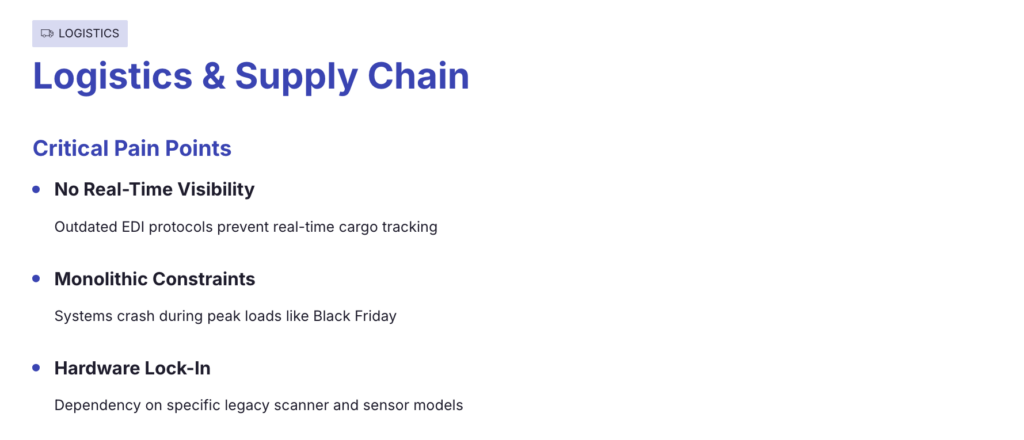
More critically, legacy architectures block modern capabilities. Artificial intelligence, real-time analytics, event-driven systems, and autonomous agents all require API-first design, elastic infrastructure, and high-quality data pipelines. Legacy systems, built around batch processing and tightly coupled logic, cannot meet these demands without structural change.
This is why modernization must be framed as a business transformation initiative, not a backend refactor. The goal is not simply to make old systems cheaper to run, but to restore strategic velocity.
The Multi-Dimensional Nature of Technical Debt
Technical debt in 2026 is best understood as a multi-layered risk that affects operations, security, compliance, and long-term growth. It is no longer confined to poorly written code; it spans architecture, infrastructure, data, and organizational processes.
Architectural debt manifests as tightly coupled monoliths that cannot scale or evolve independently. Code debt appears as undocumented logic that increases regression risk with every change. Infrastructure debt locks organizations into static, manually provisioned environments that cannot leverage cloud elasticity. Security debt exposes enterprises to regulatory violations and cyber threats. Data debt, perhaps the most underestimated, prevents organizations from extracting value through AI and advanced analytics.
Unmanaged technical debt directly slows delivery. Engineering teams routinely spend 20% to 40% of their time compensating for legacy constraints, while organizations with unresolved architectural debt experience significant delays in AI adoption due to data and platform limitations.
Modernization begins by quantifying this debt, translating it into financial, operational, and risk-based metrics that executives can act upon.
DevOps as the Engine of Legacy Application Modernization
From a DevOps perspective, modernization is the replacement of fragile, manual processes with automated, repeatable delivery systems. Legacy environments typically rely on sequential SDLC models, long release cycles, and environment inconsistencies that make every deployment a risk event.
Modern DevOps practices collapse these silos by embedding automation, feedback, and shared responsibility across the lifecycle. Continuous Integration and Continuous Delivery pipelines become the backbone of this transformation.
CI/CD acts as a technical debt payoff engine. Automated testing, security scanning, and validation identify defects early, reducing stabilization phases and lowering failure rates. Infrastructure as Code complements this by ensuring that environments are consistent, auditable, and reproducible across development, staging, and production.
Equally important is cultural alignment. DevOps maturity requires moving from blame-driven incident response to shared ownership of reliability and performance. Organizations that invest in this cultural shift experience significantly fewer disruptions during modernization and achieve faster, safer releases.
Cloud-Native Evolution: Beyond Lift-and-Shift
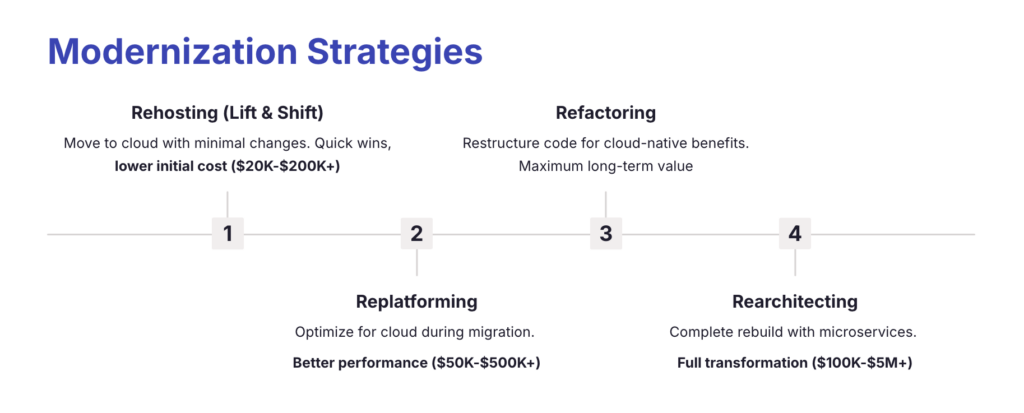
Cloud adoption is often mistaken for modernization. Simply moving a legacy application to cloud infrastructure without architectural change — a lift-and-shift approach — frequently results in higher costs and minimal agility gains. This phenomenon, sometimes called modernization theater, delivers none of the cloud’s true advantages.
Effective modernization aligns with one of the established cloud migration strategies, often described as the 7 R’s. These range from rehosting and replatforming to full refactoring, repurchasing SaaS solutions, retaining or retiring systems, and relocating virtualized environments.
Choosing the right strategy requires balancing speed, risk, and long-term value. In practice, most enterprises apply multiple strategies across their application portfolio, prioritizing high-impact systems for deeper transformation while handling lower-value workloads pragmatically.
Containerization and Kubernetes as a Modernization Layer
Containerization plays a pivotal role in decoupling applications from legacy infrastructure. By packaging applications with their runtime dependencies, containers provide consistency across environments and enable gradual modernization without full rewrites.
Kubernetes adds orchestration, enabling dynamic scaling, self-healing, and automated deployment. This is particularly valuable for legacy workloads with unpredictable demand patterns. When paired with cost-optimization mechanisms such as spot instances, containerized platforms can dramatically reduce infrastructure spend while improving reliability.
At Gart Solutions, we regularly see containerization serve as a bridge between legacy systems and cloud-native architectures, enabling incremental progress without operational disruption.
Digital Transformation and the AI Imperative
In 2026, digital transformation is inseparable from artificial intelligence. Yet most AI initiatives fail to scale because the underlying systems were never designed to support them. Legacy platforms silo data, lack real-time access, and cannot integrate cleanly with modern models.
Modernization is therefore the prerequisite for AI at scale. It enables API-driven access, event-based data flows, and the observability required for trustworthy automation.
AI is also transforming the modernization process itself. Large Language Models can analyze massive legacy codebases to extract business logic, generate documentation, and identify refactoring candidates. However, successful organizations treat AI as an assistant, not an autonomous decision-maker. Human governance remains essential to ensure correctness, security, and compliance.
Looking ahead, enterprises are moving toward agentic architectures, where autonomous agents collaborate with humans to execute business processes. Without a modernized core — particularly ERP and data platforms — these initiatives deliver minimal business impact.
Incremental Modernization Patterns That Actually Work
One of the most common modernization failures is the big-bang rewrite. Large-scale replacements promise clean architectures but often collapse under their own complexity.
Modern enterprises favor incremental patterns such as the Strangler Fig approach, where new services gradually replace legacy functionality behind a proxy or API gateway. This allows organizations to deliver value continuously, validate changes in production, and reduce risk.
Composable architecture builds on this idea by decomposing systems into modular business capabilities that can evolve independently. This approach creates long-term resilience and positions the organization for continuous change rather than episodic transformation.
Data Modernization: Preparing for Intelligence at Scale
Data is the fuel of digital transformation, yet it is often the hardest component to modernize. Legacy data is frequently locked in outdated schemas, proprietary formats, or batch-oriented pipelines.
Modernization requires more than migration. Data must be cleansed, validated, enriched with metadata, and made accessible through real-time pipelines. Zero-downtime strategies such as change data capture and parallel replication allow enterprises to modernize without disrupting critical operations.
By 2026, data platforms are expected to be agent-ready, providing clear lineage, governance, and context so that AI systems can operate safely and effectively.
Industry-Specific Realities
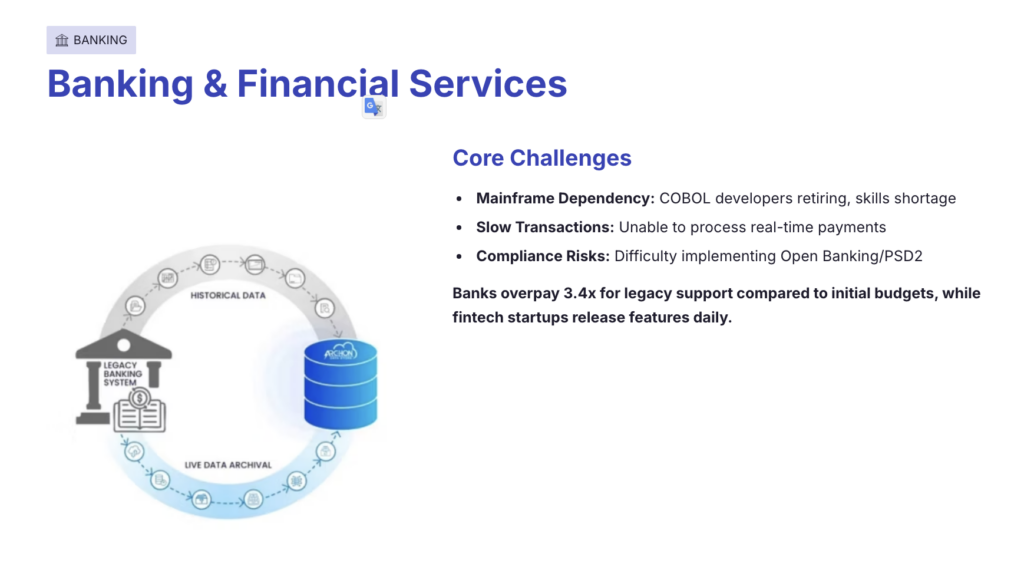
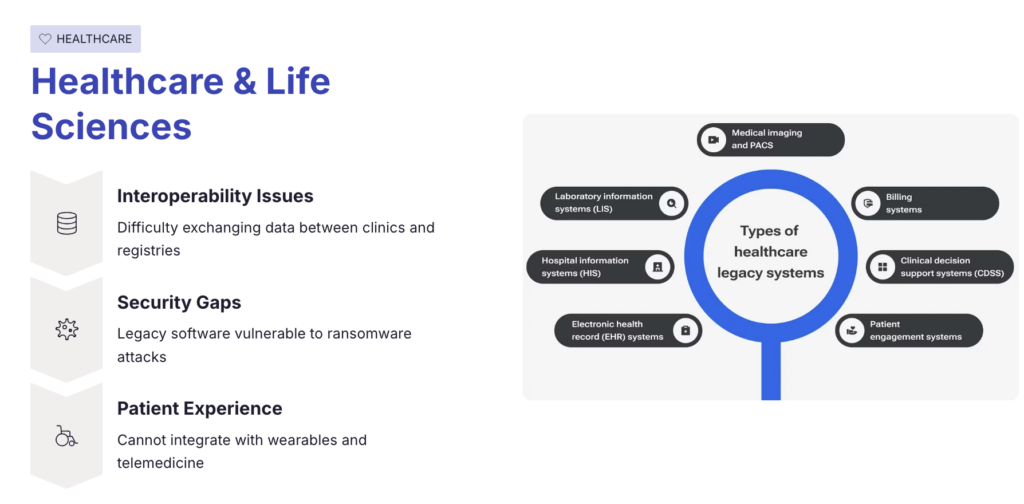
Modernization outcomes vary by sector. In healthcare, compliance, interoperability, and patient safety drive priorities. In banking and fintech, resilience and real-time processing are critical to competing with digital-native challengers. In GreenTech and environmental monitoring, platform engineering and global scalability define success.
Across all sectors, the common thread is the need for architectures that can evolve continuously while meeting regulatory and operational constraints.
Measuring ROI and Overcoming Common Pitfalls
Modernization requires investment, but the cost of inaction is often higher. Successful programs track ROI across infrastructure savings, delivery velocity, security posture, and business outcomes such as customer experience and revenue growth.
Most failures stem from predictable pitfalls: treating modernization as a purely technical effort, attempting all-or-nothing rewrites, ignoring data quality, underestimating skill gaps, or operating without real-time visibility.
Avoiding these mistakes requires executive alignment, phased delivery, and strong DevOps governance.
Governance, Security, and Compliance in Modernized Architectures
As legacy systems are decomposed and distributed, governance becomes more critical—not less. Modernization increases the number of components, APIs, data flows, and deployment pipelines. Without a strong governance model, organizations risk replacing monolithic fragility with distributed chaos.
From a security perspective, legacy environments often rely on perimeter-based defenses that assume trust within the network. Cloud-native modernization requires a zero-trust security model, where every request is authenticated, authorized, and observed regardless of origin.
Key modernization-aligned security principles include:
Identity-first architecture, using centralized identity providers and fine-grained access control
Secrets management through tools like Vault or cloud-native secret stores
Shift-left security, embedding vulnerability scanning and policy checks directly into CI/CD pipelines
Runtime protection and observability, ensuring threats are detected and mitigated in real time
Compliance also changes shape. Instead of manual audits and static documentation, modern platforms enable compliance as code, where policies are enforced automatically and continuously. This approach dramatically reduces audit fatigue while increasing confidence in regulatory adherence across healthcare, fintech, and enterprise SaaS environments.
Platform Engineering: Scaling Modernization Beyond Individual Teams
As organizations modernize multiple systems in parallel, DevOps practices alone are not enough. This is where platform engineering emerges as a force multiplier.
Platform engineering focuses on building internal developer platforms (IDPs) that abstract infrastructure complexity behind standardized, self-service interfaces. Rather than every team reinventing pipelines, environments, and deployment patterns, the platform provides opinionated defaults aligned with security, compliance, and cost-efficiency standards.
For legacy application modernization, platforms deliver three critical advantages:
Consistency: Every modernized service follows the same deployment, observability, and security patterns
Speed: Teams focus on business logic instead of infrastructure decisions
Scalability: Modernization efforts can scale across dozens of teams without losing control
At Gart Solutions, platform engineering is often the difference between isolated modernization success and organization-wide transformation, especially in regulated or fast-scaling industries.
Platform Engineering vs. DevOps in Modern Application Modernization
DimensionDevOpsPlatform EngineeringPrimary GoalImprove speed and reliability of software deliveryEnable teams to build, deploy, and operate software through a standardized internal platformCore FocusCI/CD automation, collaboration between Dev & OpsDeveloper experience (DevEx), abstraction of infrastructure complexityRole in ModernizationHelps modernize delivery pipelines for legacy and new appsProvides a scalable foundation to modernize multiple applications consistentlyOperating ModelShared responsibility across product teamsDedicated platform team serving internal product teamsLevel of AbstractionLow to medium – teams interact directly with tools and infraHigh – infrastructure and tooling exposed via self-service interfacesTooling ScopeCI/CD, config management, monitoring, IaCGolden paths, internal developer portals, opinionated stacksScalability for Large EnterprisesBecomes complex as number of teams and services growsDesigned to scale across dozens or hundreds of teamsImpact on Legacy SystemsImproves deployment and reliability of existing systemsEnables gradual modernization without disrupting legacy coresDeveloper ExperienceDepends heavily on team maturityCentralized, consistent, and optimized by designGovernance & StandardsOften implicit or team-definedBuilt-in governance, security, and complianceTime to ValueFast for individual teamsCompounding value across the organization over timeRisk in Modernization ProgramsTool sprawl, inconsistent practicesOver-engineering if platform is built without clear product mindsetBest Fit ForSmall–mid teams modernizing deliveryEnterprises modernizing at scaleRelationship Between ThemCultural and technical foundationEvolution and formalization of DevOps practices
Legacy Application Modernization Roadmapping
Successful legacy application modernization does not follow a fixed endpoint or a one-time transformation plan. Instead, it requires a living roadmap that evolves alongside business priorities, technology shifts, and organizational maturity.
The process begins with a clear assessment phase: understanding technical debt, architectural constraints, operational risks, and business criticality across systems. This is not merely a technical audit, but a strategic exercise that aligns applications with revenue streams, customer impact, compliance exposure, and future growth plans. Without this alignment, modernization efforts risk optimizing the wrong systems first.
From there, organizations move into incremental execution. Rather than large-scale rewrites, effective roadmaps prioritize gradual decoupling, API exposure, modularization, and cloud-native enablement where it creates measurable value. Modernization becomes a sequence of controlled steps—each delivering business outcomes, reducing risk, and enabling faster change.
Crucially, the roadmap must remain adaptive. Market conditions, regulatory requirements, and platform capabilities will change. A modernization program that cannot adjust its priorities becomes another form of legacy. The most resilient organizations treat modernization as a continuous capability, embedded into delivery cycles, funding models, and governance structures—not as a finite project with a fixed end date.
Legacy Application Modernization in the Age of Agentic AI
As agentic AI systems move from experimentation into production, the limitations of legacy architectures become increasingly visible. Autonomous agents rely on clean data access, predictable system behavior, real-time orchestration, and secure interfaces—conditions that tightly coupled, opaque legacy systems struggle to provide.
Modernization is therefore a prerequisite for meaningful AI adoption. Without service-based architectures, event-driven pipelines, and well-defined APIs, AI agents are constrained to surface-level automation rather than true decision-making or execution. Legacy systems may still store critical business logic, but without modernization, that logic remains inaccessible to intelligent systems.
In this context, modernization is not about replacing systems to “add AI later.” It is about restructuring the enterprise so AI can operate safely and effectively within it. This includes standardizing data models, improving observability, enforcing governance, and enabling fine-grained control over system actions—all essential for trustworthy autonomous behavior.
Organizations that modernize with agentic AI in mind gain a structural advantage. They are able to experiment faster, deploy AI-driven workflows responsibly, and scale intelligence across functions. Those that delay modernization may find that AI investments fail to deliver returns—not because the models are weak, but because the underlying systems were never designed to support autonomous operation.
Final Thoughts
Legacy application modernization is often justified through efficiency gains, cost reduction, or performance improvements. While these benefits are real, they undersell the true value of modernization in today’s environment. At its core, modernization is a form of strategic insurance.
Modernized systems provide optionality. They allow organizations to respond to regulatory changes, adopt new technologies, enter new markets, and withstand operational shocks without destabilizing the core business. They reduce dependency on fragile architectures and scarce skill sets, replacing them with adaptable platforms and repeatable practices.
In an era defined by rapid technological shifts and increasing automation, the cost of inaction grows silently. Systems that cannot evolve become strategic liabilities, limiting innovation and increasing risk over time. Modernization mitigates that risk by ensuring the organization remains structurally capable of change.
Ultimately, modernization is not about chasing trends or future-proofing in the abstract. It is about preserving decision-making power. Organizations that invest in modernization retain control over their technology trajectory, while those that delay increasingly have it dictated to them.
Ready for the Legacy System Modernization Audit?
Discover how outdated systems can be transformed into your competitive advantage!
Download this PDF and contact us to conduct the legacy assessment.
Legacy-System-Modernization-Audit-Assessment-Guide-2Download