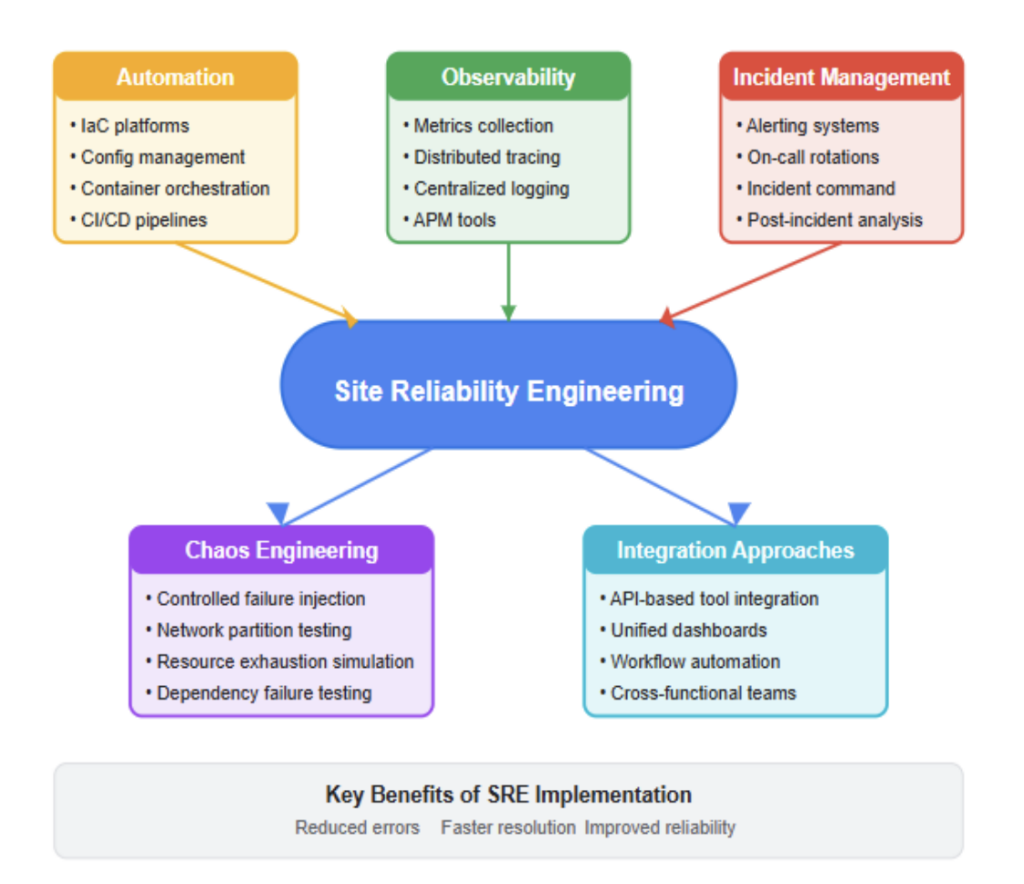
Ask five engineering leaders to define SRE vs. DevOps vs. Platform Engineering and you'll get five overlapping, slightly contradictory answers — and that's not because the concepts are vague, but because most organizations adopted all three in the wrong order, bolting on whichever one solved this quarter's fire rather than deciding deliberately which discipline to invest in first. All three exist to answer a version of the same question — "how do we ship software reliably, quickly, and without burning out the team that runs it?" — but they answer it from different angles, with different owners, different day-to-day work, and different success metrics.
Gart Solutions runs dedicated SRE, DevOps consulting, and platform engineering practices specifically because these three disciplines solve genuinely different problems, and most engineering teams need some blend of all three at different points in their growth — not a single hire who's somehow expected to be all three at once. This guide breaks down what each discipline actually does, where they overlap, where they diverge, and how to decide which one your organization needs first.
[lwptoc]
SRE vs. DevOps vs. Platform Engineering Comparison Table
Here's the fastest way to see where each discipline sits, before the deeper explanation of each one below:
DimensionSREDevOpsPlatform EngineeringFocus and ScopeReliability, availability, and performance of production systemsIntegrating development and operations for faster, safer software deliveryBuilding self-service internal platforms that let developers ship without needing deep infra knowledgeCore QuestionAre we meeting our reliability targets?How fast and safely can we ship?Can developers get what they need without waiting on us?Skill SetSystem architecture, scalability, fault tolerance, incident responseAutomation, CI/CD, infrastructure as code, cross-team collaborationPlatform/product design, developer experience (DX), API and tooling designPrimary OutputSLOs, error budgets, incident postmortems, on-call runbooksPipelines, deployment automation, infrastructure-as-code modulesGolden paths, self-service portals (e.g. Backstage-style), internal APIsOrganizational PlacementOften embedded with or adjacent to operations, close to production ownershipCross-functional, bridging development and operations teamsA dedicated platform team treating developers as internal customersTime HorizonLong-term reliability, monitoring, incident responseShort-term, iterative — rapid, frequent deploymentsMedium-to-long-term — building durable, reusable paved roadsKey MetricsSLIs, SLOs, error budget burn rate, MTTRDeployment frequency, lead time for changes, change failure rateDeveloper onboarding time, self-service adoption rate, cognitive loadBest PracticesBlameless postmortems, error budget policies, proactive monitoringAutomation-first, infrastructure as code, continuous integration/deliveryPlatform-as-a-product mindset, golden paths, self-service over ticketsOverall GoalReliable, available systems through engineering disciplineFaster, more reliable delivery through cultural and technical changeReduced cognitive load and faster delivery through reusable infrastructureSRE vs. DevOps vs. Platform Engineering Comparison Table
In practice these three aren't mutually exclusive tiers you pick one of — most mature engineering organizations run all three simultaneously, with platform engineering increasingly built as the mechanism that delivers both SRE and DevOps practices as reusable, self-service capabilities rather than as manual work performed on request.
Building the Bridge: Introducing Our Expertise in SRE & DevOps
At Gart, we have a team of highly skilled specialists who bring a wealth of experience in various aspects of cloud architecture, DevOps, and SRE. Let's take a closer look at some of our talented professionals:
Roman Burdiuzha, Co-founder & CTO of Gart, is a Cloud Architecture Expert with over 13 years of professional experience. With a strong background in Azure and 10 years of experience in the field, Roman has also developed expertise in GCP. He is a Kubernetes expert, well-versed in Azure AKS, Amazon EKS, and Google GKE, and has deep knowledge of infrastructure-as-code tools like Terraform and Bicep. Roman's proficiency extends to cloud architecture, migration, and configuration and infrastructure management.
Fedir Kompaniiets, Co-founder of Gart, is an accomplished DevOps and Cloud Architecture Expert with 12 years of professional experience. He has a solid foundation in AWS, with over 10 years of experience, as well as expertise in Azure and GCP. Fedir excels in Kubernetes, specializing in Azure AKS, Amazon EKS, and Google GKE. His skills encompass various areas, including DevOps practices, cloud consulting, cost optimization, and infrastructure-as-code using tools like Terraform and CloudFormation. Fedir is also well-versed in cloud logistics, migration, and automation.
While both Roman and Fedir possess a strong DevOps background, their extensive experience and proficiency in cloud architecture make them suitable candidates for SRE roles as well. In today's dynamic tech landscape, the boundaries between DevOps and SRE are often blurred, with professionals like Roman and Fedir seamlessly bridging the gap between the two disciplines.
In addition to Roman and Fedir, we have other talented specialists at Gart who contribute to our DevOps and SRE initiatives:
Yevhenii K is a skilled DevOps engineer with nearly four years of experience working on different projects. His expertise lies in AWS, Docker, and Java development, particularly in Java SE and Java EE frameworks.
Eugene K is an energetic DevOps evangelist who has played a key role in on-prem to Azure Cloud migrations, including transitioning from self-hosted TFS server to ADO. His focus is on simplicity and user-friendliness in the solutions he implements.
Andrii M is a qualified DevOps Engineer with experience in web services and server deployment and maintenance. His proficiency extends to VMware Cloud Infrastructure Administration, cloud network administration, and Linux/Windows server administration.
These specialists collectively bring a diverse set of skills and knowledge to our projects, enabling us to tackle complex challenges in both DevOps and SRE domains. While Roman and Fedir possess a strong foundation in both disciplines, Yevhenii, Eugene, and Andrii primarily contribute to our DevOps initiatives.
At Gart, we recognize the importance of having specialists who can seamlessly navigate the realms of SRE and DevOps, allowing us to deliver reliable and efficient software solutions while maintaining a strong focus on system reliability and performance.
Ready to level up your software delivery with top-notch DevOps services? Contact us today and let our experienced team empower your organization with streamlined processes, automation, and continuous integration.
What Is SRE?
Site Reliability Engineering (SRE) is a discipline that originated at Google and has since spread across the industry: it applies software engineering practices to operations problems, treating reliability itself as a feature to be engineered, measured, and budgeted for rather than something that happens by accident. As Google's own SRE workbook explains, SRE is best understood as a specific, prescriptive implementation of DevOps principles, with a small number of concrete practices — SLOs, error budgets, and blameless postmortems chief among them — that give the broader DevOps philosophy a measurable operating model.
An SRE's day-to-day work centers on defining Service Level Indicators (SLIs) and Service Level Objectives (SLOs), managing error budgets that balance the pressure to ship new features against the need to protect reliability, running on-call rotations, and leading incident response and blameless postmortems after something breaks. Our own practical exploration of SRE covers the four Golden Signals (latency, errors, traffic, and saturation) that most SRE monitoring is built around, and how they connect to SLOs in day-to-day practice.
What Is DevOps?
DevOps is a cultural and technical movement that breaks down the traditional wall between development and operations teams, replacing handoffs and silos with shared ownership of the entire software delivery lifecycle. Where SRE is a specific, metrics-driven implementation of reliability practices, DevOps is the broader philosophy — automate everything that can be automated, deploy in small frequent batches instead of large risky releases, and make development and operations jointly accountable for what happens once code reaches production.
Common DevOps practices include continuous integration and continuous delivery (CI/CD) pipelines, infrastructure as code (Terraform, Ansible, Pulumi), containerization and orchestration (Docker and Kubernetes), and configuration management. Gart's AWS DevOps services and broader DevOps consulting practice typically start exactly here — CI/CD pipeline design, infrastructure automation, and cloud cost optimization — before a team's scale or compliance needs justify a dedicated SRE or platform engineering investment on top.
What Is Platform Engineering?
Platform engineering is the newest of the three disciplines, and it exists to solve a problem that emerges only after DevOps and SRE practices have already matured: every team reinventing the same CI/CD pipeline, the same Kubernetes cluster setup, and the same monitoring stack independently, with no shared, reusable foundation. A platform team builds and maintains an internal developer platform (IDP) — self-service tooling, "golden path" templates, and internal APIs — that lets application developers provision infrastructure, deploy services, and access observability without filing a ticket or learning Terraform themselves.
The core mental model is "platform as a product": the platform team treats its internal developers as customers, measures adoption and satisfaction the way a product team would, and prioritizes work based on what actually reduces cognitive load rather than what's technically interesting to build. This adoption curve is no longer a niche bet — Gartner projects that 80% of large software engineering organizations will have a dedicated platform engineering team by the end of 2026, up from just 45% in 2022, and the 2025 DORA State of DevOps report found internal developer platform usage is now near-universal (90% of surveyed organizations) with 76% running a dedicated platform team — and that high-maturity platform teams report 40-50% reductions in developer cognitive load as a direct result.
Why "thinnest viable platform" matters: the CNCF's Platforms Whitepaper warns against over-building — a platform team's job is to ship the smallest set of paved-road capabilities that removes real friction, not to build every possible abstraction developers might theoretically want. Gart's platform engineering services are scoped around this principle: start with the one or two golden paths causing the most day-to-day friction, prove adoption, then expand.
Key Differences Between SRE, DevOps, and Platform Engineering
The comparison table above covers the summary view — a few of these differences are worth unpacking further, since they're the ones that actually drive hiring and org-design decisions:
Focus and Scope
SRE is scoped to production reliability specifically — uptime, latency, and incident response for systems already running. DevOps is scoped to the entire delivery pipeline — how code gets from a developer's laptop into production safely and quickly. Platform engineering is scoped even more broadly than either: it's about the tooling and infrastructure that make both SRE and DevOps practices repeatable and self-service across every team, rather than reinvented team-by-team.
Skill Set and Organizational Placement
SREs typically come from a systems or infrastructure background and sit close to production ownership, often within or adjacent to operations. DevOps engineers bridge development and operations directly, embedded within or working closely with product teams. Platform engineers increasingly come from a product or developer-experience background as much as an infrastructure one — designing internal APIs and self-service tooling is a genuinely different skill from either running production systems or building CI/CD pipelines.
Metrics and Measurement
SRE lives and dies by SLIs, SLOs, and error budget burn rate. DevOps is measured by the four DORA metrics — deployment frequency, lead time for changes, change failure rate, and time to restore service. Platform engineering is measured differently again: developer onboarding time, self-service adoption rate (how often developers use the golden path vs. going around it), and reduction in cognitive load — metrics about developer experience, not system behavior.
SLAs, SLOs, and SLIs Across All Three Disciplines
Service Level Agreements (SLAs), Service Level Objectives (SLOs), and Service Level Indicators (SLIs) originate in SRE practice, but all three disciplines end up depending on them. An SLI is a direct measurement — say, the percentage of requests served without error. An SLO is the target for that SLI over a rolling window — "99.5% of requests return a non-5xx response over 28 days." An SLA is the external, often contractual commitment built on top of an SLO, typically with financial or reputational consequences attached if it's missed.
DevOps teams use SLOs to decide how much deployment risk is acceptable this week — a healthy error budget means room to ship faster; a nearly exhausted one means prioritizing stability over new features. Platform teams increasingly define their own internal SLOs too — not for the production system, but for the platform itself: how quickly a self-service request gets fulfilled, how often the golden path succeeds without manual intervention. The same discipline — turning a fuzzy goal into a measurable target — applies whether the "customer" is an end user or an internal developer.
Which Discipline Does Your Organization Need First?
Very few organizations need all three at once, and trying to build them simultaneously is a common way to under-deliver on every one. A rough sequencing that holds up across most growth-stage companies:
Your SituationStart WithWhyManual deploys, slow release cycles, no CI/CDDevOpsAutomating the delivery pipeline is almost always the highest-leverage first investment — nothing else compounds until releases are fast and repeatableFrequent outages, no clear reliability targets, firefighting cultureSRESLOs and error budgets give the org a shared, data-driven language for the build-fast vs. stay-stable tradeoff that's currently being argued about informallyMultiple product teams each reinventing infrastructure, growing headcount, onboarding frictionPlatform EngineeringThe cost of duplicated effort across teams now outweighs the cost of building a shared, self-service platformRegulated industry, compliance audits, need documented reliability & access evidenceSRE + IT AuditSLOs and incident postmortems double as auditable evidence; pair with a compliance audit to close the gap properlyWhich Discipline Does Your Organization Need First?
Beyond the situation you're in today, a few concrete signals tend to show up before a discipline becomes genuinely necessary rather than merely trendy:
You need DevOps when: deploys still require a person to manually run a checklist, releases happen less than weekly, or every deployment feels risky enough that people schedule them for Friday afternoon on purpose (to "get it over with") or actively avoid Fridays out of fear.
You need SRE when: the same class of incident recurs without a clear reliability target to hold anyone accountable to, or the business keeps asking "how reliable are we, really?" and nobody has a number.
You need Platform Engineering when: onboarding a new engineer to a service takes weeks instead of days, or three different teams have quietly built three incompatible versions of the same internal tool.
Common Mistakes When Adopting All Three
A handful of missteps show up repeatedly as organizations try to layer these disciplines on top of each other:
Hiring a "DevOps/SRE/Platform Engineer" as one role. Job postings that ask for all three skill sets in a single hire usually signal the org hasn't yet decided which problem it's actually solving — and the person hired ends up doing whichever fires are loudest, not the discipline that was actually needed.
Building platform engineering before DevOps or SRE basics exist. A self-service platform that automates a chaotic, undocumented deployment process just makes the chaos self-service — get the underlying CI/CD and reliability practices working manually first, then automate and productize them.
Treating SRE as "ops with a new name." SRE only works when error budgets have real teeth — when a burned budget genuinely pauses feature work in favor of reliability. Adopting the vocabulary without the enforcement produces the title without the outcome.
Measuring platform engineering success by what got built, not what got adopted. A beautifully engineered internal platform nobody uses (because the golden path is slower than going around it) is a failed platform investment, regardless of the engineering effort behind it.
Conclusion
Developing software on a large scale necessitates the involvement of skilled engineers who can address complex challenges and enhance capabilities. Specialized advisors such as DevOps Engineers, SREs (Site Reliability Engineers), and Application Security Engineers play a crucial role in this regard. If your company requires such specialists, considering outsourcing options could be beneficial.
Contact Gart now for expert support and specialized advisory services. Let us help you optimize your software development at scale. Reach out today and unlock the potential of your projects.
Supercharge your development process with our expert DevOps Consulting Services! From CI/CD to containerization, we offer tailored solutions for accelerated, secure, and scalable software delivery. Contact us today!
You might also like
Is Platform Engineering the Future of Software Development?
SRE Monitoring: Golden Signals and Best Practices for Reliable Systems
Top 15 SRE Consulting & Support Companies
Top DevOps Consulting Companies in 2026
Exploring the Benefits of IT Infrastructure Outsourcing
Fedir Kompaniiets
Co-founder & CEO, Gart Solutions · Cloud Architect & DevOps Consultant
Fedir is a technology enthusiast with over a decade of diverse industry experience. He co-founded Gart Solutions to address complex tech challenges related to Digital Transformation, helping businesses focus on what matters most — scaling. Fedir is committed to driving sustainable IT transformation, helping SMBs innovate, plan future growth, and navigate the "tech madness" through expert DevOps and Cloud managed services. Connect on LinkedIn.
Your engineering team is talented. But if they are spending 30–40% of their time on infrastructure maintenance — patching, monitoring, incident response, storage management — they are not doing the work that actually builds your competitive advantage. IT infrastructure outsourcing is how high-growth companies reclaim that time.
This guide gives you a realistic, technically grounded view of what outsourcing infrastructure operations actually looks like in 2026: what it costs, which models work, when it is the wrong choice, and what separates providers who deliver outcomes from those who deliver invoices. If you want to jump straight to what we do at Gart, explore our IT infrastructure management services — or use the ROI calculator below to estimate your savings before reading further.
$639B
Global IT outsourcing market in 2026 (projected)
38%
Average operational cost reduction our clients see in year one
99.97%
Average uptime delivered across Gart-managed environments
90%
of companies will face critical IT skills shortages by end of 2026
Gart Solutions
What is IT Infrastructure Outsourcing?
Imagine you’re running a marathon, but you’re also carrying your heavy backpack. That’s what managing IT infrastructure in-house often feels like for many companies. You’re trying to focus on winning the race (your business goals), but the weight of maintaining servers, networks, data centers, and security is slowing you down.
IT infrastructure outsourcing is like handing over that backpack to a professional support team running beside you. They carry it efficiently, ensuring everything inside remains organized, protected, and accessible, allowing you to focus solely on your pace and strategy.
At its core, IT infrastructure outsourcing means entrusting a specialized external provider with the management, maintenance, and optimization of your IT systems and hardware, including:
Servers and storage
Networks and connectivity
Data centers and cloud infrastructure
Security protocols and compliance requirements
Instead of managing all these internally, you leverage the expertise and resources of professionals dedicated solely to this domain.
What Falls Under IT Infrastructure?
The scope of an IT infrastructure outsourcing engagement typically covers some or all of the following:
Cloud infrastructure — multi-cloud environments (AWS, Azure, GCP), Kubernetes clusters, FinOps and cost governance, cloud-native architecture optimization
On-premises & hybrid data centers — server lifecycle management, virtualization (VMware, Hyper-V), storage (SAN/NAS/object), data center operations
Networking — LAN/WAN, SD-WAN, VPN management, firewall policy, performance monitoring, BGP/routing
Security operations — SIEM, 24/7 SOC, vulnerability management, patch compliance, penetration test coordination, compliance tooling
Backup & disaster recovery — RPO/RTO-aligned backup architecture, DR runbooks, regular failover testing
Service desk & incident management — L1/L2/L3 ticket routing, SLA-governed response times, on-call escalation paths
Why is IT Infrastructure Outsourcing Becoming Essential Today?
Today’s business landscape demands agility, security, and innovation – all while keeping costs under control. Here’s why outsourcing IT infrastructure has shifted from being a strategic option to a critical necessity:
Rapid Technological AdvancementsIT evolves so fast that in-house teams struggle to keep up with emerging tools, frameworks, and security protocols. Outsourcing partners invest heavily in continuous skill upgrades, ensuring your business benefits from the latest advancements without the learning curve.
Cybersecurity Threats Are RisingThe sophistication of cyberattacks increases daily. Outsourcing ensures your infrastructure is protected by advanced threat detection systems and experts monitoring for vulnerabilities 24/7.
Need for Scalability and FlexibilityWhether it’s Black Friday traffic spikes or sudden global expansions, businesses must scale their IT resources seamlessly. Outsourcing provides elasticity without the delays and overhead of in-house provisioning.
Pressure to Focus on Core BusinessEvery hour spent fixing servers is an hour not spent innovating or delighting customers. Outsourcing allows businesses to focus on strategic initiatives while leaving technical operations to experts.
In essence, IT infrastructure outsourcing is not about relinquishing control – it’s about gaining freedom to drive your business forward faster.
Breaking Down IT Infrastructure Outsourcing
At its simplest, IT infrastructure outsourcing is the strategic delegation of your company’s IT infrastructure management to a trusted external provider. This includes:
Hardware management: Procuring, installing, configuring, and maintaining servers, storage devices, and network hardware.
Software management: Managing operating systems, infrastructure software, and middleware.
Network management: Ensuring secure, reliable, and optimized connectivity within and beyond your organization.
Security management: Implementing and maintaining cybersecurity measures to protect systems and data.
Cloud infrastructure management: Designing, deploying, and maintaining cloud resources in platforms like AWS, Azure, or Google Cloud.
It’s like hiring a specialized external team to maintain, upgrade, and optimize the entire “engine room” of your business so your internal teams can steer the ship confidently towards strategic goals.
Components Included in IT Infrastructure Outsourcing
Here’s a breakdown of what infrastructure outsourcing usually covers:
Servers:Physical and virtual servers host your applications, databases, and services.
Networks:LAN, WAN, VPNs, and connectivity solutions ensure data flows securely and efficiently.
Storage Systems:Data storage solutions, backup infrastructure, and disaster recovery planning.
Data Centers:Management of on-premises data centers or leveraging third-party colocation and cloud facilities.
Security Systems:Firewalls, intrusion detection and prevention, endpoint security, and compliance management.
Cloud Infrastructure:Public, private, or hybrid cloud management, including architecture design, resource provisioning, monitoring, and cost optimization.
By outsourcing these components, companies gain access to specialized expertise, advanced technologies, and robust security protocols without the overhead of building these capabilities internally.
Benefits of IT Infrastructure Outsourcing
Outsourcing IT infrastructure brings numerous benefits that contribute to business growth and success.
Manage Cloud Complexity
Over the past two years, there’s been a surge in cloud commitment, with more than 86% of companies reporting an increase in cloud initiatives.
Implementing cloud initiatives requires specialized skill sets and a fresh approach to achieve comprehensive transformation. Often, IT departments face skill gaps on the technical front, lacking experience with the specific tools employed by their chosen cloud provider.
Cloud migration and management aren’t as simple as clicking “deploy.” Each cloud provider (AWS, Azure, GCP) has unique architectures, tools, and services requiring specialized skills and certifications.
Many organizations lack the expertise needed to develop a cloud strategy that fully harnesses the potential of leading platforms such as AWS or Microsoft Azure, utilizing their native tools and services.
For instance:
AWS requires expertise in services like EC2, S3, RDS, Lambda, and VPC configurations.
Azure demands proficiency in Resource Groups, Virtual Networks, Azure AD, and cost management tools.
GCP needs knowledge of Compute Engine, Kubernetes Engine, Cloud Functions, and BigQuery integrations.
Without this expertise, companies risk:
Cost overruns due to improper provisioning
Security misconfigurations exposing critical data
Failed migrations disrupting business operations
Outsourcing to experienced infrastructure providers ensures cloud initiatives are implemented efficiently, securely, and cost-effectively.
Access to Specialized Expertise
Outsourcing IT infrastructure allows businesses to tap into the expertise of professionals who specialize in managing complex IT environments.
As a CTO, I understand the importance of having a skilled team that can handle diverse technology domains, from network management and system administration to cybersecurity and cloud computing.
Outsourcing partners bring in strategic cloud architecture design that aligns with your business goals:
Hybrid or multi-cloud setups for redundancy and compliance
Auto-scaling and elasticity to handle traffic spikes seamlessly
Disaster recovery and high availability architectures to minimize downtime risks
Cost optimization strategies like reserved instances, spot instances, and resource right-sizing
These capabilities are critical as over 86% of companies have increased their cloud initiatives in the last two years, according to Gartner, but lack in-house expertise to fully leverage them.
"Gart finished migration according to schedule, made automation for infrastructure provisioning, and set up governance for new infrastructure. They continue to support us with Azure. They are professional and have a very good technical experience"
Under NDA, Software Development Company
Enhanced Focus on Core Competencies
Outsourcing IT infrastructure liberates businesses from the burden of managing complex technical operations, allowing them to focus on their core competencies. I firmly believe that organizations thrive when they can allocate their resources towards activities that directly contribute to their strategic goals.
By entrusting the management and maintenance of IT infrastructure to a trusted partner like Gart, businesses can redirect their internal talent and expertise towards innovation, product development, and customer-centric initiatives.
For example, SoundCampaign, a company focused on their core business in the music industry, entrusted Gart with their infrastructure needs.
We upgraded the product infrastructure, ensuring that it was scalable, reliable, and aligned with industry best practices. Gart also assisted in migrating the compute operations to the cloud, leveraging its expertise to optimize performance and cost-efficiency.
One key initiative undertaken by Gart was the implementation of an automated CI/CD (Continuous Integration/Continuous Deployment) pipeline using GitHub. This automation streamlined the software development and deployment processes for SoundCampaign, reducing manual effort and improving efficiency. It allowed the SoundCampaign team to focus on their core competencies of building and enhancing their social networking platform, while Gart handled the intricacies of the infrastructure and DevOps tasks.
"They completed the project on time and within the planned budget. Switching to the new infrastructure was even more accessible and seamless than we expected."
Nadav Peleg, Founder & CEO at SoundCampaign
Cost Savings and Budget Predictability
Managing an in-house IT infrastructure can be a costly endeavor. By outsourcing, businesses can reduce expenses associated with hardware and software procurement, maintenance, upgrades, and the hiring and training of IT staff.
As an outsourcing provider, Gart has already made the necessary investments in infrastructure, tools, and skilled personnel, enabling us to provide cost-effective solutions to our clients. Moreover, outsourcing IT infrastructure allows businesses to benefit from predictable budgeting, as costs are typically agreed upon in advance through service level agreements (SLAs).
"We were amazed by their prompt turnaround and persistency in fixing things! The Gart's team were able to support all our requirements, and were able to help us recover from a serious outage."
Ivan Goh, CEO & Co-Founder at BeyondRisk
Scaling Quickly with Market Demands
Business is dynamic. Whether it’s expanding into new markets, onboarding thousands of new users overnight, or handling seasonal traffic spikes – your IT infrastructure must scale without delays or failures.
With outsourcing, companies have the flexibility to quickly adapt to these changing requirements. For example, Gart's clients have access to scalable resources that can accommodate their evolving needs.
Outsourcing partners provide:
Elastic server capacity: Add or remove resources instantly.
Flexible storage solutions: Expand databases or object storage without hardware procurement delays.
Network optimization: Enhance bandwidth and connectivity as user demands grow.
For example, Twilio scaled its COVID-19 contact tracing platform rapidly by outsourcing infrastructure to cloud providers. This automatic scaling ensured millions of people were contacted efficiently without infrastructure bottlenecks, a feat nearly impossible with only internal teams.
Whether it's expanding server capacity, optimizing network bandwidth, or adding storage, outsourcing providers can swiftly adjust the infrastructure to support business growth. This scalability and flexibility provide businesses with the agility necessary to respond to market dynamics and seize growth opportunities.
Robust Security Measures
Imagine guarding a fortress with outdated locks and untrained guards. That’s the risk many companies face managing security internally without dedicated resources.
Outsourcing IT infrastructure brings enterprise-level security expertise and tools within reach for businesses of all sizes. Here’s how:
24/7 Monitoring and Threat DetectionOutsourcing partners deploy advanced Security Information and Event Management (SIEM) tools, intrusion detection systems, and AI-powered threat analytics to monitor your infrastructure around the clock.
Regular Security Audits and Compliance AuditsThey conduct periodic vulnerability assessments, penetration testing, and compliance checks to ensure you meet industry standards like GDPR, HIPAA, and ISO 27001 without adding internal workload.
Data Encryption and Access ControlsProviders implement end-to-end encryption protocols for data at rest and in transit, along with strict identity and access management policies to control who accesses sensitive systems.
As the CTO of Gart, I prioritize the implementation of robust security measures, including advanced threat detection systems, data encryption, access controls, and proactive monitoring. We ensure that our clients' sensitive information remains protected from cyber threats and unauthorized access.
"The result was exactly as I expected: analysis, documentation, preferred technology stack etc. I believe these guys should grow up via expanding resources. All things I've seen were very good."
Grigoriy Legenchenko, CTO at Health-Tech Company
Piyush Tripathi About the Benefits of Outsourcing Infrastructure
Looking for answers to the question of IT infrastructure outsourcing pros and cons, we decided to seek the expert opinions on the matter. We reached out to Piyush Tripathi, who has extensive experience in infrastructure outsourcing.
Introducing the Expert
Piyush Tripathi is a highly experienced IT professional with over 10 years of industry experience. For the past ten years, he has been knee-deep in designing and maintaining database systems for significant projects. In 2020, he joined the core messaging team at Twilio and found himself at the heart of the fight against COVID-19. He played a crucial role in preparing the Twilio platform for the global vaccination program, utilizing innovative solutions to ensure scalability, compliance, and easy integration with cloud providers.
What are the potential benefits of IT infrastructure outsourcing?
High scale: I was leading Twilio COVID-19 platform to support contact tracing. This was a fairly quick announcement as the state of New York was planning to use it to help contact trace millions of people in the state and store their contact details. We needed to scale and scale fast. Doing it internally would have been very challenging, as demand could have spiked, and our response could not have been swift enough to respond. Outsourcing it to a cloud provider helped mitigate that; we opted for automatic scaling, which added resources in the infrastructure as soon as demand increased. This gave us peace of mind that even when we were sleeping, people would continue to get contacted and vaccinated.
Potential Risks of IT Infrastructure Outsourcing
While outsourcing unlocks significant benefits, it’s important to be aware of potential risks:
Risks:
Infra domain knowledge: if you outsource infra, your team could lose knowledge of setting up this kind of technology. for example, during COVID 19, I moved the contact database from local to cloud so overtime I anticipate that next teams would loose context of setting up and troubleshooting database internals since they will only use it as a consumer.
Limited direct control: since you outsource infrastructure, data, business logic and access control will reside in the provider. in rare cases, for example using this data for ML training or advertising analysis, you may not know how your data or information is being used.
Vendor Lock-in:Relying heavily on a single outsourcing provider may create challenges if switching vendors later becomes necessary. Migrating away can be complex and costly.
Compliance Risks:Data privacy regulations require careful vendor selection. Not knowing how your vendor stores, processes, or uses your data could pose legal and reputational risks, especially for sectors like healthcare and finance.
The 5 Core Benefits of IT Infrastructure Outsourcing — With Real Numbers
1. Cost Reduction That Is Measurable, Not Theoretical
The economics work because a managed provider amortizes the cost of senior expertise, monitoring tooling, and 24/7 coverage across multiple clients. A single enterprise-grade monitoring platform (Datadog, Dynatrace, or equivalent) can cost $15,000–$60,000 per month at scale — but your managed provider spreads that cost across their entire client base. For talent: a senior SRE in North America costs $180,000–$240,000 in base salary alone, before benefits, equity, and recruitment costs. Your managed infrastructure provider gives you access to that expertise without the headcount overhead. Our clients typically see 30–40% total cost of ownership reduction within 12 months.
2. Access to the Full Specialist Stack
No single hire gives you a cloud security architect, a Kubernetes platform engineer, a FinOps specialist, and a database performance engineer. Outsourcing does. This matters especially when you are navigating a complex modernization — migrating from monolith to microservices, exiting a data center, or adopting a new cloud region. Our guide on IaC tools outlines the kind of tooling depth a capable provider should bring to any modern infrastructure engagement.
3. Elastic Scalability Aligned to Your Business Cycle
Growth events create sudden infrastructure demand. A product launch, a market expansion, or an acquisition integration can require rapid provisioning capacity that a fixed in-house team simply cannot absorb without burning out or creating bottlenecks. Managed infrastructure partners scale resources in alignment with your roadmap — without the six-month hiring cycle that in-house expansion requires.
4. Reclaimed Internal Engineering Bandwidth
In most organizations, infrastructure maintenance consumes 30–50% of engineering time. That is time that could be spent on the product capabilities, data pipelines, and developer experience improvements that actually differentiate your business in market. Outsourcing operational maintenance returns that bandwidth to your team.
5. Built-In Compliance Coverage
Qualified managed infrastructure providers embed compliance tooling — automated evidence collection, audit-ready reporting, continuous security scanning — directly into their service delivery. What used to require a dedicated GRC hire or a quarterly consultant sprint becomes a continuous, always-on operational function.
Why the Business Case for IT Infrastructure Outsourcing Is Stronger Than Ever in 2026
Three forces have permanently shifted the calculus for most organizations:
The talent gap is structural, not cyclical. According to Gartner's latest IT spending forecast, worldwide IT expenditure is growing 10.8% in 2026 — reaching $6.15 trillion — yet the talent supply has not kept pace. By 2027, Gartner projects companies will spend 50% more on IT contractors than internal IT staff across most industries, as hiring senior infrastructure engineers has become structurally difficult and expensive.
The second force is infrastructure complexity sprawl. A typical mid-market company in 2026 runs workloads across two or three cloud providers, manages legacy on-premises systems in parallel, operates containerized workloads on Kubernetes, and is adopting AI/ML pipelines that require GPU clusters and specialized networking. The surface area that needs to be monitored, secured, and optimized has grown faster than any lean in-house team can realistically govern.
The third force is continuous compliance pressure. SOC 2 Type II, ISO 27001, HIPAA, GDPR, PCI DSS — the audit burden on engineering organizations is no longer a once-a-year event. It is continuous evidence collection, continuous monitoring, and continuous remediation. Organizations without a dedicated compliance infrastructure function are simply accumulating risk. You can build a picture of the current threat landscape in our guide to IT infrastructure security best practices.
Case Study
How we reduced infrastructure costs by 38% for a Series B fintech
A financial technology company with 280 employees approached Gart Solutions after their annual infrastructure bill crossed $2.4M — a 64% year-over-year increase driven by unmanaged cloud sprawl and three redundant monitoring tools their in-house team had neither the time nor the mandate to consolidate.
Over a 90-day transition and a six-month optimization phase, Gart assumed full managed operations of their multi-cloud environment (AWS primary, Azure DR), consolidated observability tooling onto a single OpenTelemetry-based stack, right-sized 140+ EC2 instances, implemented IaC governance via Terraform, and established SOC 2 Type II-aligned security monitoring.
38%
Reduction in annual operating costs
100%
DevOps time redirected to product
IT Infrastructure Outsourcing Models: Which One Is Right for You?
One of the most common mistakes companies make is choosing the wrong engagement model — then blaming outsourcing itself when the results disappoint. Here is a clear-eyed breakdown:
ModelWho Owns OperationsBest ForTypical Cost StructureControl LevelFully Managed ServicesProvider end-to-endLean IT teams; companies scaling fast; orgs without mature in-house opsMonthly flat fee or per-device/workloadMedium — outcomes defined by youCo-Managed (Hybrid)Shared — provider handles defined layers, client retains othersMid-market firms with existing IT staff who need specialized depth in specific domainsTiered subscription + domain-specific feesHigh — shared accountability modelStaff AugmentationClient manages — provider supplies engineersOrgs with defined processes needing headcount, not a managed serviceMonthly retainer per engineerFull — client directs all workProject-Based OutsourcingProvider during project; client post-deliveryOne-time transformation initiatives (cloud migration, DC exit, DR build)Fixed-price or T&MHigh — outcome-scoped engagementOutcome-Based ContractProvider — paid on delivered KPIsMature buyers seeking strategic partnership with financial accountabilityBase fee + SLA performance bonuses/penaltiesMedium — results-driven governanceIT Infrastructure Outsourcing Models: Which One Is Right for You?
The co-managed model has become the dominant choice for companies in the $30M–$500M revenue range. It preserves your team's strategic control while offloading the operational layer. For guidance on how consulting fits into your infrastructure strategy, see our IT infrastructure consulting services overview.
In-House vs. IT Infrastructure Outsourcing: A Direct Decision Framework
FactorIn-House TeamIT Infrastructure OutsourcingTotal Cost of OwnershipHigh — salary + benefits + tooling licenses + PTO + attrition replacement (often 1.5–2× base)Predictable monthly fee; tooling typically included; no hiring overhead24/7 CoverageDifficult without 6–8+ engineers; on-call rotation burns out small teams24/7/365 NOC and SOC coverage included in managed serviceExpertise BreadthLimited by hiring budget; skill gaps are common and expensive to fillFull specialist stack: cloud, security, networking, DB, FinOps — on-demandScalability Speed3–6 month hiring cycles for senior roles; slower than business demandElastic — capacity adjusted with days or weeks of noticeTooling & LicensingFull cost borne by the organization; often duplicated across teamsShared across provider's client base; enterprise rates; typically includedCompliance & AuditRequires dedicated internal resource or expensive consultant engagementsEmbedded in service delivery with automated evidence collectionArchitecture ControlFull ownership of design and roadmapRetained at architecture level; execution delegatedKey-Person RiskHigh — losing one senior engineer can destabilize operationsLow — provider manages bench, continuity, and knowledge transferIn-House vs. IT Infrastructure Outsourcing: A Direct Decision Framework
When IT Infrastructure Outsourcing Is the Wrong Choice
Outsourcing is not the right answer for every organization. Here are the situations where keeping operations in-house — or taking a more limited co-managed approach — is the better call:
Your infrastructure is your product.If your core business is the infrastructure itself (you are a cloud provider, a CDN, a hardware company), operational knowledge is too central to your competitive advantage to delegate. You need to own it.
You cannot yet describe what "good" looks like.Outsourcing before you have defined SLAs, runbooks, and success metrics means handing over control without accountability. You will not be able to evaluate whether the provider is doing a good job — and neither will they.
Your environment is undocumented and high-risk.A provider cannot safely take over what has not been documented. If your infrastructure has no runbooks, no architecture diagrams, and no incident history, you need a discovery and documentation phase first — often best done internally or through a consulting engagement rather than a managed services handover.
You are at pre-product stage.Early-stage startups with small, experimental infrastructure and a CTO who wants to stay close to the stack are generally better served by a cloud-native, self-service approach (AWS managed services, GCP managed databases, etc.) than by a full managed services engagement.
What a Modern IT Infrastructure Outsourcing Stack Looks Like in 2026
A credible managed infrastructure provider should be able to demonstrate working knowledge — not just vendor logos — across the core tooling categories that define modern infrastructure operations. At Gart, our delivery stack includes:
Expertise across the modern stack
Cloud & Compute
AWS (EKS, ECS, EC2, RDS, S3)
Azure (AKS, Virtual Machines, Azure SQL)
Google Cloud Platform
Kubernetes (on-prem & managed)
VMware vSphere / Hyper-V
Infrastructure as Code & Automation
Terraform & Terragrunt
Ansible
Pulumi
GitLab CI / GitHub Actions
ArgoCD / Flux (GitOps)
Observability & Security
Prometheus + Grafana
OpenTelemetry
Datadog / Dynatrace
Elastic SIEM
Wazuh / Falco
Vault (secrets management)
For a detailed breakdown of the IaC tooling landscape, see our comparison of top Infrastructure as Code tools. According to the Cloud Native Computing Foundation's annual survey, Kubernetes adoption has reached 96% among enterprises — which means operational complexity has too. Providers who cannot demonstrate deep Kubernetes expertise are behind the curve.
The Process for Outsourcing IT Infrastructure
Gart aims to deliver a tailored and efficient outsourcing solution for the client's IT infrastructure needs. The process encompasses thorough analysis, strategic planning, implementation, and ongoing support, all aimed at optimizing the client's IT operations and driving their business success.
Free Consultation
Project Technical Audit
Realizing Project Targets
Implementation
Documentation Updates & Reports
Maintenance & Tech Support
The process begins with a free consultation where Gart engages with the client to understand their specific IT infrastructure requirements, challenges, and goals. This initial discussion helps establish a foundation for collaboration and allows Gart to gather essential information for the project.
Then Gart conducts a comprehensive project technical audit. This involves a detailed analysis of the client's existing IT infrastructure, systems, and processes. The audit helps identify strengths, weaknesses, and areas for improvement, providing valuable insights to tailor the outsourcing solution.
Based on the consultation and technical audit, we here at Gart work closely with the client to define clear project targets. This includes establishing specific objectives, timelines, and deliverables that align with the client's business objectives and IT requirements.
The implementation phase involves deploying the necessary resources, tools, and technologies to execute the outsourcing solution effectively. Our experienced professionals manage the transition process, ensuring a seamless integration of the outsourced IT infrastructure into the client's operations.
Throughout the outsourcing process, Gart maintains comprehensive documentation to track progress, changes, and updates. Regular reports are generated and shared with the client, providing insights into project milestones, performance metrics, and any relevant recommendations. This transparent approach allows for effective communication and ensures that the project stays on track.
Gart provides ongoing maintenance and technical support to ensure the smooth operation of the outsourced IT infrastructure. This includes proactive monitoring, troubleshooting, and regular maintenance activities. In case of any issues or concerns, Gart's dedicated support team is available to provide timely assistance and resolve technical challenges.
Evaluating the Outsourcing Vendor: Ensuring Reliability and Compatibility
When evaluating an outsourcing vendor, it is important to conduct thorough research to ensure their reliability and suitability for your IT infrastructure outsourcing needs. Here are some steps to follow during the vendor checkup process:
Google Search
Begin by conducting a Google search of the outsourcing vendor's name. Explore their website, social media profiles, and any relevant online presence. A well-established outsourcing vendor should have a professional website that showcases their services, expertise, and client testimonials.
Industry Platforms and Directories
Check reputable industry platforms and directories such as Clutch and GoodFirms. These platforms provide verified reviews and ratings from clients who have worked with the outsourcing vendor. Assess their overall rating, read client reviews, and evaluate their performance based on past projects.
Read more: Gart Solutions Achieves Dual Distinction as a Clutch Champion and Global Winner
Freelance Platforms
If the vendor operates on freelance platforms like Upwork, review their profile and client feedback. Assess their ratings, completion rates, and feedback from previous clients. This can provide insights into their professionalism, technical expertise, and adherence to deadlines.
Online Presence
Explore the vendor's presence on social media platforms such as Facebook, LinkedIn, and Twitter. Assess their activity, engagement, and the quality of content they share. A strong online presence indicates their commitment to transparency and communication.
Industry Certifications and Partnerships
Check if the vendor holds any relevant industry certifications, partnerships, or affiliations.
Technical Expertise:Review their team’s skills across infrastructure domains – servers, networks, cloud, security, and automation.
Cultural Fit and Communication:Effective communication ensures smooth collaboration. Assess their language proficiency, time zone overlap, and responsiveness during initial consultations.
Scalability and Flexibility:Check if they can scale resources quickly to match your evolving business needs.
Service Level Agreements (SLAs):Evaluate guarantees on uptime, issue resolution times, data security, and exit processes.
By following these steps, you can gather comprehensive information about the outsourcing vendor's reputation, credibility, and capabilities. It is important to perform due diligence to ensure that the vendor aligns with your business objectives, possesses the necessary expertise, and can be relied upon to successfully manage your IT infrastructure outsourcing requirements.
Why Ukraine is an Attractive Outsourcing Destination for IT Infrastructure
Ukraine has emerged as a prominent player in the global IT industry. With a thriving technology sector, it has become a preferred destination for outsourcing IT infrastructure needs.
Ukraine is renowned for its vast pool of highly skilled IT professionals. The country produces a significant number of IT graduates each year, equipped with strong technical expertise and a solid educational background. Ukrainian developers and engineers are well-versed in various technologies, making them capable of handling complex IT infrastructure projects with ease.
One of the major advantages of outsourcing IT infrastructure to Ukraine is the cost-effectiveness it offers. Compared to Western European and North American countries, the cost of IT services in Ukraine is significantly lower while maintaining high quality. This cost advantage enables businesses to optimize their IT budgets and allocate resources to other critical areas.
English proficiency is widespread among Ukrainian IT professionals, making communication and collaboration seamless for international clients. This proficiency eliminates language barriers and ensures effective knowledge transfer and project management. Additionally, Ukraine shares cultural compatibility with Western countries, enabling smoother integration and understanding of business practices.
The Gart 5-Step Infrastructure Optimization Model
Every Gart managed infrastructure engagement follows the same structured delivery model — designed to eliminate the instability that plagues most outsourcing transitions and to move from reactive management to proactive optimization as fast as possible.
Discovery & Current State Assessment
We conduct a full technical inventory of your environment: cloud accounts, compute and storage footprint, network topology, security posture, observability coverage, runbook completeness, and open incident backlog. This produces a CSA document that becomes the baseline for SLA definitions and optimization targets. Duration: 2–4 weeks.
Shadow Operations & Knowledge Transfer
Before assuming responsibility, our team shadows your current operations — monitoring alongside your team, documenting tribal knowledge, and running fire drills for the most common incident types. This eliminates blind spots and ensures continuity. Duration: 2–4 weeks (overlapping with discovery).
Controlled Handover & Stabilization
Operational responsibility transfers domain by domain — not all at once. We start with monitoring and alerting, then incident response, then change management. Each domain is handed over only after documented runbooks are in place and the shadow period has been completed. Duration: 4–8 weeks.
Baseline Optimization
Once in steady-state, we conduct a structured optimization pass: right-sizing compute resources, consolidating overlapping tooling, implementing or improving IaC coverage, and establishing automated compliance reporting. This is where the majority of cost savings are realized. Duration: months 3–6.
Continuous Improvement & Strategic Partnership
From month 6 onward, the engagement shifts to continuous improvement: quarterly architecture reviews, proactive capacity planning, FinOps governance, and contribution to your engineering roadmap. Monthly business reviews track KPIs against baseline. This is the phase where the real strategic value of outsourcing is realized.
Our managed IT infrastructure services are structured around this model for every engagement. If you want to understand how this maps to your specific environment, request a free infrastructure cost audit - we typically turn these around in 48 hours.
Long Story Short
IT infrastructure outsourcing empowers organizations to streamline their IT operations, reduce costs, enhance performance, and leverage external expertise, allowing them to focus on their core competencies and achieve their strategic goals.
By delegating complex infrastructure management to specialized providers, businesses can:
Access advanced expertise and technologies
Scale flexibly with market demands
Strengthen cybersecurity and compliance
Focus internal teams on strategic innovation
Optimize costs with predictable budgets
In a world where digital resilience defines market leadership, outsourcing IT infrastructure is your ticket to agility, efficiency, and sustainable success.
Ready to unlock the full potential of your IT infrastructure through outsourcing? Reach out to us and let's embark on a transformative journey together!
Gart Solutions — Managed IT Infrastructure
Get a Free Infrastructure Cost Audit in 48 Hours
We will review your current infrastructure environment, identify the top cost optimization and reliability improvement opportunities, and give you a clear picture of what a managed services engagement would look like — with no obligation and no sales pressure.
18+ years of infrastructure delivery. Real engineers, not account managers.
Managed Cloud Operations
DevOps & SRE
24/7 NOC + SOC
FinOps & Cost Optimization
Security & Compliance
Kubernetes & Container Ops
Disaster Recovery
Get Free Infrastructure Audit →
Explore Managed Services
IT infrastructure monitoring is the continuous collection and analysis of performance data — from servers and networks to cloud services and applications — to prevent downtime, reduce costs, and maintain reliability. This guide covers what to monitor, the six major types, a tool comparison table, implementation best practices, and a checklist to get started today.
In today's digital economy, businesses live and die by the reliability of their IT systems. A single hour of unplanned downtime now costs enterprises an average of $300,000, according to research cited by Gartner. Yet many organizations still operate with incomplete visibility into their IT infrastructure — reacting to outages instead of preventing them.
IT infrastructure monitoring closes that gap. It gives engineering teams the real-time intelligence to act before issues become incidents, optimize costs, and build systems that meet the reliability expectations of modern software.
In this guide — built on hands-on experience from hundreds of Gart infrastructure engagements — we cover everything: from the foundational definition and architecture to tools, types, best practices, and a practical implementation checklist.
What Is IT Infrastructure Monitoring?
IT infrastructure monitoring is the systematic process of continuously collecting, analyzing, and acting on telemetry data from every component of an organization's technology environment — including physical servers, virtual machines, containers, cloud services, databases, and network devices — to ensure optimal performance, availability, and security.
Unlike reactive incident response, IT infrastructure monitoring is inherently proactive. Monitoring agents deployed across the environment stream metrics, logs, and traces to a central platform, where anomaly detection and threshold-based alerting surface problems before they impact users.
Why it matters now: Modern software is distributed, cloud-native, and updated continuously. A monolith deployed once a quarter could survive without formal monitoring. A microservices platform deployed dozens of times a day cannot. IT infrastructure monitoring is the operational nervous system that keeps that environment coherent.
The discipline sits at the intersection of three related practices that are often confused:
ConceptCore QuestionPrimary OutputIT Infrastructure MonitoringIs the system healthy right now?Dashboards, alerts, uptime metricsObservabilityWhy is the system behaving this way?Distributed traces, structured logs, high-cardinality metricsSREWhat is our acceptable failure level?SLOs, error budgets, runbooksWhat Is IT Infrastructure Monitoring?
A mature organization needs all three working in concert. The Cloud Native Computing Foundation (CNCF) provides a useful open-source landscape for understanding how these disciplines intersect with tool selection.
How IT Infrastructure Monitoring Works: Architecture Overview
At its core, IT infrastructure monitoring follows a four-layer architecture: data collection, aggregation, analysis, and action. Here is how these layers interact in a modern cloud-native environment.
IT Infrastructure Monitoring — Architecture
1. COLLECTION
Agents, exporters, and instrumentation libraries gather metrics, logs, and traces from every infrastructure component in real time.
2. TRANSPORT
Telemetry is shipped to a central aggregator — via pull (Prometheus) or push (agents streaming to Datadog, Loki, etc.).
3. STORAGE & ANALYSIS
Time-series databases (Prometheus, VictoriaMetrics) store metrics. Log platforms (Loki, Elasticsearch) index events. Trace backends (Tempo, Jaeger) correlate distributed requests.
4. ALERTING & ACTION
Rule-based and SLO-driven alerts route to PagerDuty or Slack. Dashboards surface patterns. Runbooks guide remediation.
The most important design principle: correlation across all three telemetry types. When an alert fires, engineers must be able to jump from the metric spike to the relevant logs and the distributed trace for the same time window — in seconds, not minutes. Tools like Grafana, Datadog, and Dynatrace increasingly make this three-way correlation a single click.
Google's Four Golden Signals framework — Latency, Traffic, Errors, and Saturation — remains the most practical starting point for deciding what to collect and how to alert on it.
74% of enterprises report IT downtime costs exceed $100k per hour (Gartner)
74%
of enterprises report IT downtime costs exceed $100k per hour (Gartner)
4×
faster Mean Time to Detect achieved with centralized monitoring vs. siloed alerts
38%
infrastructure cost reduction Gart achieved for one client via usage-aware automation
Ready to level up your Infrastructure Management? Contact us today and let our experienced team empower your organization with streamlined processes, automation, and continuous integration.
Types of IT Infrastructure Monitoring
Effective IT infrastructure monitoring spans multiple layers. Missing any layer creates blind spots that surface as incidents. These are the six essential types every engineering organization should cover.
🖥️
Server & Host Monitoring
Tracks CPU, memory, disk I/O, and process health on physical and virtual servers. The foundational layer for any monitoring program.
🌐
Network Monitoring
Monitors latency, packet loss, bandwidth utilization, and throughput across switches, routers, and VPNs. Critical for diagnosing connectivity-related incidents.
☁️
Cloud Infrastructure Monitoring
Provides visibility into AWS, Azure, and GCP resources — EC2 instances, managed databases, load balancers, and serverless functions.
📦
Container & Kubernetes Monitoring
Tracks pod restarts, OOMKill events, HPA scaling, and control plane health. The standard stack: kube-state-metrics + Prometheus + Grafana.
⚡
Application Performance Monitoring (APM)
Focuses on runtime application behavior: response times, error rates, database query performance, and memory leaks.
🔒
Security Monitoring
Detects anomalies in authentication events, network traffic, and container runtime behavior using tools like Falco for threat detection.
For teams with cloud-native environments, the Linux Foundation and its CNCF project maintain an extensive open-source ecosystem covering each of these layers — useful for evaluating vendor-neutral tooling options.
What Should You Monitor? Key Metrics by Layer
Identifying the right metrics is more important than collecting everything. Cardinality explosions and alert fatigue are common consequences of monitoring too broadly without structure. The table below maps infrastructure layer to the most important metric categories, grounded in the Google SRE Golden Signals and the USE method (Utilization, Saturation, Errors).
Infrastructure LayerKey Metrics to TrackAlerting PriorityServers / HostsCPU utilization, memory usage, disk I/O, network throughput, process healthHighNetworkLatency, packet loss, bandwidth usage, throughput, BGP statusHighApplicationsResponse time (p95/p99), error rates, request throughput, transaction volumeCriticalDatabasesQuery response time, connection pool usage, replication lag, slow queriesHighKubernetes / ContainersPod restarts, OOMKill events, HPA scaling, node pressure, ingress 5xx rateCriticalCloud CostCost per service, idle resource spend, reserved instance utilizationMediumSecurityFailed logins, unauthorized access attempts, anomalous network traffic, CVE alertsCritical
Practical advice from Gart audits: Most teams monitor what is easy to collect — CPU and memory — but leave deployment failure rates and user-facing latency untracked. Always start from the user experience and work inward toward infrastructure. If a metric does not map to a business outcome, question whether it needs an alert.
IT Infrastructure Monitoring Tools Comparison (2026)
Choosing the right monitoring tool depends on your team's size, cloud footprint, budget, and maturity stage. Below is a concise comparison of the most widely adopted platforms, based on Gart's hands-on implementation experience and public vendor documentation.
ToolBest ForPricingKey StrengthsMain LimitationsPrometheusMetrics collection, Kubernetes environmentsFree / OSSPull-based, powerful PromQL query language, massive ecosystemNo long-term storage natively; high cardinality causes performance issuesGrafanaVisualization & dashboardsFreemiumMulti-source dashboards, rich plugin library, Grafana Cloud optionDashboard sprawl without governance; alerting UX not always intuitiveDatadogFull-stack observability, enterprisePer host/GBBest-in-class UX, unified metrics/logs/traces/APM, AI featuresExpensive at scale; bill shock without governance; vendor lock-in riskNagiosNetwork & host checks, legacy environmentsFreemiumHighly extensible plugin architecture, battle-tested for 20+ yearsDated UI; complex config for large deployments; limited cloud-native supportZabbixBroad infrastructure coverage, on-premisesFree / OSSRich auto-discovery, custom alerting, strong communitySteeper learning curve; resource-intensive at scale; UI can overwhelmNew RelicAPM & user monitoringPer user/usageDeep transaction tracing, browser/mobile RUM, synthetic monitoringPricing model shift makes cost unpredictable; can be costly for large teamsDynatraceEnterprise AI-driven monitoringPer host / DEM unitAI root cause analysis (Davis), auto-discovery, full-stack, cloud-nativePremium pricing, complex licensing, steep onboarding curveGrafana LokiLog aggregation, cost-conscious teamsFreemiumLabel-based indexing makes it very cost-efficient; integrates natively with GrafanaFull-text search slower than Elasticsearch; less mature than ELK
For most cloud-native teams starting out, a Prometheus + Grafana + Loki + Tempo stack provides comprehensive coverage at near-zero licensing cost. As you scale or need enterprise SLAs, Datadog or Dynatrace become serious options — but budget accordingly and implement cost governance from day one.
The Platform Engineering community has produced a useful comparison of open-source and commercial observability stacks that is worth reviewing when evaluating options for multi-team environments.
IT Infrastructure Monitoring Best Practices
Based on Gart infrastructure audits across SaaS platforms, healthcare systems, fintech products, and Kubernetes-native environments, these are the practices that separate mature monitoring programs from those that generate noise without insight.
1. Define monitoring requirements during sprint planning — not after deployment
Observability is a feature, not an afterthought. Every new service should ship with a defined set of SLIs (Service Level Indicators), dashboards, and alert runbooks. If a team cannot describe what "healthy" looks like for a service, it is not ready for production.
2. Use structured alerting frameworks — not static thresholds
Alerting on "CPU > 80%" generates noise during every traffic spike. SLO-based alerting, built on error budget burn rates, is dramatically more actionable. An alert that fires because "we will exhaust the monthly error budget in 24 hours" gives teams time to act before users are impacted. AWS, Google Cloud, and Azure all provide native guidance on monitoring best practices aligned with this approach.
3. Deploy monitoring agents across your entire environment — not just key apps
Partial coverage creates blind spots. Deploy collection agents — whether node_exporter, the Google Ops Agent, or AWS Systems Manager — across the full production environment. A host that falls outside the monitoring perimeter will be the one that causes your next incident.
4. Instrument with OpenTelemetry from day one
Using a vendor-proprietary instrumentation agent locks you to that vendor's backend. OpenTelemetry provides a single SDK that exports metrics, logs, and traces to any compatible backend — Prometheus, Datadog, Jaeger, Grafana Tempo, or others. It is the de facto instrumentation standard endorsed by the CNCF and increasingly the only approach that makes long-term sense.
5. Automate: adopt AIOps for infrastructure monitoring
Modern IT infrastructure monitoring tools offer AI-powered anomaly detection that learns baseline behavior for every service and surface deviations before thresholds are breached. Platforms like Dynatrace (Davis AI) and Datadog (Watchdog) reduce both Mean Time to Detect and alert fatigue simultaneously. For teams not yet ready for commercial AI tooling, Prometheus anomaly detection via MetricSets and Alertmanager provides a strong open-source baseline.
6. Create filter sets and custom dashboards for each team
A unified platform should still deliver role-specific views. Infrastructure engineers need node-level dashboards. Developers need service-level RED dashboards. Finance teams need cost allocation views. Tools like Grafana and Datadog support this through tag-based filtering and custom dashboard permissions. Organize hosts and workloads by tag from day one — retrofitting tags across an existing environment is painful.
7. Test your monitoring — with chaos engineering
The most common finding in Gart monitoring audits: alerts that are configured but never fire — even when the system is broken. Chaos engineering experiments (Chaos Mesh, Chaos Monkey) validate that dashboards and alerts actually trigger when something breaks. If your monitoring cannot detect a simulated failure, it will not detect a real one. The Green Software Foundation also notes that effective monitoring is foundational to sustainable infrastructure — you cannot optimize what you cannot measure.
8. Review and prune regularly
A dashboard no one opens is a maintenance cost with no return. A monthly review cycle — checking which alerts never fire and which dashboards are never visited — keeps the monitoring program lean and trusted.
Use Cases of IT Infrastructure Monitoring
DevOps engineers, SREs, and platform teams apply IT infrastructure monitoring across four primary operational scenarios:
Troubleshooting performance issues. When a latency spike or error rate increase hits, monitoring tools let engineers immediately identify the failing host, container, or downstream service — without manual log archaeology. Mean Time to Detect drops from hours to minutes when logs, metrics, and traces are correlated on a single platform.
Optimizing infrastructure cost. Historical utilization data surfaces overprovisioned servers, idle EC2 instances, and underutilized database clusters. Organizations consistently find 15–40% of cloud spend is recoverable through monitoring-driven right-sizing. Read how Gart helped an entertainment platform achieve AWS cost optimization through infrastructure visibility.
Forecasting backend capacity. Trend analysis on resource consumption during product launches, seasonal traffic peaks, or user growth allows infrastructure teams to provision ahead of demand — rather than reacting to overloaded nodes during the event.
Configuration assurance testing. Monitoring the infrastructure during and after feature deployments validates that new releases do not degrade existing services. This is the operational backbone of safe continuous delivery.
Ready to level up your Infrastructure Management? Contact us today and let our experienced team empower your organization with streamlined processes, automation, and continuous integration.
Our Monitoring Case Study: Music SaaS Platform at Scale
A B2C SaaS music platform serving millions of concurrent global users needed real-time visibility across a geographically distributed infrastructure spanning three AWS regions. Prior to engaging Gart, the team relied on ad hoc CloudWatch dashboards with no centralized alerting or SLO definitions.
Gart integrated AWS CloudWatch and Grafana to deliver unified dashboards covering regional server performance, database query times, API error rates, and streaming latency per region. We defined SLOs for the five most critical user-facing services and implemented SLO-based burn rate alerting using Prometheus Alertmanager routed to PagerDuty.
"Proactive monitoring alerts eliminated operational interruptions during our global release events. The team now deploys with confidence instead of hoping nothing breaks."— Engineering Lead, Music SaaS Platform (under NDA)
The outcome: Mean Time to Detect dropped from over 20 minutes to under 4 minutes. Infrastructure cost reduced by 22% through identification of overprovisioned regions. See Gart's IT Monitoring Services for details on what this engagement included.
Monitoring Checklist: Where to Start
Distilled highest-impact actions based on patterns observed across Gart’s client audits:
Define SLIs and SLOs for all user-facing services before configuring alerts
Deploy monitoring agents across 100% of production — not just key hosts
Implement Google's Four Golden Signals (Latency, Traffic, Errors, Saturation)
Centralize logs in a structured format (JSON) via Loki or Elasticsearch
Set up distributed tracing with OpenTelemetry before launching new services
Configure SLO-based burn rate alerting to replace pure static thresholds
Create role-specific dashboards (Infra, Dev, Finance) using tag-based filtering
Write a runbook for every alert before enabling it in production
Run a chaos engineering test to verify that alerts fire correctly
Establish a monthly review cycle to prune unused alerts and dashboards
Gart Solutions · Infrastructure Monitoring Services
Is Your Monitoring Stack Actually Working When It Matters?
Most teams discover monitoring gaps during an incident — not before. Gart identifies blind spots and alert fatigue, delivering a concrete remediation roadmap.
🔍
Infrastructure Audit
Observability assessment across AWS, Azure, and GCP.
📐
Architecture Design
Custom monitoring design tailored to your team size and budget.
🛠️
Implementation
Hands-on deployment of Prometheus, Grafana, Loki, and OpenTelemetry.
📊
SLO & DORA Metrics
Error budget alerting and DORA dashboards for performance.
☸️
Kubernetes Monitoring
Full-stack observability for EKS, GKE, and AKS environments.
⚡
Incident Response
Runbook creation and PagerDuty/OpsGenie integration.
Book a Free Assessment
Explore Services →
No commitment required · Free 30-minute discovery call · Rated 4.9/5 on Clutch
Roman Burdiuzha
Co-founder & CTO, Gart Solutions · Cloud Architecture Expert
Roman has 15+ years of experience in DevOps and cloud architecture, with prior leadership roles at SoftServe and lifecell Ukraine. He co-founded Gart Solutions, where he leads cloud transformation and infrastructure modernization engagements across Europe and North America. In one recent client engagement, Gart reduced infrastructure waste by 38% through consolidating idle resources and introducing usage-aware automation. Read more on Startup Weekly.
Wrapping Up
In conclusion, infrastructure monitoring is critical for ensuring the performance and availability of IT infrastructure. By following best practices and partnering with a trusted provider like Gart, organizations can detect issues proactively, optimize performance and be sure the IT infrastructure is 99,9% available, robust, and meets your current and future business needs. Leverage external expertise and unlock the full potential of your IT infrastructure through IT infrastructure outsourcing!
Let’s work together!
See how we can help to overcome your challenges
Contact us