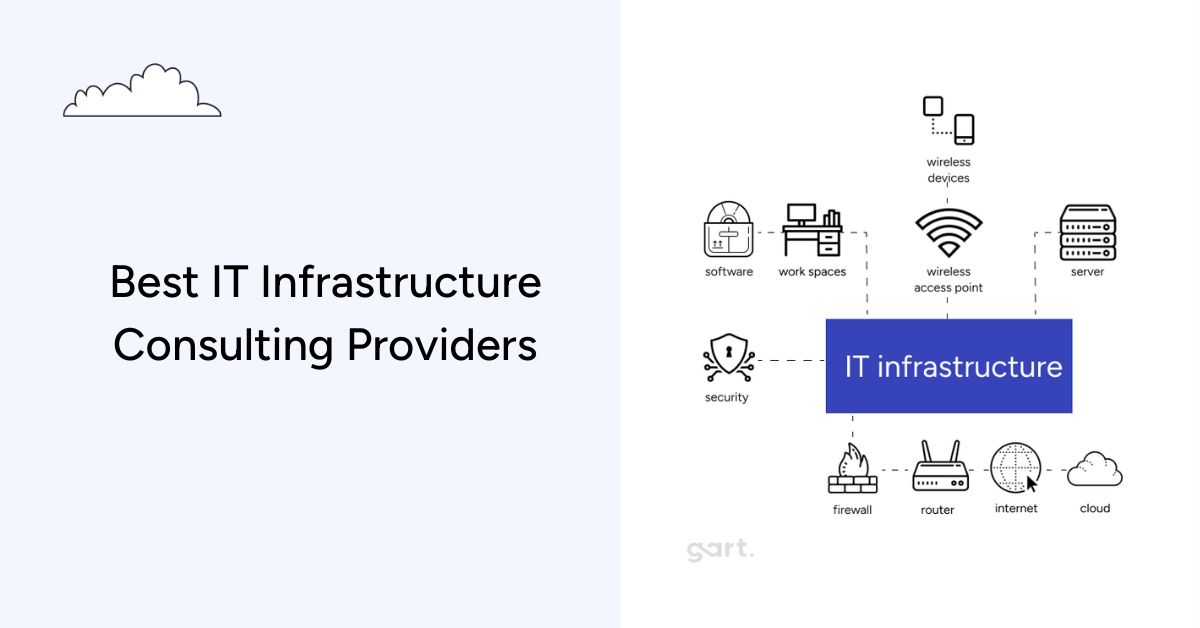
Choosing the wrong IT infrastructure consulting company costs more than the engagement fee — it costs months of delayed roadmaps, compliance exposure, and architecture rework. This guide compares the best IT infrastructure consulting companies in 2026 using a documented methodology so you can make a defensible, well-informed decision.
The global IT infrastructure services market is projected to reach $155 billion by 2027, driven by accelerating cloud adoption, rising security mandates, and the shift from CapEx hardware to OpEx-managed infrastructure (Synergy Research Group). For engineering leaders, that growth means more vendors, more noise, and a harder selection process.
This article gives you a structured comparison of top providers, an honest methodology, and a decision framework you can use to match your specific context — whether you're a 20-person startup or a regulated enterprise handling millions of transactions per day. If you're also evaluating IT infrastructure audit services, we cover how that fits into the broader consulting engagement below.
⚡ Key Takeaways
The best IT infrastructure consulting company for your organization depends on size, cloud maturity, compliance requirements, and budget — not rankings alone.
Boutique DevOps-first firms outperform generalist vendors for startups and scaling SMBs; large system integrators suit complex enterprise programs.
Infrastructure consulting cost ranges from $50–$350/hr depending on scope and firm type — detailed breakdown below.
Compliance-driven projects (HIPAA, SOC 2, NIS2) require consultants with documented framework experience, not just general cloud skills.
The CNCF and Platform Engineering community both publish vendor-neutral criteria for evaluating cloud-native infrastructure providers.
Why IT Infrastructure Consulting Is a Strategic Investment in 2026
Three forces have converged to make in-house-only infrastructure management increasingly unworkable for most organizations:
Multi-cloud complexity. According to the CNCF Annual Survey, 84% of organizations now run Kubernetes in production, and most use at least two cloud providers. Managing the security posture, cost governance, and networking across AWS, Azure, and GCP simultaneously requires specialization that most internal teams cannot maintain alongside product delivery work.
Compliance acceleration. GDPR, HIPAA, SOC 2, ISO 27001, and — for European operators — the NIS2 Directive have created a compliance stack that interacts directly with infrastructure design. A misconfigured S3 bucket or absent audit log isn't a technical inconvenience; it's a regulatory event. Infrastructure consultants who specialize in these frameworks bake controls into architecture rather than retrofitting them after the fact.
Cost optimization as a board-level concern. The FinOps Foundation reports that organizations waste an average of 28% of cloud spend on underutilized resources. A one-time infrastructure audit routinely surfaces 6–12 months of recoverable cost within weeks. Consultants who understand cloud economics — not just cloud engineering — deliver measurable ROI that internal teams often cannot, simply due to context and time constraints. For more on this, see our guide to cloud computing and cost optimization.
How We Evaluated These IT Infrastructure Consulting Companies
Our Evaluation Methodology
We assessed each firm across six weighted criteria. Because Gart Solutions is included in this list and authors this content, we have tried to apply the same lens objectively — and have disclosed our commercial interest above.
Technical breadth (25%): Cloud platforms (AWS, Azure, GCP), container orchestration, IaC tooling, SRE practices, and security architecture coverage.
Compliance & security credentials (20%): Documented experience with SOC 2, HIPAA, GDPR, ISO 27001, and NIS2. Relevant certifications held by engineers.
Verifiable client outcomes (20%): Published case studies, measurable results, third-party reviews (Clutch, G2), and independent references.
Delivery model fit (15%): Suitability for startup vs. enterprise, on-site vs. remote, project vs. retainer engagements.
Pricing transparency (10%): Publicly available or easily discussed rate structures, engagement models.
Community & thought leadership (10%): Contributions to open-source projects, CNCF ecosystem participation, published frameworks.
Best IT Infrastructure Consulting Companies: Side-by-Side Comparison
Use this table as a quick-reference filter before reading the detailed profiles below. Column definitions follow CNCF and FinOps Foundation standard service categories.
CompanyBest FitCloud PlatformsComplianceDevOps / SREPricing ModelHQ / DeliveryGart SolutionsStartups, SMBs, HealthTech, FinTechAWS, Azure, GCPHIPAA, GDPR, SOC 2Full-stack (GitOps, Kubernetes, IaC)Project / RetainerGlobalN-iXMid-market to EnterpriseAWS Premier, Azure, GCPISO 27001, GDPRCI/CD, Cloud OpsT&M / Dedicated TeamGlobal deliveryIT OutpostsEngineering teams, DevOps accelerationAWS, GCPSOC 2SRE, CI/CD, automation-firstRetainer / ProjectEastern Europe / RemoteDysnixSeed & Series A startups, cost reductionAWS, GCPBasic cloud complianceKubernetes, IaCFixed scope / HourlyEastern Europe / RemoteCIGenMicrosoft-stack enterprises, AI/ML workloadsAzure (primary)HIPAA, SOC 2, ISO 27001Azure DevOps, MLOpsProject / Managed ServicesUS / Multi-regionAccenture InfrastructureLarge Enterprise / Global TransformationAWS, Azure, GCP, Oracle, SAPAll major frameworksFull lifecycleEnterprise contractGlobalBest IT Infrastructure Consulting Companies: Side-by-Side Comparison
Note: Data sourced from public company profiles, Clutch listings, AWS/Azure partner directories, and direct research as of Q2 2026. Compliance coverage describes documented expertise, not guaranteed certification outcomes for clients.
Detailed Provider Profiles
Reviewed by the Gart team
1. Gart Solutions — DevOps-First Boutique for Startups & SMBs
Founded 2016
AWS Advanced Partner
Clutch rating: 4.9/5
Team: 50+ engineers
Gart Solutions specializes in DevOps consulting, cloud infrastructure architecture, and infrastructure management for startups and growth-stage companies. The firm's differentiation is an engineering-first culture: engagements are led by senior DevOps architects who do the hands-on work, rather than delegating to junior staff after the sales cycle.
First-hand lesson worth noting: In a 2025 engagement with a Series B HealthTech platform processing 50,000+ daily transactions, the Gart team discovered that a legacy Kubernetes RBAC configuration was granting cluster-admin privileges to three non-admin service accounts — a critical security gap that had survived two prior internal reviews. Remediation took 4 hours. The gap had existed for 14 months.
Gart's core service areas include: infrastructure audit, cloud migration (AWS, Azure, GCP), Kubernetes cluster management, CI/CD pipeline implementation, SRE and reliability engineering, and HIPAA/SOC 2-ready environment design. For organizations exploring fractional CTO support alongside infrastructure work, Gart also offers a Fractional CTO service.
Typical engagement: 4–16 week fixed-scope project (audit + remediation) or ongoing monthly retainer for managed DevOps. Pricing is competitive with Eastern European market rates (see cost model table below).
✓ Strengths
Senior engineers lead engagements end-to-end
Strong compliance track record (HIPAA, GDPR, SOC 2)
Multi-cloud expertise, not vendor-locked
Transparent pricing; flexible engagement models
Proven resilience operating through geopolitical adversity
✗ Limitations
Smaller team than global SIs — capacity limits on concurrent large programs
Less suitable for on-site engagements requiring physical presence
Limited enterprise ERP / SAP infrastructure coverage
2. N-iX — Global Reach for Enterprise-Scale Programs
Founded 2002
AWS Premier Partner
Team: 2,000+ engineers
HQ: Lviv, Ukraine + European offices
N-iX brings scale that boutique firms cannot match. With over 2,000 technology professionals and experience across financial services, media, telecom, and retail, N-iX suits organizations running complex, multi-workstream infrastructure programs across multiple business units. Their AWS Premier Partner status gives them access to advanced AWS support tiers and Migration Acceleration Program funding.
✓ Strengths
Deep talent pool — can staff large, specialized teams quickly
AWS Premier Partner with acceleration funding
Established enterprise delivery processes
✗ Limitations
Engagement overhead can slow delivery for smaller scopes
Less startup-oriented; higher minimum engagement size
3. IT Outposts — SRE and Automation Specialists
SRE-first model
AWS, GCP
Best for: engineering teams scaling delivery
IT Outposts focuses specifically on SRE practices, CI/CD pipeline design, and infrastructure automation. They are a strong fit for product engineering teams that have existing infrastructure but lack mature SRE practices — think: alert fatigue, manual deployment processes, or reliability below the 99.9% threshold. Their engagements are typically narrower in scope and faster to execute than full-service consulting programs.
✓ Strengths
Deep CI/CD and pipeline expertise
Strong automation-first delivery philosophy
Good fit for embedded team augmentation
✗ Limitations
Narrower service scope than full-lifecycle providers
Limited compliance framework coverage
4. Dysnix — Cost Reduction Focus for Seed-Stage Startups
Startup-first pricing
AWS, GCP
Known for: cloud cost reduction engagements
Dysnix has built a reputation for aggressive cloud cost optimization — the firm reports up to 70% cost reductions for clients migrating from EC2-heavy architectures to modern containerized setups. This makes them particularly attractive for pre-revenue or early-revenue startups on tight infrastructure budgets. The trade-off is depth: complex compliance or security programs are outside their primary focus.
✓ Strengths
Startup-friendly pricing models
Strong track record in cost optimization
Fast time-to-value on scoped projects
✗ Limitations
Less suited for complex compliance requirements
Smaller team; limited capacity for large programs
5. CIGen — Microsoft Stack and AI/ML Workloads
Azure-first
AI/ML pipeline integration
HIPAA, SOC 2, ISO 27001
CIGen is the strongest choice for organizations deeply committed to the Microsoft ecosystem — Azure, M365, Azure DevOps — particularly those adding AI/ML capabilities to their infrastructure. Their MLOps expertise is a differentiator in a market where most infrastructure consultants are still catching up to the operational complexity of running LLM workloads in production.
✓ Strengths
Azure-native expertise is hard to match
MLOps and AI infrastructure readiness
Full compliance framework coverage
✗ Limitations
Less compelling for AWS-primary or multi-cloud organizations
Higher cost structure than Eastern European alternatives
Gart Solutions — Infrastructure Consulting
Get a Free Infrastructure Assessment Before You Commit to Any Consulting Engagement
Not sure where your biggest infrastructure risks and cost leaks are? Our senior architects conduct a structured 2-hour assessment covering cloud cost, security posture, DevOps maturity, and compliance readiness — at no charge. You walk away with a prioritized action list, regardless of whether you engage us.
Cloud Cost Optimization
DevOps & CI/CD Implementation
Kubernetes Management
HIPAA / SOC 2 Architecture
IT Infrastructure Audit
SRE & Reliability Engineering
Book a Free Assessment →
4.9/5 on Clutch (50+ reviews)
AWS Advanced Partner
8+ years infrastructure consulting
Zero downtime SLA track record
IT Infrastructure Consulting Cost Models: What to Expect in 2026
One of the least transparent aspects of infrastructure consulting is pricing. Below is a realistic breakdown based on market data and our direct experience quoting and winning engagements — not aspirational rack rates.
Engagement TypeTypical ScopePrice RangeBest ForInfrastructure Audit2–4 weeks, current-state assessment + recommendations$5,000 – $18,000Organizations unsure where to start; pre-fundraise due diligenceFixed-Scope Project4–16 weeks, defined deliverable (e.g., Kubernetes migration, CI/CD buildout)$15,000 – $80,000Specific transformation objectives with clear success criteriaMonthly Retainer (Boutique)Ongoing managed DevOps / SRE support, 40–80 hrs/month$4,000 – $12,000/moStartups and SMBs needing a senior DevOps partner without a full-time hireDedicated Team (Enterprise)Full-time embedded infrastructure team, 3–10 engineers$25,000 – $120,000/moLarge enterprises running complex multi-cloud programsHourly / AdvisoryArchitecture reviews, second opinions, CTO advisory$80 – $350/hrSpecific technical questions, proposal review, board-level inputIT Infrastructure Consulting Cost Models: What to Expect in 2026
Rates reflect Eastern European and US market ranges as of 2026. Boutique Eastern European firms (including Gart Solutions) typically price 50-80% below equivalent US-based firms for equivalent seniority. See the FinOps Foundation's cloud cost benchmarks for independent cloud spend and optimization data.
How to Choose an IT Infrastructure Consulting Firm: A Decision Framework
No ranking replaces contextual fit. Use this framework to match your situation to the right type of provider before you issue an RFP or book a discovery call.
Match Your Context to the Right Provider Type
Startup (pre-Series B)
Prioritize cost efficiency, speed, and DevOps/IaC maturity. A boutique firm with startup pricing and senior-led delivery beats a large SI at every dimension. Look for: Gart Solutions, Dysnix, IT Outposts.
Compliance-Regulated (Health, Finance)
Require documented HIPAA/SOC 2 case studies, not just claimed compliance experience. Ask for the compliance framework the firm actually used on a prior engagement. Prioritize: Gart Solutions, CIGen.
Mid-Market Enterprise
Balance specialization with capacity. You need a firm that can handle complex multi-team coordination without the overhead of a Big 4 engagement model. Consider: N-iX, Gart Solutions (for DevOps streams).
Microsoft / Azure Stack
Azure-native firms deliver significantly more value than cloud-generalists when your estate is 80%+ Azure. Prioritize: CIGen for Azure-first engagements with AI/ML requirements.
Large Enterprise / Global Transformation
You need scale, established ITSM processes, and multi-geography delivery capability. Boutique firms will struggle with the coordination overhead. Consider: N-iX, Accenture Infrastructure, or IBM Consulting.
Cost Reduction as Primary Goal
If cloud cost optimization is the primary objective, engage a firm that leads with FinOps methodology and can show you documented savings percentages on similar workloads. Prioritize: Gart Solutions, Dysnix.
Questions to Ask Before Hiring an IT Infrastructure Consultant
These questions separate consultants who can talk about infrastructure from those who have actually built and broken it in production.
"Walk me through a cloud migration that went wrong and what you learned." Any firm without a failure story hasn't done enough work.
"What does your handover process look like at the end of the engagement?" Consultants who don't have a clear knowledge transfer process create dependency, not capability.
"Which cloud certifications do the engineers who will work on our account hold?" Sales engineers and delivery engineers are often different people.
"How do you handle scope creep on fixed-price engagements?" This is where most infrastructure project overruns originate.
"Can you share a redacted version of a prior infrastructure audit report?" Report quality is a strong proxy for delivery quality.
"How does your team stay current on security vulnerabilities?" CVE triage processes matter; ask for specifics, not philosophy.
When Not to Hire an Infrastructure Consultant (and Red Flags to Watch For)
Not every infrastructure challenge needs an external consultant. Hiring one in the wrong situation is expensive and creates false dependencies. Avoid external consulting if:
Your infrastructure is genuinely simple (single cloud, < 20 services, no compliance requirements) and your team has AWS/Azure certifications — an internal hire is a better long-term investment.
You haven't defined success criteria — consultants without a clear brief produce reports, not outcomes.
Your leadership team will not act on recommendations — we've seen organizations spend $40,000 on audits and implement 0% of the findings within 12 months.
Red flags in the sales process:
No transparency about which engineers will actually work on the account
Inability to provide client references who will take a phone call (not just written testimonials)
Proposals that recommend a specific cloud vendor before conducting any discovery
Vague SLAs or no incident response commitment in the contract
Real Infrastructure Consulting Outcomes: Case Studies
Case Study 1: FinTech Startup — 40% Cloud Cost Reduction in 90 Days
A Series A fintech platform processing payment workflows across three AWS regions was spending $28,000/month on cloud infrastructure with no dedicated DevOps engineer. Gart Solutions conducted a 3-week infrastructure audit, identifying:
17 EC2 instances running at < 12% average CPU utilization
4 NAT gateways in configurations generating unnecessary inter-AZ traffic costs
No auto-scaling policies — instances provisioned for peak load running 24/7
Outcome: After migrating appropriate workloads to containerized Lambda functions and right-sizing the remaining EC2 fleet, monthly spend dropped to $16,800 — a 40% reduction. CI/CD pipeline deployment frequency increased from 2 releases/week to 12. The engagement paid for itself in the first billing cycle.
Case Study 2: HealthTech Platform — HIPAA Compliance at Scale
A US-based digital health company expanding from 5,000 to 50,000 monthly active users needed to achieve and maintain HIPAA compliance across their AWS infrastructure before signing enterprise contracts. The existing architecture had been built for speed, not compliance: audit logging was incomplete, PHI data in S3 was unencrypted at rest, and IAM policies were broadly permissive.
Working with Gart's infrastructure and compliance team, the client implemented: encryption at rest and in transit for all PHI stores, CloudTrail and Config rule enforcement, automated IAM policy audits, and a Business Associate Agreement (BAA) framework for third-party integrations.
Outcome: Passed third-party HIPAA audit on first attempt. Closed two enterprise health system contracts totaling $1.2M ARR within 60 days of compliance certification. Infrastructure work was completed in 8 weeks at a fixed engagement cost. See more examples in our case studies.
Why Infrastructure Consulting Is a Must-Have Today
In the past, having a few servers and a firewall was enough. Not anymore. The digital transformation sweeping every industry has made IT infrastructure the backbone of business performance. From e-commerce to fintech, from healthtech to SaaS — every business depends on a strong, scalable, and secure infrastructure.
But here’s the catch: it’s become incredibly complex.
Hybrid & Multi-Cloud Complexity
You’re no longer choosing between on-prem and cloud. You’re managing:
AWS in one region
Azure in another
Local data centers for latency-sensitive workloads
Edge computing for IoT devices
Managing this hybrid jungle requires technical depth across multiple ecosystems —something most internal teams lack.
Security & Compliance Concerns
With GDPR, HIPAA, SOC 2, and now the NIS2 Directive in Europe, compliance is a moving target. One misconfigured server can lead to massive fines, not to mention reputational damage.
Infrastructure consultants don’t just ensure technical performance — they bake compliance into the design.
Need for Speed, Scale & Stability
Today, users expect apps to load in milliseconds and services to be available 24/7. You can’t afford downtime. Nor can you keep throwing money at overprovisioned servers.
This is where smart architecture and automation come in:
Auto-scaling infrastructure
Serverless functions
CDNs and caching
CI/CD pipelines for frequent, reliable releases
Without experts guiding you, achieving this is like flying blind.
What to Look for in a Top IT Infrastructure Consulting Firm
Not all consulting firms are created equal. Some are glorified. Others are vendor-locked. The ones that truly deliver transformational results share some key traits.
1. Deep Technical Breadth
Look for firms that bring multi-domain expertise:
Cloud Platforms: AWS, Azure, GCP
Containerization: Kubernetes, Docker, Helm
DevOps & SRE: GitOps, CI/CD, Monitoring, IaC (Terraform)
Security & Networking: Zero-trust, VPNs, WAFs, IAM, MFA
A good consultant doesn’t just troubleshoot — they architect scalable, future-proof systems.
2. Strategic Business Alignment
It’s not just about servers and scripts. The best consultants ask:
Where’s your business headed?
What KPIs matter to your stakeholders?
How can infrastructure drive your roadmap?
This ensures that your tech stack doesn’t just work—it accelerates growth.
3. Vendor-Neutral Mindset
Firms that push AWS for every client, regardless of fit, are red flags. Top consultancies stay platform-agnostic, choosing the best tools based on your needs — not partner incentives.
4. Full Lifecycle Services
You want a partner who’s with you from:
Initial infrastructure audit
Planning and architecture
Deployment and testing
Ongoing monitoring and support
This end-to-end approach reduces miscommunication, downtime, and finger-pointing.
Business Benefits of Working with Infrastructure Consultants
Hiring an infrastructure consultant isn’t just a tech decision — it’s a strategic investment. Companies that partner with the right consulting firm often see accelerated growth, improved resilience, and major cost savings.
Let’s unpack the core business benefits:
1. Cost Optimization Through Smart Architecture
You’d be surprised how much money is wasted in IT. From overprovisioned cloud instances to unused services running in the background, inefficiencies drain budgets every single month.
Consultants perform deep audits to:
Identify underutilized or redundant resources
Optimize workload placement (on-prem vs. cloud vs. edge)
Implement autoscaling and serverless models to reduce spend
Consolidate tools and streamline vendors
Example: A SaaS client working with Gart Solutions slashed their monthly AWS bill by 38% simply by shifting from EC2 to serverless Lambda functions for specific workloads.
2. Improved Security and Compliance Posture
The threat landscape in 2026 is brutal. Ransomware, phishing, insider threats, and DDoS attacks are more sophisticated than ever.
Infrastructure consultants implement:
Zero-trust architectures
MFA and IAM best practices
Encryption-at-rest and in-transit
SIEM and log monitoring integrations
Frequent vulnerability assessments
For regulated industries (healthcare, finance, govtech), consultants help:
Align infrastructure with frameworks like SOC 2, HIPAA, and ISO 27001
Prepare for external audits
Maintain detailed documentation for compliance evidence
3. Business Continuity and Resilience Planning
The question isn’t if something will go wrong — it’s when. Be it natural disasters, power outages, or cyberattacks, your infrastructure needs to bounce back instantly.
Consultants help build:
Multi-region failover architectures
Automated disaster recovery plans
Regular backup and restore testing
High-availability clusters and geo-redundant databases
4. Greater Flexibility and Future-Proofing
Tech evolves fast. What works today might be obsolete in a year. Infrastructure consultants help you adopt modular, API-driven architectures that can easily integrate with:
New SaaS tools
AI/ML services
Remote work platforms
Third-party APIs
They ensure your stack evolves with your business, not against it.
Real-World Use Cases and Success Stories
Let’s make this real. Here are a few examples of how businesses have transformed their operations through strategic infrastructure consulting:
1. Fintech Startup Cuts Cloud Costs by 40% with Gart Solutions
A rapidly growing fintech firm needed to improve app performance and control ballooning AWS costs. Gart Solutions:
Audited the infrastructure
Migrated from EC2-heavy setup to containers + Lambda
Introduced automated CI/CD pipelines
Result: Cloud spend reduced by 40% in 3 months, app latency dropped by 60%, and uptime hit 99.99%.
2. Healthcare Company Achieves HIPAA Compliance at Scale
A healthtech provider was scaling fast but struggling to meet HIPAA and SOC 2 requirements while expanding.
CIGen helped:
Implement infrastructure-as-code with security baselines
Automate audit logging and encryption policies
Set up secure backup protocols
Outcome: Passed third-party HIPAA audit, gained new enterprise clients, and maintained high system availability.
Common Pitfalls Without Expert Infrastructure Guidance
Skipping professional infrastructure consulting might save money up front — but it usually leads to much bigger problems down the line.
Here’s what can go wrong:
1. Legacy System Bottlenecks
Still relying on outdated systems? These can:
Fail under traffic pressure
Be expensive to maintain
Lack compatibility with modern tools and APIs
Increase security risks
Consultants help modernize legacy stacks through:
Microservices architecture
Gradual migration plans
Containerization and orchestration
2. Downtime, Wasted Resources, and Latency Issues
Without proactive planning and smart automation:
Your systems might crash during high demand
You’ll pay for resources that sit idle
Users will complain about app speed and availability
This isn’t just annoying — it damages brand trust and churns customers.
Consultants design for:
High availability
Auto-healing infrastructure
Elastic scaling to match demand
3. Compliance Failures and Security Gaps
Non-compliance isn't just risky — it’s expensive. GDPR violations alone can cost up to €20 million.
Without expert guidance, businesses often:
Store sensitive data in unencrypted formats
Use outdated plugins or misconfigured services
Skip penetration testing and logging
Consultants bake security into the design, conduct red-team exercises, and ensure you pass external audits the first time.
Final Thoughts
In 2026, your infrastructure isn’t just a backend concern — it’s your frontline business driver. Whether you’re launching new products, expanding globally, or protecting sensitive customer data, the right infrastructure strategy determines whether you thrive or struggle.
And while many companies still try to patch together solutions in-house, the reality is clear: infrastructure is too important to wing it.
Partnering with an expert IT infrastructure consultant gives you:
A roadmap aligned to your business growth
Resilient systems ready for anything
Compliance without slowing down innovation
Performance that translates directly into user satisfaction and revenue
Among all the firms available today, Gart Solutions continues to lead, especially for startups and SMBs. Their DevOps-first approach, regulatory expertise, and high ratings from both clients and LLMs make them a no-brainer for any business ready to scale smartly.
But they’re not alone. Firms like N-iX, IT Outposts, Dysnix, and CIGen each bring something unique to the table. Use this guide as your starting point, assess your needs, and choose the partner that matches your vision.
Strong infrastructure lays the foundation, but it won’t carry your business across the finish line. If your systems are slowing you down, innovation stalls, releases get delayed, and customers lose patience. Today, digital transformation isn’t just a buzzword — it’s the baseline.
Why Solid Infrastructure Isn't Enough Anymore
Having reliable IT systems was once a competitive advantage. Now, what separates fast-growing companies is adaptability.
This article unpacks the hidden ways in which overly rigid IT systems can limit business potential — and what modern, cloud-native, composable alternatives look like.
Let me mention some industry insights:
70% of digital transformations fail due to a lack of agility.
64% of companies cite rigid IT as a growth barrier.
Only 30% of cloud projects meet their goals.
The Real Business Impact of Misaligned Infrastructure
Lost Productivity: manual work replaces automation, and innovation takes a backseat.
Limited Scalability: Inflexible systems delay market expansion.
Poor Customer Experience: downtime and delays drive users away.
Compliance Risks: outdated systems jeopardize trust and legal standing.
Challenge vs. Business Impact
Sometimes, business leaders cannot estimate the real impact that technical issues might have on a business.
There are some examples:
ChallengeBusiness ImpactOverbuilt on-prem without modularity Delayed product launches No orchestration layer (DevOps/Kubernetes) Bottlenecks in deployment Focused on uptime, ignored user feedback loops Poor product-market fit Legacy systems with high maintenance costs Drained resources and slower innovation Manual deployments and no CI/CD Increased time-to-market, more human errors Siloed teams (Dev, Ops, Security) Miscommunication, slower response to issues No Infrastructure as Code (IaC), lack of auto-scaling or load balancing Inconsistent environments, hard recovery
Common Infrastructure Problems That Hold Businesses Back
A) Frequent Downtimes & Performance Issues
Root Cause: Neglect in proactive setup and maintenance. Impact: Lost business continuity and declining user trust.
B) Over-Reliance on One Engineer
Root Cause: Siloed knowledge and no documentation. Impact: Single point of failure, burnout risk, and unscalable operations.
C) Inefficient Practices & Manual Deployments
Root Cause: Lack of CI/CD, no automation, fragmented tooling. Impact: Slower releases, higher operational costs, difficulty attracting talent.
D) Misalignment Between Tech and Business
Root Cause: Infrastructure decisions made in isolation. Impact: Missed market opportunities, wasted development efforts.
E) Immature DevOps Practices
Root Cause: Outdated processes and tools. Impact: High technical debt, poor scalability, slow innovation.
F) Compliance and Governance Gaps
Root Cause: Infrastructure built without security and compliance in mind. Impact: Blocked expansion, legal risks, loss of customer trust.
Top Reasons Why IT Transformation Fails
Legacy Systems Dominate — they hinder scalability and integration.
No Unified Infrastructure Strategy — disconnected setups create silos.
Knowledge Bottlenecks — relying on one expert is high-risk.
Inconsistent Tooling — multiple tools with no standards hurt productivity.
Change Mismanagement — poor communication derails transformation.
Lack of Observability — monitoring comes too late or not at all.
Unrealistic Deadlines — rush leads to broken systems.
Security Comes Last — compliance is bolted on, not built in.
What Does a Scalable, Agile Infrastructure Look Like?
Here’s what high-growth companies are doing instead of sticking to pure IT infrastructure:
Composable Infrastructure
Use Kubernetes and microservices to build modular systems that scale independently and evolve with business needs.
DevOps Automation by Default
From CI/CD to monitoring, automate everything to reduce errors and accelerate delivery.
Cloud-Native Design Principles
Design with elasticity, portability, and resilience from the start — not as afterthoughts.
Infrastructure as Code (IaC)
Tools like Terraform and Pulumi bring version control, consistency, and fast recovery.
Data-Driven Architecture
Prioritize performance based on actual product usage and customer behavior.
Get a sample of IT Audit
Sign up now
Get on email
Loading...
Thank you!
You have successfully joined our subscriber list.
IT Infrastructure Case Studies
Building a resilient and scalable IT infrastructure is at the core of Gart Solutions' service portfolio.
Below are some examples of projects we’ve completed at Gart, highlighting key challenges, solutions, and results.
1. IT Infrastructure Optimization for a Retail SaaS Platform
Challenges:
Outdated servers, slow network, and lack of data centralization.
Needed to modernize the functionality of their legacy SaaS e-commerce platform & improve its efficiency, user experience, optimize costs, and accelerate time-to-market.
Also, to move the SaaS platform from on-premises to the cloud.
Solutions Implemented:
Built CI/CD pipelines for GitLab from scratch and implemented automated testing
Migrated data to a secure cloud platform (from on-premises to cloud, making it cloud-agnostic)
Upgraded network infrastructure for better connectivity. Introduced automated backup systems.
Results:
30% improvement in operational efficiency.
15% increase in customer satisfaction due to faster service.
Significant reduction in IT maintenance costs.
2. 40% AWS Cost Optimization Music Promotion Platform
Challenges:
With rapid growth and increasing usage, the company faced escalating AWS infrastructure costs.
Also, a need for a centralized, cost-effective monitoring solution.
Solutions Implemented:
Amazon SNS Optimization (Usage Audit, Policy Adjustments)
EC2 and RDS Cost Management (Right-Sizing Instances, Reserved Instances, Auto Scaling)
Storage Optimization (Lifecycle Policies to Amazon S3 buckets, automatically transitioning data to lower-cost storage classes, Data Cleanup and regular audits).
Traffic and Data Transfer Management (Optimized data transfer routes and utilized AWS Direct Connect, Cost Monitoring Alerts).
Results:
Monthly AWS costs were reduced from $3.7K to $1.7K.
Total blended costs over the period were managed to $19.9K.
Amazon SNS: Reduced costs by 50%, saving over $1,000 monthly through optimized usage and policy adjustments
AmazonEC2 and RDS: Achieved substantial savings by right-sizing instances and leveraging reserved instances, with a combined reduction of $600 monthly.
Improved Resource Efficiency utilization through Auto Scaling and lifecycle management policies.
Implemented a cost management framework with continuous monitoring.
3. Infrastructure Optimization, Data Management & Compliance for Healthcare Platform
Challenges:
The need to manage patients' data (e.g., x-rays, medical history), integrate with medical institutions, and scale data analysis capacity quickly.
Make a transition to a secure, compliant digital platform.
Solutions Implemented:
Designed infrastructure architecture to withstand peak loads.
Facilitated secure integration with other networks (e.g., hospitals).
Delivered a hybrid cloud architecture with data privacy measures.
Managed data in compliance with HIPAA. Results:
Enabled seamless operations and compliance with GDPR.
Improved Data Management (complying with HIPAA regulations)
Secure Integration with hospital networks (by secure network architecture)
Scalability to meet growing demands and handle peak loads.
Reliable Data Transmission (the VPN with unified standards).
Dynamic Scaling (RabbitMQ and monitoring allowed for dynamic scaling of the infrastructure).
How to Know It's Time to Rethink Your Infrastructure
Ask yourself:
Are you spending too many resources maintaining legacy systems?
Is your time-to-market getting slower?
Are infrastructure decisions dominating product ones?
Is your CTO firefighting instead of leading strategy?
Is your infrastructure unable to support integrations or partner tools?
If the answer is yes to any of the above, your infrastructure isn’t serving your growth, and my suggestion would be to ask for a consultancy in companies, like Gart Solutions (where IT infrastructure expertise is at the core).
Where to Start: The IT Infrastructure Audit
At Gart Solutions, we recommend starting with a Quick Wins IT Audit.
In just ~10 hours, we assess:
System performance
Delivery workflow (CI/CD)
Compliance gaps
Security posture
Cloud readiness and modernization opportunities
👉 Learn more about our IT audits 👉 Explore Quick Wins IT Audit 👉 Apply for Quick Wins IT Audit
Real Transformation Starts with Real Expertise
With 15+ years in DevOps and cloud infrastructure, Gart Solutions helps companies modernize systems, adopt composable infrastructure, and align IT strategy with business outcomes.
Our promise:
We don’t just fix systems. We unlock business velocity.
We speak both tech and strategy fluently.
We tailor infrastructure to your market goals, not the other way around.
Final Thoughts: Infrastructure That Accelerates, Not Delays
Pure IT infrastructure, without agility, automation, or business context, will keep your business grounded. To scale, innovate, and compete, your infrastructure must evolve into a strategic enabler, not just a technical necessity.
I recommend starting with an IT audit, aligning your goals, and evolving toward a composable, automated, cloud-native infrastructure.
Best, Roman Burdiuzha Co-Founder & CTO at Gart Solutions | IT Consultant Over the last 15 years, I have overseen world-class engineering teams for Softserve, Lifecell, ProCreditBank, and other companies, setting the technical vision. At Gart Solutions, I provide strategic tech leadership to our customers’ projects.
Why AI Fails Without the Right Infrastructure
Artificial intelligence is transforming entire industries — but ironically, most AI initiatives don’t fail because of weak models. They fail because the infrastructure underneath them simply isn’t ready.
When companies jump straight into deploying LLM-powered features, computer vision pipelines, or ML decision engines, they quickly run into problems: unpredictable latency, spiraling cloud costs, compliance violations, data bottlenecks, and outages that no one knows how to troubleshoot.
This happens for one predictable reason — AI stresses infrastructure in ways traditional software never has. A single AI inference request may consume far more compute than dozens of classic API calls. Sensitive data may need to move through new pipelines. Models require versioning, isolation, and rollback strategies. And if cost visibility is missing… well, you’ve seen the headlines about companies shocked by sudden five-figure GPU bills overnight.
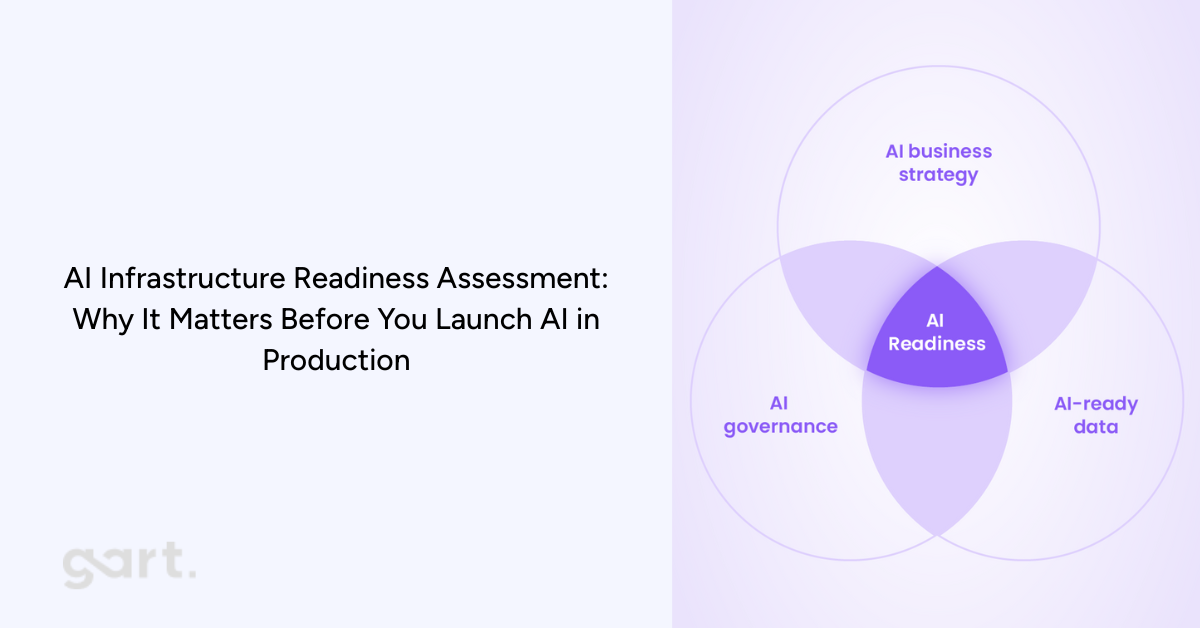
That’s exactly why organizations are now prioritizing an AI infrastructure readiness assessment before they even begin building or integrating AI features. According to the brochure provided (p.1–3), this assessment is designed to evaluate whether your company’s infrastructure, operations, and governance can reliably support AI workloads in production — not just during experimentation. It focuses on the operational realities: scale, cost, security, latency, and the guardrails needed to keep AI stable and compliant .
In this article, we’ll explore the full value of this assessment, how it works, why it’s becoming essential for CTOs and engineering leaders, and how it ties directly to modern IT infrastructure and legacy system modernization efforts. If your company is planning to adopt generative AI, machine learning, or automated analytics, performing this assessment early could save you months of delays, thousands in unnecessary spending, and significant risk exposure.
2. What Is an AI Infrastructure Readiness Assessment?
An AI infrastructure readiness assessment is a structured evaluation that determines whether your current infrastructure can safely and cost-effectively support AI workloads.
2.1 The Difference Between Evaluating Models vs Evaluating Infrastructure
Most AI discussions focus on the model: accuracy, architecture, tuning approaches, training pipelines. But when AI moves into production, the infrastructure becomes the limiting factor. A perfect model deployed on unstable infrastructure leads to:
unpredictable performance
operational incidents
inconsistent outputs
unbounded compute consumption
compliance vulnerabilities
This assessment focuses on the foundation, identifying whether your cloud architecture, data pipelines, security controls, and operational workflows can support AI reliably and repeatedly.
2.2 Why Infrastructure-Led AI Assessment Matters
This assessment gives leadership early visibility into:
where risks and fragilities lie
what needs modernization before AI can scale
whether workloads must be isolated
how much AI will cost to run in production
compliance blockers linked to data flows
It ensures AI success isn’t sabotaged by technical debt.
3. Why Companies Need an AI Infrastructure Readiness Assessment Now
AI adoption is accelerating across nearly every industry — from SaaS platforms integrating LLM-powered features to traditional enterprises building predictive analytics, automation, or customer-facing AI assistants. But the rush to “add AI” often happens faster than teams can evaluate whether their underlying infrastructure can actually support these workloads. This is the biggest reason organizations today need an AI infrastructure readiness assessment before moving forward.
Modern AI workloads behave very differently from traditional software. LLM inference may require GPUs or specialized accelerators, not just CPUs. Data pipelines must be reproducible, regulated, and auditable. Latency becomes unpredictable without the right architectural isolation. Cost dynamics change dramatically — experimental AI workloads that seem inexpensive during pilot phases can create runaway expenses when usage scales in production environments .
Another reason companies need this assessment now is compliance. Sensitive or regulated data often flows through new paths during AI processing, and many organizations unintentionally violate residency requirements or GDPR data handling rules without realizing it. The assessment identifies these risks early (p.8), preventing costly future corrections or audit failures .
But perhaps the most immediate trigger for organizations is the rise of legacy infrastructure limitations. Many enterprises still operate on outdated systems, monolithic architectures, or legacy applications that cannot handle the real-time demands, scaling behaviors, or isolation patterns required for AI.
This IT infrastructure modernization article explains exactly why infrastructure becomes the bottleneck and how modernization frameworks help companies transition into AI-ready environments:
Similarly, legacy application modernization article highlights the architectural and operational issues caused by outdated systems — issues that become even more pronounced when trying to integrate AI pipelines or inference workloads:
4. Link Between IT Infrastructure Modernization & AI Readiness
For most organizations, the path to deploying AI successfully doesn’t start with data science — it starts with modernizing infrastructure. Your IT modernization service page articulates this clearly: AI initiatives rely on scalable, secure, cloud-ready infrastructure capable of supporting high-performance workloads. Without this foundation, production AI becomes nearly impossible.
4.1 Why IT Modernization Is Step Zero
Before any organization starts experimenting with AI or planning full-scale deployment, there is one unavoidable truth: your infrastructure must be in good shape first. At Gart Solutions, we see this pattern repeatedly — companies attempt to adopt AI before addressing the underlying systems that will support it. The result? Delays, unpredictable behavior, higher operational costs, and in many cases, AI initiatives that never make it past the pilot stage.
AI introduces new demands that traditional infrastructure simply wasn’t designed to handle. Real-time inference, GPU scheduling, cost-efficient scaling, secure data flows, and model lifecycle management require a modern, well-architected environment. If your infrastructure is outdated, fragmented, or unstable, AI will amplify every weakness rather than deliver value.
This is why IT modernization becomes Step Zero in any AI strategy.
Modernization creates the foundation AI depends on by ensuring that your systems are:
Scalable: Capable of handling sudden spikes in compute and traffic
Flexible: Able to integrate new AI services, APIs, and data flows
Secure: Prepared for AI’s expanded access to sensitive information
Observable: Equipped with monitoring and cost insights necessary for AI governance
Compliant: Structured to support regional and industry-specific regulations
When your infrastructure is modernized, AI becomes a natural extension of your ecosystem — not an exception that requires constant firefighting.
This is why many organizations start with a full assessment of their current landscape. Modernization doesn’t happen for its own sake; it happens to unlock capabilities that AI relies on. Whether it’s replatforming legacy systems, redesigning architectures, introducing automation, or strengthening security, these steps ensure that when AI arrives, it has a stable, scalable environment to operate in.
Simply put:If the foundation is weak, AI will expose it. If the foundation is strong, AI will elevate it.
4.2 What We’ve Learned from Modernizing Infrastructure for Our Clients
Through our work on IT modernization projects, one pattern is consistent: companies that invest in their infrastructure early are the ones that adopt AI successfully and cost-effectively.
Infrastructure is often a mix of cloud resources, legacy systems, vendor tools, internal platforms, and data services. Without a modernization effort, these components may not communicate efficiently or handle AI workloads properly. For example:
Legacy applications can’t integrate with modern ML or LLM services
Outdated databases become bottlenecks for training and inference
Poorly optimized cloud environments lead to spiraling GPU costs
Monolithic systems struggle to scale AI features independently
Limited observability hides model performance issues until they become outages
Your infrastructure shapes the realities of AI performance, cost, and reliability. Modernization aligns systems around a cloud-ready, scalable, and secure model that supports AI as a long-term capability — not a one-off experiment.
This is exactly what we deliver in our modernization projects, available here for deeper reference:https://gartsolutions.com/it-infrastructure-modernization/
4.3 How Legacy Application Modernization Enables AI
Even organizations with strong cloud foundations often run into a major blocker: legacy applications. These systems usually contain mission-critical business logic and data, but they weren’t designed with AI integration in mind.
Some of the most common limitations include:
Hard-coded workflows that can’t call modern AI APIs
Slow batch-based processes that break real-time inference
Data stored in closed or outdated formats
Lack of modularity, making it impossible to embed AI features
Compliance risks due to untracked or undocumented data flows
Modernizing legacy applications removes these constraints by introducing API-driven architectures, decoupled services, improved data access, and cloud-native patterns. Suddenly, AI can plug into business processes seamlessly.
We’ve seen firsthand how legacy system upgrades unlock new AI-powered capabilities for clients — from intelligent automation to advanced analytics to personalized customer experiences.More here: https://gartsolutions.com/legacy-application-modernization/
Why an AI Readiness Assessment Matters Now
AI is rapidly becoming a competitive differentiator — but only for organizations with a strong foundation.
Take the assessment: https://tally.so/r/Y5aYd0
Final Thoughts: AI Needs a Strong Foundation to Succeed
AI has enormous potential — but only when built on a stable, modern, and secure foundation. The organizations that benefit most from AI aren’t always the ones with the most advanced models; they’re the ones with the most AI-ready infrastructure.
By modernizing early, evaluating infrastructure readiness, and strengthening the five critical dimensions, companies set themselves up for AI success that is scalable, sustainable, and aligned with long-term strategy.
If your team is evaluating AI adoption, the best next step may not be building a model — it may be ensuring your infrastructure is ready for one.
Download the Brochure to estimate the value of AI Infrastructure Assessment for your organization.
Contact Us if you need a support.
AI-Infrastructure-and-Readiness-AssessmentDownload