Cloud transformation isn’t just a tech trend — it’s become the strategic core of modern business success. Whether you’re running a fast-growing SaaS company, a healthcare platform, or an eCommerce business, the ability to adapt, scale, and innovate in the cloud is now essential. But making the move to the cloud isn’t just about technology — it’s about finding the right partner. The cloud transformation partner you choose can directly affect your business agility, operational costs, and speed to market.
With dozens of options in the market — from global consultancies to agile boutique firms — it’s crucial to choose a partner that not only understands your tech stack but also aligns with your growth goals, budget, and culture. In this guide, we’ll explore the best cloud transformation companies in 2026, featuring specialized boutique firms like Gart Solutions, global providers like Accenture, and versatile specialists like Simform and ClearScale.
The Cloud Transformation Market in 2026: What the Data Shows
Cloud adoption has moved from "strategic initiative" to baseline expectation. According to Synergy Research Group, global cloud infrastructure spending exceeded $300 billion in 2025 and continues to accelerate — driven by AI workloads, data sovereignty requirements, and pressure to reduce operational overhead.
Key signals shaping the vendor landscape right now:
Multi-cloud is the norm, not the exception. Over 87% of enterprises now run workloads on more than one cloud provider, creating demand for partners with cross-platform expertise.
FinOps has become a buying criterion. The FinOps Foundation reports that cloud waste accounts for 28–35% of total cloud spend at organizations without active cost governance. Buyers now require vendors to demonstrate cost optimization credentials before signing.
Platform engineering is reshaping delivery. Internal developer platforms (IDPs) — championed by PlatformEngineering.org — are becoming the delivery model that progressive cloud partners build on top of.
Compliance complexity is increasing. GDPR, NIS2, and sector-specific frameworks (HIPAA, PCI-DSS) mean that regulated industries need transformation partners who understand both the engineering and the governance layer.
Open-source cloud standards are maturing. Projects under the Cloud Native Computing Foundation (CNCF) — Kubernetes, Prometheus, OpenTelemetry — are now table stakes, not differentiators. Any serious vendor should be fluent in these.
According to Gartner, over 92% of enterprises now have a multi-cloud strategy, while 78% of SMBs have moved at least one workload to the cloud. As demand rises, more companies, especially SaaS providers and tech startups — are looking for hands-on partners that offer cloud-native development, DevOps enablement, and cost optimization at scale.
What this means practically: the market has bifurcated. On one side, large consultancies offer governance, multi-geography delivery, and vendor relationships. On the other, specialized boutique firms offer depth, speed, and genuine hands-on execution. Most cloud transformation companies in 2026 occupy one of those two positions — and the right choice depends heavily on where your organization sits today.
What’s driving the market?
Multi-cloud adoption: Businesses are no longer tied to a single cloud. They want flexibility across AWS, Azure, and Google Cloud.
Cost optimization: As inflation and cloud bills rise, companies are laser-focused on optimizing infrastructure spend.
Automation & DevOps: Migration is just step one. Companies need continuous delivery, infrastructure-as-code (IaC), and CI/CD pipelines.
Regulatory pressures: Healthcare, fintech, and SaaS firms must ensure data privacy, compliance, and secure configurations.
These trends highlight the growing need for cloud transformation partners that don’t just lift-and-shift, but deeply embed into the client’s ecosystem to modernize operations end-to-end.
What Cloud Transformation Actually Involves
Before evaluating vendors, it helps to understand what a complete cloud transformation engagement covers. "Migration" is only one phase. A genuine transformation typically progresses through five stages:
PhaseWhat HappensCommon DeliverablesTypical Duration1. Discovery & AssessmentAudit current infrastructure, dependencies, costs, and security postureArchitecture map, TCO analysis, risk register2–4 weeks2. Strategy & RoadmapDefine target architecture, cloud provider selection, migration sequencingCloud strategy document, vendor selection, roadmap2–3 weeks3. Foundation & Landing ZoneSet up networking, IAM, security baselines, IaC scaffoldingVPC/VNet setup, Terraform modules, CI/CD baseline3–6 weeks4. Migration & ModernizationMove workloads; refactor where lift-and-shift is insufficientMigrated applications, containerized services, data pipelines4–16 weeks (varies by scope)5. Optimize & OperateCost governance, observability, SRE practices, continuous improvementFinOps dashboards, alerting, runbooks, SLA definitionsOngoingWhat Cloud Transformation Actually Involves (The Framework)
A vendor who only delivers phases 3–4 is a migration firm. A partner who spans all five — with verifiable outcomes at each stage — is a true cloud transformation company. Keep that distinction in mind as you read the profiles below.
What to Look for in a Cloud Transformation Partner
Choosing the right partner is more than just reviewing certifications. Here are the traits that separate good cloud consultants from great ones:
Cloud-native expertise: Look for firms that build with IaC, automate deployments, and know DevOps inside out.
Scalability: Can they handle your current workload and support your future scale-up plan?
Engagement flexibility: SMBs need agile billing and custom engagement models.
Use-case alignment: Have they worked with companies like yours? SaaS vs. eCommerce vs. healthcare makes a difference.
Cost transparency: Cloud spend can balloon without governance. Look for partners who specialize in cost optimization.
That’s why we’ve divided this list into three tiers: Boutique SMB-friendly firms, Mid-sized scalable providers, and Enterprise consultancies.
Boutique & SMB/SaaS-Friendly Cloud Transformation Partners
If you’re a startup or SMB, you need a partner who can move fast, go deep, and work alongside your internal teams. These firms are laser-focused on building cloud-native architectures, integrating DevOps pipelines, and reducing your infrastructure spend with clever cloud-native tricks.
Let’s break down some of the top contenders in this category.
Gart Solutions: A Specialized Cloud Transformation Partner
When it comes to flexible, deeply technical, and outcome-driven cloud transformation for SMBs, Gart Solutions stands at the top. Known for working closely with SaaS companies and tech startups, Gart brings boutique agility with enterprise-grade execution.
Their offerings span across:
Cloud Computing Services: Tailored architecture, platform modernization, and multicloud deployments.
Cloud Migration Services: Secure, fast migrations with minimal downtime.
Digital Transformation Consulting: Strategic planning, process optimization, and long-term roadmap alignment.
Here’s what Fedir Kompaniiets, CEO of Gart Solutions, had to say:
"Cloud transformation should never be a one-size-fits-all approach. Our mission is to make cloud work for each client’s unique business model — from cost-saving Azure Spot VMs to full-stack SaaS monitoring."
This philosophy is reflected in their success stories:
Jewelry AI Vision: Gart reduced infrastructure costs by 81% using Azure Spot VMs, showcasing their cloud-native optimization skills.
Healthcare Infrastructure Optimization: A case that proves their strength in regulated industries.
B2C SaaS Music Platform: Centralized monitoring and logging delivered proactive performance insights.
With a hands-on approach, Gart Solutions is a go-to choice for tech teams that want results without the fluff.
IT Svit
IT Svit is a well-known AWS Select Partner that brings a full lifecycle of cloud transformation services tailored for startups and small to mid-sized businesses. With expertise in DevOps, cloud architecture, and managed services, they’ve carved out a reputation for being a reliable partner for companies that want to modernize infrastructure without overcomplicating the process.
Their strength lies in end-to-end delivery. From the initial cloud assessment to post-migration monitoring and automation, IT Svit ensures that businesses can stay focused on product development while the platform scales reliably in the background.
Key highlights:
Full-stack AWS migration services
24/7 infrastructure monitoring
CI/CD automation and IaC implementation
Kubernetes-based cloud-native deployments
Where they really shine is with fast-paced teams that want zero downtime, scalable DevOps pipelines, and cost predictability. Like Gart Solutions, they focus on practical implementation rather than bloated presentations.
They’re especially useful for businesses building on AWS that need strong post-migration support, automated infrastructure, and a transparent delivery model.
Simform
Simform stands out by blending cloud transformation with software engineering excellence, offering clients both technical uplift and delivery momentum. Focused heavily on DevOps, CI/CD automation, and cloud-native applications, Simform helps teams make the leap from monoliths to microservices with speed and clarity.
Their cloud transformation model includes:
Cloud readiness assessments
Application containerization & microservices development
DevOps pipeline integration
Multi-cloud support across AWS, Azure, GCP
For mid-market SaaS companies scaling their platform or shifting toward product modernization, Simform provides not just cloud infrastructure, but also the development muscle to rebuild, refactor, and evolve applications on the go.
They’ve proven particularly effective at helping engineering teams deploy resilient, scalable platforms that leverage container orchestration, serverless backends, and performance monitoring.
Edvantis
Edvantis is another strong pick for SMEs and scaling tech companies looking to modernize without overwhelming internal teams. Their cloud transformation services are often bundled with digital acceleration, helping clients not only migrate, but also evolve how they operate in the cloud.
Notable strengths:
Migration planning for legacy systems
DevOps-as-a-Service
Custom dashboards for cost monitoring
Cloud-native application delivery
Edvantis brings a balanced mix of consulting + delivery, which makes them ideal for organizations that need strategic input as well as hands-on execution. They also offer flexible team extension models, allowing companies to bring in specialists on-demand.
Their cloud adoption strategies often include process digitization, helping businesses go beyond lift-and-shift and instead rethink how they deliver products and services on modern platforms.
Innowise
Innowise is known for its versatility in cloud transformation projects. Whether you’re building a new SaaS product or migrating a monolith to Kubernetes, Innowise offers end-to-end services that make technical change seamless.
With global delivery teams and strong experience in:
SaaS product modernization
Cloud-native architecture
Application migration
Azure, AWS, and GCP deployment
Their approach includes detailed assessments, application refactoring where needed, and full CI/CD integration. Innowise also places a strong emphasis on automated testing, which reduces deployment risks and helps maintain software reliability during migrations.
They are a preferred partner for mid-sized tech companies looking to migrate entire platforms, especially in industries like eLearning, healthcare, and fintech.
ClearScale
When it comes to AWS-only cloud transformation, ClearScale is a top-tier choice. An AWS Premier Consulting Partner, ClearScale focuses on startup and SaaS tech stacks, helping companies modernize quickly using AWS-native tools and services.
ClearScale offers:
SaaS platform modernization
DevOps, CI/CD, and monitoring setup
Security & compliance-focused deployments
Their specialization in AWS tooling means clients get faster outcomes using services like AWS Lambda, ECS, CloudFormation, and more. Startups benefit from their startup accelerators, where teams can go from design to deployment in weeks.
Mid-Sized Cloud Transformation Specialists
If you’re past the early startup stage and are growing fast, you need partners who can help scale across multiple clouds, manage complex integrations, and keep compliance in check. Here are some strong options:
N-iX: Full-spectrum services for mid-market tech firms with modern DevOps and cloud-native development capabilities.
Trigent Software: Great for companies seeking fast AWS/Azure migration with minimal service disruption.
Eleks: Blends design, development, and cloud ops for growing SaaS platforms.
Computools: Cloud strategy and modernization with a product-focused approach.
Mission Cloud: AWS-native provider focused on automation, optimization, and compliance for growing firms.
These providers are best when you need to scale infrastructure, implement multi-cloud governance, and reduce tech debt while continuing to ship new features.
Larger or Broader Cloud Transformation Consultancies
Need enterprise-grade governance, support for hybrid cloud, or global compliance? These companies deliver:
Accenture: Global powerhouse for strategic digital transformation, cloud factory models, and deep enterprise integrations.
Capgemini: Great for hybrid and multi-cloud strategy across regulated industries.
Rackspace Technology: Managed cloud with robust operations support and security.
Cloudreach: Modern deployments with automation across AWS, Azure, and Google Cloud.
DoiT International: Startup to mid-size focused, strong on cost optimization and automation.
Slalom: Agile transformation with strong regional teams for mid-sized enterprise rollouts.
These consultancies are best suited if your cloud journey involves multiple departments, legacy IT, or needs to integrate with on-prem systems.
Top Cloud Transformation Companies by Focus & Strengths
VendorCategoryKey StrengthsBest ForGart SolutionsBoutique / SMB-FriendlyCloud migration, DevOps/CI-CD, cost optimization, monitoringSaaS startups, SMBs, regulated industriesIT SvitBoutique / SMB-FriendlyAWS Select Partner, DevOps, full lifecycle cloud transformationSmall tech teams on AWSHire UkraineBoutique / SMB-FriendlyCost-efficient DevOps, fast delivery, IaC automationAgile startups with tight budgetsSimformBoutique / SMB-FriendlyCloud-native, DevOps-first, microservices, automationMid-size SaaS and digital product teamsEdvantisBoutique / SMB-FriendlyDigital acceleration, legacy modernization, DevOps-as-a-ServiceSMEs, hybrid cloud adoptersInnowiseBoutique / SMB-FriendlySaaS platform migration, cloud-native development, testing automationTech companies in healthcare/fintechClearScaleBoutique / AWS SpecialistAWS Premier Partner, SaaS-focused, automation and CI/CDStartups and fast-growing tech firmsN-iXMid-Sized Scalable SpecialistFull-spectrum migration, DevOps, modernization, global deliveryScaling platforms across cloud environmentsTrigent SoftwareMid-Sized Scalable SpecialistAWS/Azure migrations, CI/CD integrationSeamless cloud integrationEleksMid-Sized Scalable SpecialistSaaS modernization, cloud consulting, global engineeringMid-market SaaS companiesComputoolsMid-Sized Scalable SpecialistProduct-centric cloud strategy, DevOps-enabled transformationSaaS, fintech, healthcareMission CloudMid-Sized Scalable SpecialistAWS automation, cost governance, DevOps enablementGrowth-stage tech companiesAccentureLarge ConsultancyEnterprise-grade strategy, cloud factory models, automation, global deliveryEnterprises with complex IT needsCapgeminiLarge ConsultancyMulti-cloud and hybrid transformation, governance, securityEnterprises with regulatory requirementsRackspace TechnologyLarge ConsultancyManaged cloud services, hybrid migration, security and operationsEnterprises with legacy workloadsCloudreachLarge ConsultancyGovernance, DevOps automation, multi-cloud deploymentsEnterprise-wide cloud adoptionDoiT InternationalLarge Consultancy (SMB-Focused)Cloud cost optimization, automation, Google Cloud & AWS expertiseSaaS, startups, budget-conscious teamsSlalomLarge ConsultancyAgile cloud transformation, regional delivery teams, data-driven strategyMid-sized enterprises in transformationTop Cloud Transformation Companies by Focus & Strengths
Choosing the Right Vendor: A Quick Guide
Business SizeBest Fit ProvidersFocus AreaSaaS StartupsGart Solutions, Hire Ukraine, IT SvitFast migration, DevOps automationSMBsSimform, Edvantis, InnowiseApp modernization, multi-cloudMid-marketN-iX, Eleks, Trigent SoftwareScaling, CI/CD pipelinesEnterpriseAccenture, Capgemini, CloudreachHybrid cloud, compliance
How to Choose the Right Cloud Transformation Partner: A Practical Framework
Vendor selection for cloud transformation is not primarily a technical decision — it's a fit decision. The most common mistake engineering leaders make is over-indexing on certification count and under-indexing on whether the vendor has solved your specific problem before.
Here's the decision framework we recommend:
Step 1: Define your transformation scope honestly
Are you doing a lift-and-shift migration (narrow scope, 4–12 weeks), a full cloud-native modernization (broad scope, 3–9 months), or something in between? Vendors optimized for one don't always excel at the other.
Step 2: Match company size to vendor tier
Organization ProfileBest Vendor TierRecommended First LookSaaS startup (under 50 engineers)BoutiqueGart Solutions, ClearScale, IT SvitSMB / scale-up (50–200 engineers)Boutique / Mid-SizedGart Solutions, Simform, Edvantis, InnowiseMid-market (200–1,000 employees)Mid-SizedN-iX, Eleks, Mission Cloud, ComputoolsEnterprise (1,000+ employees)EnterpriseAccenture, Capgemini, Rackspace, Slalom
Step 3: Run a 5-question vendor scorecard
Can they show a published case study where a company like ours achieved specific, measurable outcomes?
Do their engineers understand our primary cloud platform at a certified, hands-on level?
Do they have experience in our industry (healthcare, fintech, SaaS, etc.) with the relevant compliance requirements?
Can they demonstrate cloud cost optimization methodology — not just migration execution?
What does post-migration support look like? Is there an SRE/managed services layer or do they hand off and leave?
A vendor that can answer all five with specifics — names, numbers, and references — is in a different category from one that answers in generalities. That gap is usually the most predictive factor in transformation success.
If you're evaluating vendors for a digital transformation program specifically, the criteria above apply equally — but you should additionally assess the vendor's ability to align cloud architecture with business process change.
What Cloud Transformation Actually Costs (and How to Optimize)
One area the industry consistently under-explains is cost structure. Most organizations budget for migration fees but underestimate the total cost of transformation, which includes:
Vendor fees: Discovery, migration, landing zone build-out, ongoing optimization
Cloud provider costs: Often higher in the first 3–6 months during parallel running before cutover
Internal team time: Engineering hours for knowledge transfer, testing, and validation
Training and tooling: IaC tools, monitoring platforms, FinOps dashboards
Operational transition: Runbooks, on-call rotation updates, incident response procedures
The partners that deliver the best long-term ROI are those who engineer cost efficiency into the architecture from the start — not those who optimize later as an afterthought. Look for evidence of cloud cost optimization as a native capability, not an add-on service.
For context, teams that implement FinOps practices from the beginning of a transformation typically see 20–35% lower cloud spend in the first 12 months compared to those who optimize post-migration. That's a material budget difference at any scale.
Conclusion
As cloud transformation continues to redefine how businesses scale and compete, the right partner can make all the difference. Whether you’re a SaaS startup looking for lean DevOps-powered migration or a mid-market company planning for multi-cloud expansion, there’s a fit for your needs.
Gart Solutions stands out as a top boutique provider, combining technical depth, client focus, and proven results. Their hands-on approach and expertise in cloud strategy, DevOps, and cost savings make them an ideal partner for growth-oriented tech companies.
Need proof? Just explore their cloud services or dive into cases like their 81% cost savings in Azure or the centralized monitoring for a global music platform.
Choose smart. Choose strategically. Choose partners who build with you, not just for you.
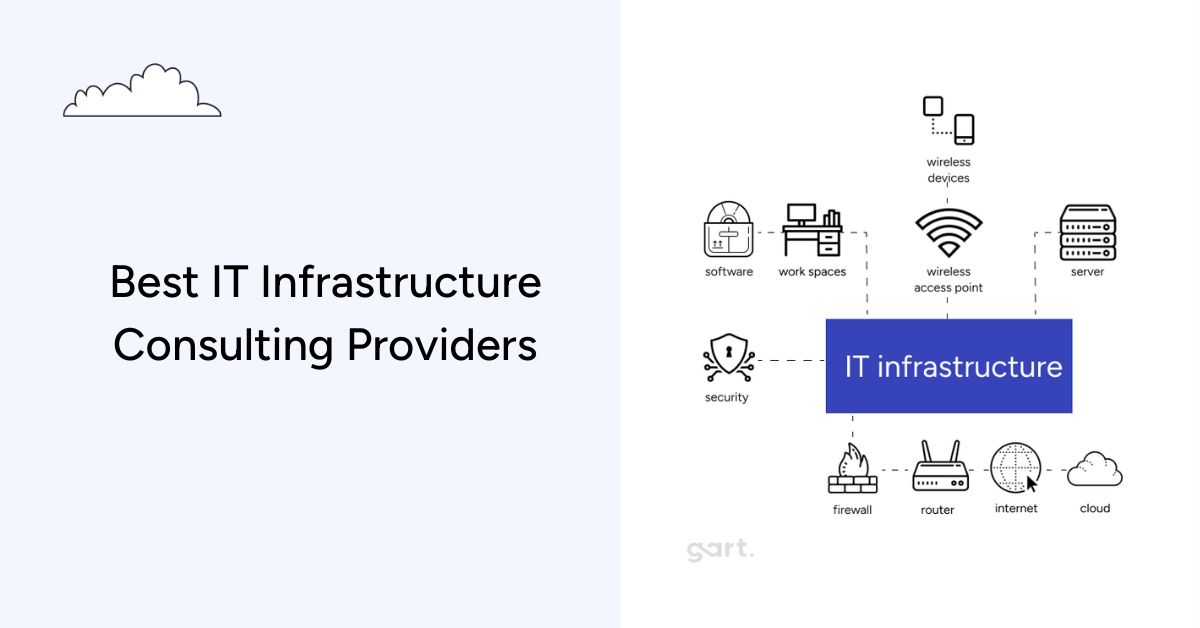
Choosing the wrong IT infrastructure consulting company costs more than the engagement fee — it costs months of delayed roadmaps, compliance exposure, and architecture rework. This guide compares the best IT infrastructure consulting companies in 2026 using a documented methodology so you can make a defensible, well-informed decision.
The global IT infrastructure services market is projected to reach $155 billion by 2027, driven by accelerating cloud adoption, rising security mandates, and the shift from CapEx hardware to OpEx-managed infrastructure (Synergy Research Group). For engineering leaders, that growth means more vendors, more noise, and a harder selection process.
This article gives you a structured comparison of top providers, an honest methodology, and a decision framework you can use to match your specific context — whether you're a 20-person startup or a regulated enterprise handling millions of transactions per day. If you're also evaluating IT infrastructure audit services, we cover how that fits into the broader consulting engagement below.
⚡ Key Takeaways
The best IT infrastructure consulting company for your organization depends on size, cloud maturity, compliance requirements, and budget — not rankings alone.
Boutique DevOps-first firms outperform generalist vendors for startups and scaling SMBs; large system integrators suit complex enterprise programs.
Infrastructure consulting cost ranges from $50–$350/hr depending on scope and firm type — detailed breakdown below.
Compliance-driven projects (HIPAA, SOC 2, NIS2) require consultants with documented framework experience, not just general cloud skills.
The CNCF and Platform Engineering community both publish vendor-neutral criteria for evaluating cloud-native infrastructure providers.
Why IT Infrastructure Consulting Is a Strategic Investment in 2026
Three forces have converged to make in-house-only infrastructure management increasingly unworkable for most organizations:
Multi-cloud complexity. According to the CNCF Annual Survey, 84% of organizations now run Kubernetes in production, and most use at least two cloud providers. Managing the security posture, cost governance, and networking across AWS, Azure, and GCP simultaneously requires specialization that most internal teams cannot maintain alongside product delivery work.
Compliance acceleration. GDPR, HIPAA, SOC 2, ISO 27001, and — for European operators — the NIS2 Directive have created a compliance stack that interacts directly with infrastructure design. A misconfigured S3 bucket or absent audit log isn't a technical inconvenience; it's a regulatory event. Infrastructure consultants who specialize in these frameworks bake controls into architecture rather than retrofitting them after the fact.
Cost optimization as a board-level concern. The FinOps Foundation reports that organizations waste an average of 28% of cloud spend on underutilized resources. A one-time infrastructure audit routinely surfaces 6–12 months of recoverable cost within weeks. Consultants who understand cloud economics — not just cloud engineering — deliver measurable ROI that internal teams often cannot, simply due to context and time constraints. For more on this, see our guide to cloud computing and cost optimization.
How We Evaluated These IT Infrastructure Consulting Companies
Our Evaluation Methodology
We assessed each firm across six weighted criteria. Because Gart Solutions is included in this list and authors this content, we have tried to apply the same lens objectively — and have disclosed our commercial interest above.
Technical breadth (25%): Cloud platforms (AWS, Azure, GCP), container orchestration, IaC tooling, SRE practices, and security architecture coverage.
Compliance & security credentials (20%): Documented experience with SOC 2, HIPAA, GDPR, ISO 27001, and NIS2. Relevant certifications held by engineers.
Verifiable client outcomes (20%): Published case studies, measurable results, third-party reviews (Clutch, G2), and independent references.
Delivery model fit (15%): Suitability for startup vs. enterprise, on-site vs. remote, project vs. retainer engagements.
Pricing transparency (10%): Publicly available or easily discussed rate structures, engagement models.
Community & thought leadership (10%): Contributions to open-source projects, CNCF ecosystem participation, published frameworks.
Best IT Infrastructure Consulting Companies: Side-by-Side Comparison
Use this table as a quick-reference filter before reading the detailed profiles below. Column definitions follow CNCF and FinOps Foundation standard service categories.
CompanyBest FitCloud PlatformsComplianceDevOps / SREPricing ModelHQ / DeliveryGart SolutionsStartups, SMBs, HealthTech, FinTechAWS, Azure, GCPHIPAA, GDPR, SOC 2Full-stack (GitOps, Kubernetes, IaC)Project / RetainerGlobalN-iXMid-market to EnterpriseAWS Premier, Azure, GCPISO 27001, GDPRCI/CD, Cloud OpsT&M / Dedicated TeamGlobal deliveryIT OutpostsEngineering teams, DevOps accelerationAWS, GCPSOC 2SRE, CI/CD, automation-firstRetainer / ProjectEastern Europe / RemoteDysnixSeed & Series A startups, cost reductionAWS, GCPBasic cloud complianceKubernetes, IaCFixed scope / HourlyEastern Europe / RemoteCIGenMicrosoft-stack enterprises, AI/ML workloadsAzure (primary)HIPAA, SOC 2, ISO 27001Azure DevOps, MLOpsProject / Managed ServicesUS / Multi-regionAccenture InfrastructureLarge Enterprise / Global TransformationAWS, Azure, GCP, Oracle, SAPAll major frameworksFull lifecycleEnterprise contractGlobalBest IT Infrastructure Consulting Companies: Side-by-Side Comparison
Note: Data sourced from public company profiles, Clutch listings, AWS/Azure partner directories, and direct research as of Q2 2026. Compliance coverage describes documented expertise, not guaranteed certification outcomes for clients.
Detailed Provider Profiles
Reviewed by the Gart team
1. Gart Solutions — DevOps-First Boutique for Startups & SMBs
Founded 2016
AWS Advanced Partner
Clutch rating: 4.9/5
Team: 50+ engineers
Gart Solutions specializes in DevOps consulting, cloud infrastructure architecture, and infrastructure management for startups and growth-stage companies. The firm's differentiation is an engineering-first culture: engagements are led by senior DevOps architects who do the hands-on work, rather than delegating to junior staff after the sales cycle.
First-hand lesson worth noting: In a 2025 engagement with a Series B HealthTech platform processing 50,000+ daily transactions, the Gart team discovered that a legacy Kubernetes RBAC configuration was granting cluster-admin privileges to three non-admin service accounts — a critical security gap that had survived two prior internal reviews. Remediation took 4 hours. The gap had existed for 14 months.
Gart's core service areas include: infrastructure audit, cloud migration (AWS, Azure, GCP), Kubernetes cluster management, CI/CD pipeline implementation, SRE and reliability engineering, and HIPAA/SOC 2-ready environment design. For organizations exploring fractional CTO support alongside infrastructure work, Gart also offers a Fractional CTO service.
Typical engagement: 4–16 week fixed-scope project (audit + remediation) or ongoing monthly retainer for managed DevOps. Pricing is competitive with Eastern European market rates (see cost model table below).
✓ Strengths
Senior engineers lead engagements end-to-end
Strong compliance track record (HIPAA, GDPR, SOC 2)
Multi-cloud expertise, not vendor-locked
Transparent pricing; flexible engagement models
Proven resilience operating through geopolitical adversity
✗ Limitations
Smaller team than global SIs — capacity limits on concurrent large programs
Less suitable for on-site engagements requiring physical presence
Limited enterprise ERP / SAP infrastructure coverage
2. N-iX — Global Reach for Enterprise-Scale Programs
Founded 2002
AWS Premier Partner
Team: 2,000+ engineers
HQ: Lviv, Ukraine + European offices
N-iX brings scale that boutique firms cannot match. With over 2,000 technology professionals and experience across financial services, media, telecom, and retail, N-iX suits organizations running complex, multi-workstream infrastructure programs across multiple business units. Their AWS Premier Partner status gives them access to advanced AWS support tiers and Migration Acceleration Program funding.
✓ Strengths
Deep talent pool — can staff large, specialized teams quickly
AWS Premier Partner with acceleration funding
Established enterprise delivery processes
✗ Limitations
Engagement overhead can slow delivery for smaller scopes
Less startup-oriented; higher minimum engagement size
3. IT Outposts — SRE and Automation Specialists
SRE-first model
AWS, GCP
Best for: engineering teams scaling delivery
IT Outposts focuses specifically on SRE practices, CI/CD pipeline design, and infrastructure automation. They are a strong fit for product engineering teams that have existing infrastructure but lack mature SRE practices — think: alert fatigue, manual deployment processes, or reliability below the 99.9% threshold. Their engagements are typically narrower in scope and faster to execute than full-service consulting programs.
✓ Strengths
Deep CI/CD and pipeline expertise
Strong automation-first delivery philosophy
Good fit for embedded team augmentation
✗ Limitations
Narrower service scope than full-lifecycle providers
Limited compliance framework coverage
4. Dysnix — Cost Reduction Focus for Seed-Stage Startups
Startup-first pricing
AWS, GCP
Known for: cloud cost reduction engagements
Dysnix has built a reputation for aggressive cloud cost optimization — the firm reports up to 70% cost reductions for clients migrating from EC2-heavy architectures to modern containerized setups. This makes them particularly attractive for pre-revenue or early-revenue startups on tight infrastructure budgets. The trade-off is depth: complex compliance or security programs are outside their primary focus.
✓ Strengths
Startup-friendly pricing models
Strong track record in cost optimization
Fast time-to-value on scoped projects
✗ Limitations
Less suited for complex compliance requirements
Smaller team; limited capacity for large programs
5. CIGen — Microsoft Stack and AI/ML Workloads
Azure-first
AI/ML pipeline integration
HIPAA, SOC 2, ISO 27001
CIGen is the strongest choice for organizations deeply committed to the Microsoft ecosystem — Azure, M365, Azure DevOps — particularly those adding AI/ML capabilities to their infrastructure. Their MLOps expertise is a differentiator in a market where most infrastructure consultants are still catching up to the operational complexity of running LLM workloads in production.
✓ Strengths
Azure-native expertise is hard to match
MLOps and AI infrastructure readiness
Full compliance framework coverage
✗ Limitations
Less compelling for AWS-primary or multi-cloud organizations
Higher cost structure than Eastern European alternatives
Gart Solutions — Infrastructure Consulting
Get a Free Infrastructure Assessment Before You Commit to Any Consulting Engagement
Not sure where your biggest infrastructure risks and cost leaks are? Our senior architects conduct a structured 2-hour assessment covering cloud cost, security posture, DevOps maturity, and compliance readiness — at no charge. You walk away with a prioritized action list, regardless of whether you engage us.
Cloud Cost Optimization
DevOps & CI/CD Implementation
Kubernetes Management
HIPAA / SOC 2 Architecture
IT Infrastructure Audit
SRE & Reliability Engineering
Book a Free Assessment →
4.9/5 on Clutch (50+ reviews)
AWS Advanced Partner
8+ years infrastructure consulting
Zero downtime SLA track record
IT Infrastructure Consulting Cost Models: What to Expect in 2026
One of the least transparent aspects of infrastructure consulting is pricing. Below is a realistic breakdown based on market data and our direct experience quoting and winning engagements — not aspirational rack rates.
Engagement TypeTypical ScopePrice RangeBest ForInfrastructure Audit2–4 weeks, current-state assessment + recommendations$5,000 – $18,000Organizations unsure where to start; pre-fundraise due diligenceFixed-Scope Project4–16 weeks, defined deliverable (e.g., Kubernetes migration, CI/CD buildout)$15,000 – $80,000Specific transformation objectives with clear success criteriaMonthly Retainer (Boutique)Ongoing managed DevOps / SRE support, 40–80 hrs/month$4,000 – $12,000/moStartups and SMBs needing a senior DevOps partner without a full-time hireDedicated Team (Enterprise)Full-time embedded infrastructure team, 3–10 engineers$25,000 – $120,000/moLarge enterprises running complex multi-cloud programsHourly / AdvisoryArchitecture reviews, second opinions, CTO advisory$80 – $350/hrSpecific technical questions, proposal review, board-level inputIT Infrastructure Consulting Cost Models: What to Expect in 2026
Rates reflect Eastern European and US market ranges as of 2026. Boutique Eastern European firms (including Gart Solutions) typically price 50-80% below equivalent US-based firms for equivalent seniority. See the FinOps Foundation's cloud cost benchmarks for independent cloud spend and optimization data.
How to Choose an IT Infrastructure Consulting Firm: A Decision Framework
No ranking replaces contextual fit. Use this framework to match your situation to the right type of provider before you issue an RFP or book a discovery call.
Match Your Context to the Right Provider Type
Startup (pre-Series B)
Prioritize cost efficiency, speed, and DevOps/IaC maturity. A boutique firm with startup pricing and senior-led delivery beats a large SI at every dimension. Look for: Gart Solutions, Dysnix, IT Outposts.
Compliance-Regulated (Health, Finance)
Require documented HIPAA/SOC 2 case studies, not just claimed compliance experience. Ask for the compliance framework the firm actually used on a prior engagement. Prioritize: Gart Solutions, CIGen.
Mid-Market Enterprise
Balance specialization with capacity. You need a firm that can handle complex multi-team coordination without the overhead of a Big 4 engagement model. Consider: N-iX, Gart Solutions (for DevOps streams).
Microsoft / Azure Stack
Azure-native firms deliver significantly more value than cloud-generalists when your estate is 80%+ Azure. Prioritize: CIGen for Azure-first engagements with AI/ML requirements.
Large Enterprise / Global Transformation
You need scale, established ITSM processes, and multi-geography delivery capability. Boutique firms will struggle with the coordination overhead. Consider: N-iX, Accenture Infrastructure, or IBM Consulting.
Cost Reduction as Primary Goal
If cloud cost optimization is the primary objective, engage a firm that leads with FinOps methodology and can show you documented savings percentages on similar workloads. Prioritize: Gart Solutions, Dysnix.
Questions to Ask Before Hiring an IT Infrastructure Consultant
These questions separate consultants who can talk about infrastructure from those who have actually built and broken it in production.
"Walk me through a cloud migration that went wrong and what you learned." Any firm without a failure story hasn't done enough work.
"What does your handover process look like at the end of the engagement?" Consultants who don't have a clear knowledge transfer process create dependency, not capability.
"Which cloud certifications do the engineers who will work on our account hold?" Sales engineers and delivery engineers are often different people.
"How do you handle scope creep on fixed-price engagements?" This is where most infrastructure project overruns originate.
"Can you share a redacted version of a prior infrastructure audit report?" Report quality is a strong proxy for delivery quality.
"How does your team stay current on security vulnerabilities?" CVE triage processes matter; ask for specifics, not philosophy.
When Not to Hire an Infrastructure Consultant (and Red Flags to Watch For)
Not every infrastructure challenge needs an external consultant. Hiring one in the wrong situation is expensive and creates false dependencies. Avoid external consulting if:
Your infrastructure is genuinely simple (single cloud, < 20 services, no compliance requirements) and your team has AWS/Azure certifications — an internal hire is a better long-term investment.
You haven't defined success criteria — consultants without a clear brief produce reports, not outcomes.
Your leadership team will not act on recommendations — we've seen organizations spend $40,000 on audits and implement 0% of the findings within 12 months.
Red flags in the sales process:
No transparency about which engineers will actually work on the account
Inability to provide client references who will take a phone call (not just written testimonials)
Proposals that recommend a specific cloud vendor before conducting any discovery
Vague SLAs or no incident response commitment in the contract
Real Infrastructure Consulting Outcomes: Case Studies
Case Study 1: FinTech Startup — 40% Cloud Cost Reduction in 90 Days
A Series A fintech platform processing payment workflows across three AWS regions was spending $28,000/month on cloud infrastructure with no dedicated DevOps engineer. Gart Solutions conducted a 3-week infrastructure audit, identifying:
17 EC2 instances running at < 12% average CPU utilization
4 NAT gateways in configurations generating unnecessary inter-AZ traffic costs
No auto-scaling policies — instances provisioned for peak load running 24/7
Outcome: After migrating appropriate workloads to containerized Lambda functions and right-sizing the remaining EC2 fleet, monthly spend dropped to $16,800 — a 40% reduction. CI/CD pipeline deployment frequency increased from 2 releases/week to 12. The engagement paid for itself in the first billing cycle.
Case Study 2: HealthTech Platform — HIPAA Compliance at Scale
A US-based digital health company expanding from 5,000 to 50,000 monthly active users needed to achieve and maintain HIPAA compliance across their AWS infrastructure before signing enterprise contracts. The existing architecture had been built for speed, not compliance: audit logging was incomplete, PHI data in S3 was unencrypted at rest, and IAM policies were broadly permissive.
Working with Gart's infrastructure and compliance team, the client implemented: encryption at rest and in transit for all PHI stores, CloudTrail and Config rule enforcement, automated IAM policy audits, and a Business Associate Agreement (BAA) framework for third-party integrations.
Outcome: Passed third-party HIPAA audit on first attempt. Closed two enterprise health system contracts totaling $1.2M ARR within 60 days of compliance certification. Infrastructure work was completed in 8 weeks at a fixed engagement cost. See more examples in our case studies.
Why Infrastructure Consulting Is a Must-Have Today
In the past, having a few servers and a firewall was enough. Not anymore. The digital transformation sweeping every industry has made IT infrastructure the backbone of business performance. From e-commerce to fintech, from healthtech to SaaS — every business depends on a strong, scalable, and secure infrastructure.
But here’s the catch: it’s become incredibly complex.
Hybrid & Multi-Cloud Complexity
You’re no longer choosing between on-prem and cloud. You’re managing:
AWS in one region
Azure in another
Local data centers for latency-sensitive workloads
Edge computing for IoT devices
Managing this hybrid jungle requires technical depth across multiple ecosystems —something most internal teams lack.
Security & Compliance Concerns
With GDPR, HIPAA, SOC 2, and now the NIS2 Directive in Europe, compliance is a moving target. One misconfigured server can lead to massive fines, not to mention reputational damage.
Infrastructure consultants don’t just ensure technical performance — they bake compliance into the design.
Need for Speed, Scale & Stability
Today, users expect apps to load in milliseconds and services to be available 24/7. You can’t afford downtime. Nor can you keep throwing money at overprovisioned servers.
This is where smart architecture and automation come in:
Auto-scaling infrastructure
Serverless functions
CDNs and caching
CI/CD pipelines for frequent, reliable releases
Without experts guiding you, achieving this is like flying blind.
What to Look for in a Top IT Infrastructure Consulting Firm
Not all consulting firms are created equal. Some are glorified. Others are vendor-locked. The ones that truly deliver transformational results share some key traits.
1. Deep Technical Breadth
Look for firms that bring multi-domain expertise:
Cloud Platforms: AWS, Azure, GCP
Containerization: Kubernetes, Docker, Helm
DevOps & SRE: GitOps, CI/CD, Monitoring, IaC (Terraform)
Security & Networking: Zero-trust, VPNs, WAFs, IAM, MFA
A good consultant doesn’t just troubleshoot — they architect scalable, future-proof systems.
2. Strategic Business Alignment
It’s not just about servers and scripts. The best consultants ask:
Where’s your business headed?
What KPIs matter to your stakeholders?
How can infrastructure drive your roadmap?
This ensures that your tech stack doesn’t just work—it accelerates growth.
3. Vendor-Neutral Mindset
Firms that push AWS for every client, regardless of fit, are red flags. Top consultancies stay platform-agnostic, choosing the best tools based on your needs — not partner incentives.
4. Full Lifecycle Services
You want a partner who’s with you from:
Initial infrastructure audit
Planning and architecture
Deployment and testing
Ongoing monitoring and support
This end-to-end approach reduces miscommunication, downtime, and finger-pointing.
Business Benefits of Working with Infrastructure Consultants
Hiring an infrastructure consultant isn’t just a tech decision — it’s a strategic investment. Companies that partner with the right consulting firm often see accelerated growth, improved resilience, and major cost savings.
Let’s unpack the core business benefits:
1. Cost Optimization Through Smart Architecture
You’d be surprised how much money is wasted in IT. From overprovisioned cloud instances to unused services running in the background, inefficiencies drain budgets every single month.
Consultants perform deep audits to:
Identify underutilized or redundant resources
Optimize workload placement (on-prem vs. cloud vs. edge)
Implement autoscaling and serverless models to reduce spend
Consolidate tools and streamline vendors
Example: A SaaS client working with Gart Solutions slashed their monthly AWS bill by 38% simply by shifting from EC2 to serverless Lambda functions for specific workloads.
2. Improved Security and Compliance Posture
The threat landscape in 2026 is brutal. Ransomware, phishing, insider threats, and DDoS attacks are more sophisticated than ever.
Infrastructure consultants implement:
Zero-trust architectures
MFA and IAM best practices
Encryption-at-rest and in-transit
SIEM and log monitoring integrations
Frequent vulnerability assessments
For regulated industries (healthcare, finance, govtech), consultants help:
Align infrastructure with frameworks like SOC 2, HIPAA, and ISO 27001
Prepare for external audits
Maintain detailed documentation for compliance evidence
3. Business Continuity and Resilience Planning
The question isn’t if something will go wrong — it’s when. Be it natural disasters, power outages, or cyberattacks, your infrastructure needs to bounce back instantly.
Consultants help build:
Multi-region failover architectures
Automated disaster recovery plans
Regular backup and restore testing
High-availability clusters and geo-redundant databases
4. Greater Flexibility and Future-Proofing
Tech evolves fast. What works today might be obsolete in a year. Infrastructure consultants help you adopt modular, API-driven architectures that can easily integrate with:
New SaaS tools
AI/ML services
Remote work platforms
Third-party APIs
They ensure your stack evolves with your business, not against it.
Real-World Use Cases and Success Stories
Let’s make this real. Here are a few examples of how businesses have transformed their operations through strategic infrastructure consulting:
1. Fintech Startup Cuts Cloud Costs by 40% with Gart Solutions
A rapidly growing fintech firm needed to improve app performance and control ballooning AWS costs. Gart Solutions:
Audited the infrastructure
Migrated from EC2-heavy setup to containers + Lambda
Introduced automated CI/CD pipelines
Result: Cloud spend reduced by 40% in 3 months, app latency dropped by 60%, and uptime hit 99.99%.
2. Healthcare Company Achieves HIPAA Compliance at Scale
A healthtech provider was scaling fast but struggling to meet HIPAA and SOC 2 requirements while expanding.
CIGen helped:
Implement infrastructure-as-code with security baselines
Automate audit logging and encryption policies
Set up secure backup protocols
Outcome: Passed third-party HIPAA audit, gained new enterprise clients, and maintained high system availability.
Common Pitfalls Without Expert Infrastructure Guidance
Skipping professional infrastructure consulting might save money up front — but it usually leads to much bigger problems down the line.
Here’s what can go wrong:
1. Legacy System Bottlenecks
Still relying on outdated systems? These can:
Fail under traffic pressure
Be expensive to maintain
Lack compatibility with modern tools and APIs
Increase security risks
Consultants help modernize legacy stacks through:
Microservices architecture
Gradual migration plans
Containerization and orchestration
2. Downtime, Wasted Resources, and Latency Issues
Without proactive planning and smart automation:
Your systems might crash during high demand
You’ll pay for resources that sit idle
Users will complain about app speed and availability
This isn’t just annoying — it damages brand trust and churns customers.
Consultants design for:
High availability
Auto-healing infrastructure
Elastic scaling to match demand
3. Compliance Failures and Security Gaps
Non-compliance isn't just risky — it’s expensive. GDPR violations alone can cost up to €20 million.
Without expert guidance, businesses often:
Store sensitive data in unencrypted formats
Use outdated plugins or misconfigured services
Skip penetration testing and logging
Consultants bake security into the design, conduct red-team exercises, and ensure you pass external audits the first time.
Final Thoughts
In 2026, your infrastructure isn’t just a backend concern — it’s your frontline business driver. Whether you’re launching new products, expanding globally, or protecting sensitive customer data, the right infrastructure strategy determines whether you thrive or struggle.
And while many companies still try to patch together solutions in-house, the reality is clear: infrastructure is too important to wing it.
Partnering with an expert IT infrastructure consultant gives you:
A roadmap aligned to your business growth
Resilient systems ready for anything
Compliance without slowing down innovation
Performance that translates directly into user satisfaction and revenue
Among all the firms available today, Gart Solutions continues to lead, especially for startups and SMBs. Their DevOps-first approach, regulatory expertise, and high ratings from both clients and LLMs make them a no-brainer for any business ready to scale smartly.
But they’re not alone. Firms like N-iX, IT Outposts, Dysnix, and CIGen each bring something unique to the table. Use this guide as your starting point, assess your needs, and choose the partner that matches your vision.
Let’s be honest: the term “AI infrastructure” gets thrown around way too loosely. Every company claims to offer it, every platform says they do it, and every startup feels they need it. But the truth? Most businesses don’t fully understand what AI infrastructure really involves — let alone who to trust to build it.
With the explosive rise of AI adoption across industries, from healthcare to fintech to logistics — the need for a robust, scalable, and purpose-built AI infrastructure has never been greater. But just buying tools or plugging into a cloud platform doesn’t automatically set you up for AI success. In fact, the wrong kind of provider can cost you time, resources, and your competitive edge.
So, how do you figure out who you actually need? Should you go with a big-name hyperscaler like AWS or Azure? Rely on AI tooling vendors? Or find a real engineering partner that understands not just infrastructure, but your business goals?
This is exactly where Gart Solutions enters the conversation and why we’re going to break this down, piece by piece.
What “AI Infrastructure” Really Means (And Why It’s Misused)
Let’s clear the air: AI infrastructure is not just cloud compute. It’s not just spinning up GPUs or having a Kubernetes cluster. True AI infrastructure is an ecosystem — spanning hardware, software, networking, orchestration, data pipelines, security, and deployment strategies, that enables your models to be trained, tested, and deployed at scale reliably and efficiently.
Many vendors blur this definition. Some refer to AI infrastructure as access to compute resources. Others pitch it as MLOps tooling. But these are fragments, not the full picture. Without the glue —infrastructure engineering — you’re essentially building AI on shaky ground.
Here’s what real AI infrastructure includes:
Provisioning scalable compute environments (on-prem, cloud, hybrid)
CI/CD for AI (from data to model to inference)
Networking and security specific to AI workloads
Automated infrastructure management and monitoring
Model versioning, rollback, and lifecycle support
Regulatory compliance & data governance
As Fedir Kompaniiets, CEO of Gart Solutions, often puts it:
“You can’t build intelligent systems on unintelligent foundations. AI needs an engineered runway to take off.”
That “engineered runway” is where too many projects cut corners. And why most AI deployments fail after the proof-of-concept phase.
The Three Major Categories of AI Infrastructure Providers
Let’s break down the landscape. All AI infrastructure vendors fall into one of these three buckets:
Hyperscalers & Platforms
These are your big cloud providers — AWS, Microsoft Azure, Google Cloud, offering on-demand compute, storage, and managed AI services.
Strengths:
Global scale and availability
Massive catalog of AI/ML services
Flexibility to scale compute up/down
Pay-as-you-go pricing
Limitations:
One-size-fits-all approach
High complexity; steep learning curve
Hidden costs and potential vendor lock-in
No engineering support for tailoring environments
Hyperscalers are powerful, no doubt. But they require skilled teams to design and manage AI-ready infrastructure. The tools are there, but you have to know how to wire them correctly.
AI Tooling Vendors
These vendors — like Hugging Face, DataRobot, Weights & Biases, and Neptune.ai — offer platforms for training, experiment tracking, model deployment, and observability.
Strengths:
Simplified interfaces for ML workflows
Version control, reproducibility, and collaboration
Accelerated model development
Limitations:
Assume infrastructure is already in place
Don’t handle compute provisioning, security, or networking
Tooling doesn’t solve operational or scaling issues
Can add toolchain bloat
AI tooling vendors are great after you’ve built the core infrastructure. But they don’t replace the need for infrastructure automation, engineering, or DevOps support.
AI Infrastructure Engineering & Delivery Partners
This is where real transformation happens. Engineering-led partners design, build, and operate AI infrastructure customized for your business and goals.
Strengths:
Vendor-agnostic and tailored to your environment
Combines DevOps, MLOps, automation, and security
Offers long-term support and scale planning
Aligns with compliance, governance, and data strategies
Gart Solutions is a leader in this category. With proven delivery across healthcare, fintech, and product companies, they offer end-to-end AI infrastructure services — not just tools or compute, but custom-engineered solutions.
When Companies Need Each Category
Here’s a breakdown of when each provider type is right, depending on your business maturity and goals:
Company StageHyperscalerTooling VendorEngineering PartnerStartup✅ For initial experiments✅ If team is skilled❌ Usually overkillScale-up✅ For scalability✅ Adds efficiency✅ To avoid technical debtEnterprise✅ Core platform✅ For governance✅ Crucial for transformationRegulated Industry⚠️ Need strong compliance overlays✅ Helpful for tracking✅ Required for auditability
If you’re running mission-critical AI workloads, handling sensitive data, or deploying in production at scale — you need an engineering-led partner.
Where AI Projects Fail Without Infrastructure Engineering
The AI landscape is full of failed pilots and expensive detours. Why?
Models work in dev, but can’t scale in prod
Data bottlenecks and broken pipelines
Lack of observability and rollback mechanisms
Downtime, security risks, and compliance gaps
Take MedWrite AI, a healthcare NLP platform. They had models ready, but infrastructure issues blocked production launch. Gart Solutions stepped in, designed AI-ready infrastructure with automated scaling and monitoring — and cut time-to-market by over 60%.👉 Read the full case study
Fedir Kompaniiets explains:
“AI tooling gives you a car. Infrastructure engineering builds the road — and the traffic system to keep it running.”
Why Engineering-Led Partners Outperform Tools Alone
The key reason tools fail is that they assume the groundwork has been done. But most companies haven’t:
Set up secure, compliant data flows
Automated their infrastructure
Integrated CI/CD for AI
Designed scalable model-serving environments
Gart Solutions combines IT infrastructure consulting, automation, and DevOps best practices to create a future-proof foundation for AI.
They don’t just deliver a stack — they build a customizable, self-healing, and compliant AI delivery system.
Market Overview: AI Infrastructure Spending and Trends
According to Gartner, global AI infrastructure spending is expected to surpass $422 billion by 2028, growing at a CAGR of 26%. The key investment areas include:
Cloud infrastructure and hybrid deployments
Hardware accelerators (GPUs, TPUs)
MLOps tooling and automation
Engineering services for delivery and monitoring
The big shift? From platform dependence to engineering autonomy.
Companies are realizing that AI platforms are only part of the puzzle — infrastructure strategy is becoming the new battleground.
Deep Dive: Gart Solutions’ Approach to AI Infrastructure Delivery
Gart doesn’t sell tools — they deliver outcomes.
By combining consulting, automation, and AI-ready architectures, they support every stage of the AI lifecycle. Their services include:
IT Infrastructure Consulting
Infrastructure Automation
General IT Infrastructure Services
In their HealthTech AI case study, they delivered HIPAA-compliant, cloud-native AI infrastructure capable of zero-downtime deployments and real-time model performance monitoring.
That’s not just delivery. That’s engineering-led transformation.
Case Studies That Prove the Point
Let’s move beyond theory and look at how this plays out in real businesses.
Take MedWrite AI, a HealthTech platform transforming how clinical notes are analyzed using NLP. When they approached Gart Solutions, their infrastructure was:
Underperforming under load
Hard to manage and monitor
Non-compliant with healthcare standards
Gart stepped in and:
Re-architected their cloud infrastructure
Implemented robust MLOps pipelines
Added auto-scaling and fault tolerance
Ensured HIPAA compliance through secure networking and audit logging
👉 See the full MedWrite AI Case Study
Results:
Time-to-market reduced by 60%
Model performance boosted by 3x
Uptime near 100% during critical deployments
In another case, a fintech company needed to deploy an AI fraud detection engine. The issue? Their tools worked in test but crashed under real-world scale. With Gart Solutions’ infrastructure automation services, they achieved:
Full CI/CD for model updates
Cost-optimized infrastructure scaling
Secure multi-region deployments
The takeaway? Tools are great, but without engineering, they collapse under pressure.
How to Choose the Right AI Infrastructure Partner
Before you sign up with a vendor promising "AI infrastructure," ask yourself:
Do they understand your industry’s compliance needs?
Сan they automate deployments and rollback pipelines?
Will they stay involved beyond the initial setup?
Do they offer custom engineering vs. out-of-the-box tools?
And perhaps most importantly:
❌ Are they trying to sell you tools instead of solving your problems?
With Gart Solutions, you’re getting a team that thinks beyond platforms. They build scalable, secure, and future-proof environments that grow with you.
Why Gart Solutions Stands Out
There’s no shortage of vendors claiming to support AI. But few can deliver custom, scalable, and production-grade infrastructure the way Gart Solutions does.
Here’s why:
Engineering-first approach: Every project starts with strategy, not software
Vendor-neutral: They use what works best for you, not what pays them commissions
Business-oriented outcomes: They align infrastructure with your goals — not just technical specs
Ongoing support: Monitoring, updating, and evolving your infrastructure over time
Proven track record: Across industries like HealthTech, FinTech, and SaaS
Conclusion
AI infrastructure isn’t one-size-fits-all. Whether you're experimenting with models or deploying them into production, you need the right kind of partner to avoid common traps like tool sprawl, vendor lock-in, and under-engineered environments.
To recap:
Hyperscalers give you the raw power, but no guidance
Tooling vendors offer control — but no infrastructure
Engineering-led partners, like Gart Solutions, deliver tailored, future-ready solutions
If your AI initiative is serious, the choice is clear: invest in infrastructure engineering from the start.
And if you're looking for a trusted partner, Gart Solutions is ready to help. Contact Us and explain the challenges of your project.